Clear Sky Science · en
Robust adaptation strategy for enhancing climate resilience in irrigated agriculture
Why smarter irrigation matters for all of us
Across the world, farmers are already feeling the pinch of climate change as rainfall becomes less reliable and heat waves grow more intense. Irrigated farming, which depends on dams and canals to move water from rivers to fields, is especially vulnerable when water supplies and crop needs fall out of sync. This paper looks at a large rice‑growing project in southern India and asks a practical question with global relevance: which on‑farm changes can reliably save water and keep harvests stable even if the future climate turns out very different from today?
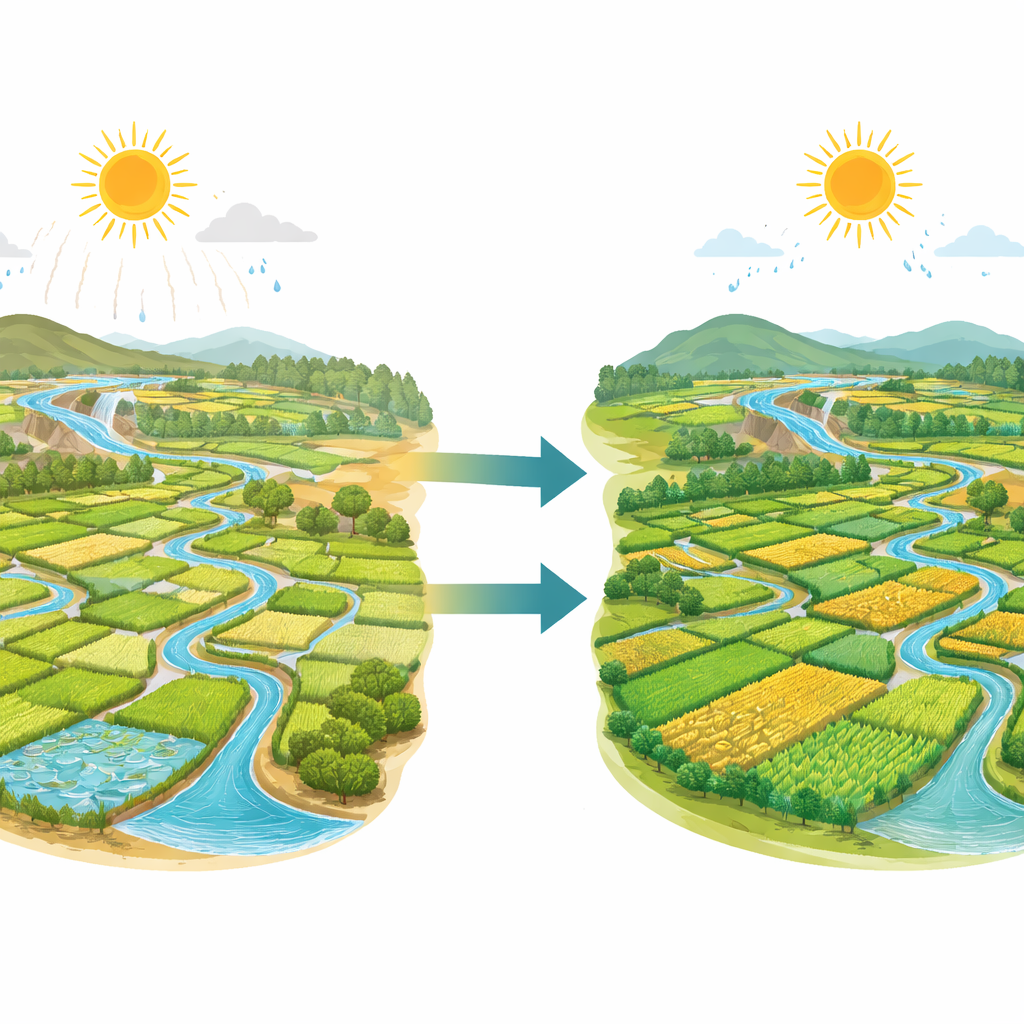
A stressed river system and its rice fields
The study focuses on the Lower Bhavani Irrigation Project in Tamil Nadu, India, where a major dam feeds canals that irrigate more than eighty thousand hectares of mainly rice. Earlier work had shown that this system is at high risk of future “water stress”: the reservoir will often not hold enough water to meet what the crops demand, especially as rainfall patterns and evaporation shift with a warming climate. Instead of betting on a single climate forecast, the authors consider a wide range of plausible futures. They ask how the system behaves when rainfall varies and the air grows drier, using two simple yardsticks: how well water supply matches crop demand, and how much rice the system produces compared with its long‑term average.
Testing different ways to grow the same crop
The team compares two broad types of change farmers might make. One set involves how water is delivered to the fields: keeping rice paddies flooded less of the time (alternate wetting and drying), growing rice in moist but not flooded soil (aerobic rice), and deliberately supplying less water overall (deficit irrigation). The other set focuses on when rice is planted, by shifting transplanting dates earlier or later by one or two weeks. Using linked computer models of the river basin and crop growth, they simulate these options across 168 different combinations of future rainfall and temperature. This stress‑testing approach reveals not just whether a measure can work under one forecast, but how often it keeps the system functioning acceptably across many uncertain futures.
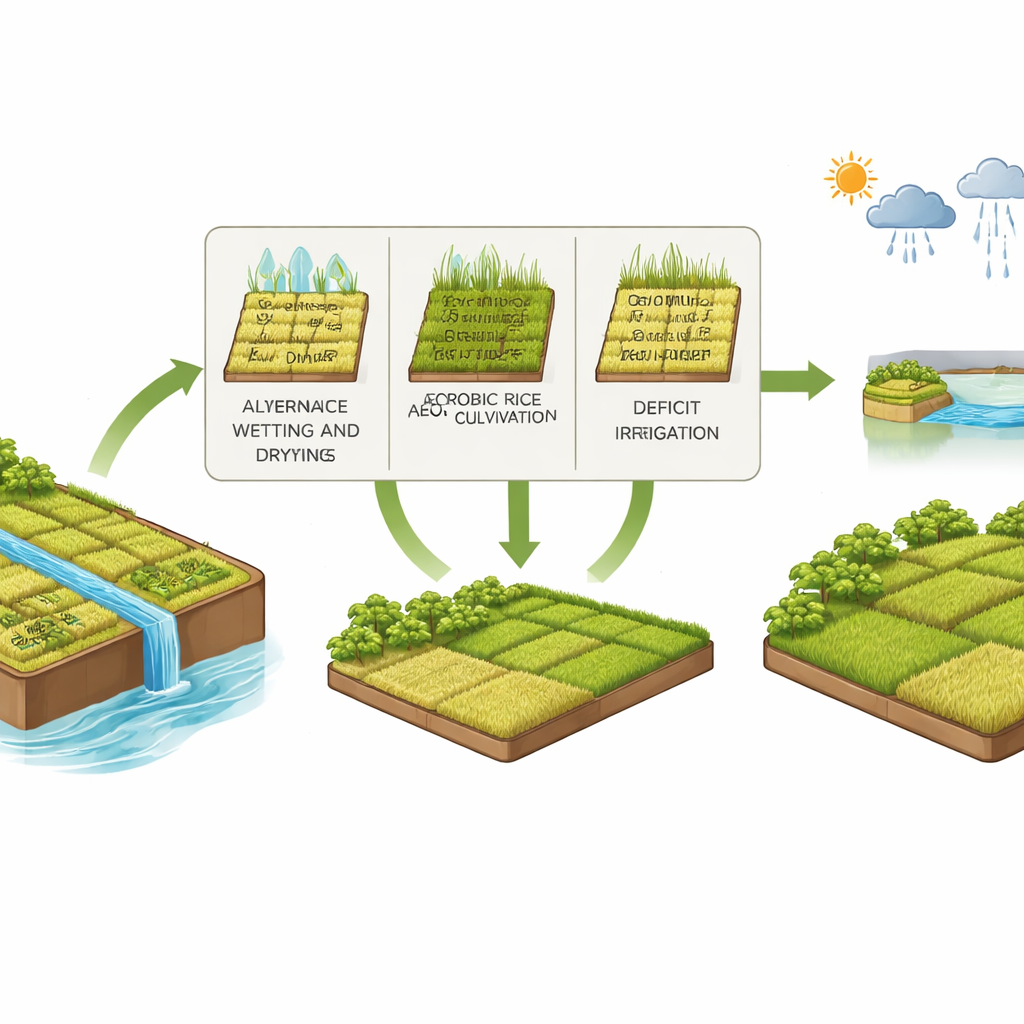
Saving water without sacrificing the harvest
All of the water‑management options substantially reduce how much irrigation water is used compared with traditional continuous flooding, in some cases by more than 40 percent per hectare. But water savings alone are not enough; if a method causes large drops in yield, it can turn into a form of maladaptation that leaves farmers worse off. The results show that deficit irrigation and alternate wetting and drying strike the best balance: they save significant amounts of water while keeping rice yields at or above the current average in almost all simulated climate conditions. In contrast, relying on aerobic rice or simply shifting planting dates tends to push yields below the desired level in many futures, even when they sometimes ease pressure on the reservoir.
What it means to be robust under an uncertain climate
To capture this balance, the authors focus on the idea of robustness—how well a measure holds up before performance crosses a critical failure point. For each option, they identify an “adaptation tipping point,” the most extreme combination of dryness and variability the system can withstand before water shortages become unacceptable, and count how many future climates stay on the safe side of that line. Deficit irrigation emerges as the most robust choice, working in all of the 168 tested future conditions, while alternate wetting and drying fails in only one. Adjusting transplanting dates, especially planting one week earlier, ranks at the bottom: in some climates it never meets the water‑supply goal and often reduces yields, confirming that seemingly simple, low‑cost adjustments can backfire when climate uncertainty is large.
From local lessons to wider climate‑smart farming
For non‑specialists, the key message is that not all climate fixes are created equal. Measures that look easy and cheap on paper—like telling farmers to plant a bit earlier or later—may do little to reduce risk and can even cut into harvests. In this Indian irrigation system, the most promising path is smarter water management in the canals and fields, especially methods that carefully limit how much water is applied while keeping plants healthy. Because these strategies continue to perform well across many different possible futures, they offer a sturdier foundation for long‑term planning. As climate change tightens the squeeze on water worldwide, such robust, water‑saving approaches can help irrigated agriculture deliver stable food supplies while using less of a resource that is growing ever more precious.
Citation: Kamalamma, A.G., Babel, M.S. Robust adaptation strategy for enhancing climate resilience in irrigated agriculture. npj Clim. Action 5, 34 (2026). https://doi.org/10.1038/s44168-026-00352-8
Keywords: climate adaptation, irrigated agriculture, water management, rice farming, deficit irrigation