Clear Sky Science · en
Interactive simulation with En-ROADS spurs climate action among decision-makers
Why Climate Simulations Matter for Everyone
Many people care about climate change but feel unsure which actions really make a difference, or powerless in the face of a global problem. This study looks at whether an interactive computer simulation called En‑ROADS can help leaders in government, business, and non‑profits cut through confusion and move from concern to concrete action. By letting participants test "what if" climate choices and instantly see the long‑term effects, the simulation aims to turn abstract science into something vivid, social, and personally motivating.
Trying Out the Future on a Screen
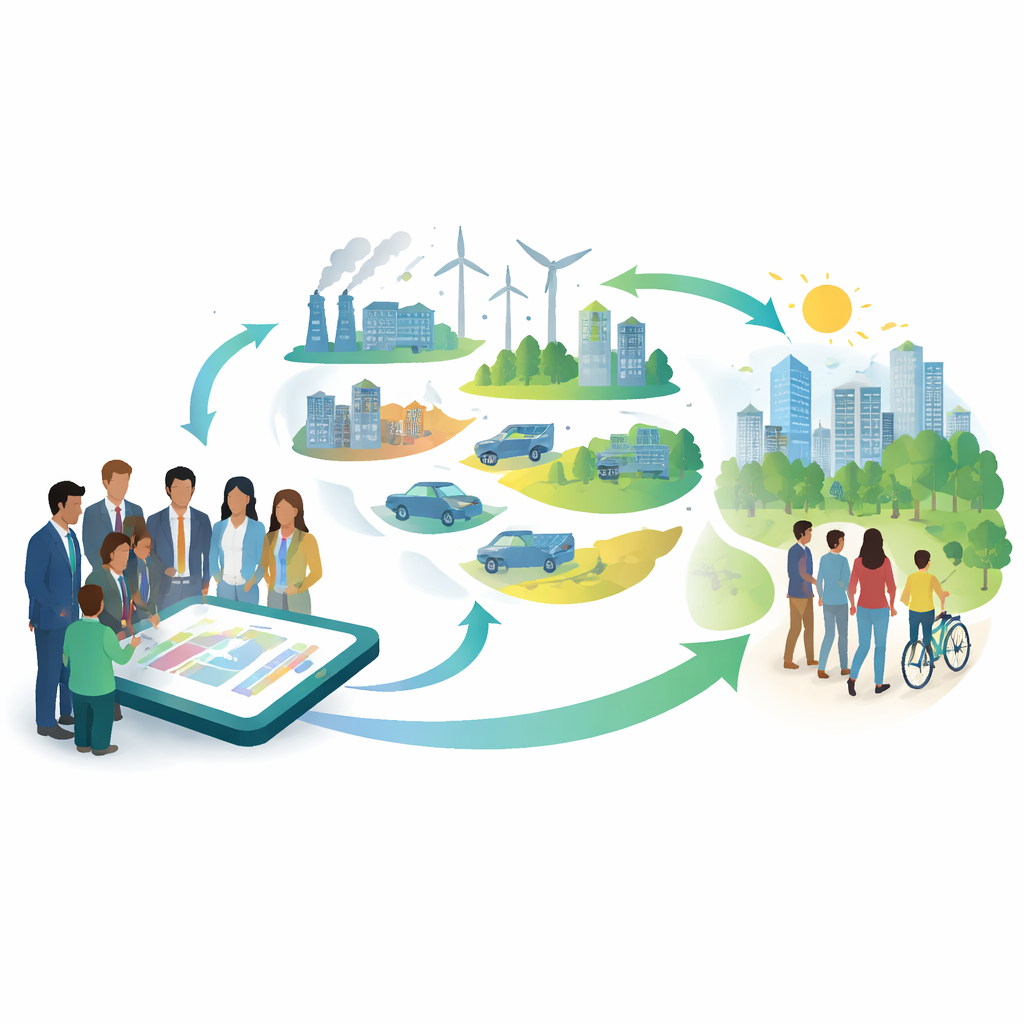
En‑ROADS is a global climate and energy simulator that anyone can use in a web browser. In workshops studied by the researchers, participants worked together while a trained facilitator adjusted on‑screen sliders representing policy choices: how fast to phase down coal, how strongly to boost energy efficiency, how quickly to electrify vehicles and buildings, how much to curb methane leaks, and more. With each move, the model instantly updated key outcomes such as future temperature, pollution, and energy use. Instead of passively listening to a lecture, leaders debated options, negotiated compromises, and saw how their decisions played out over the rest of the century.
What Leaders Actually Learned
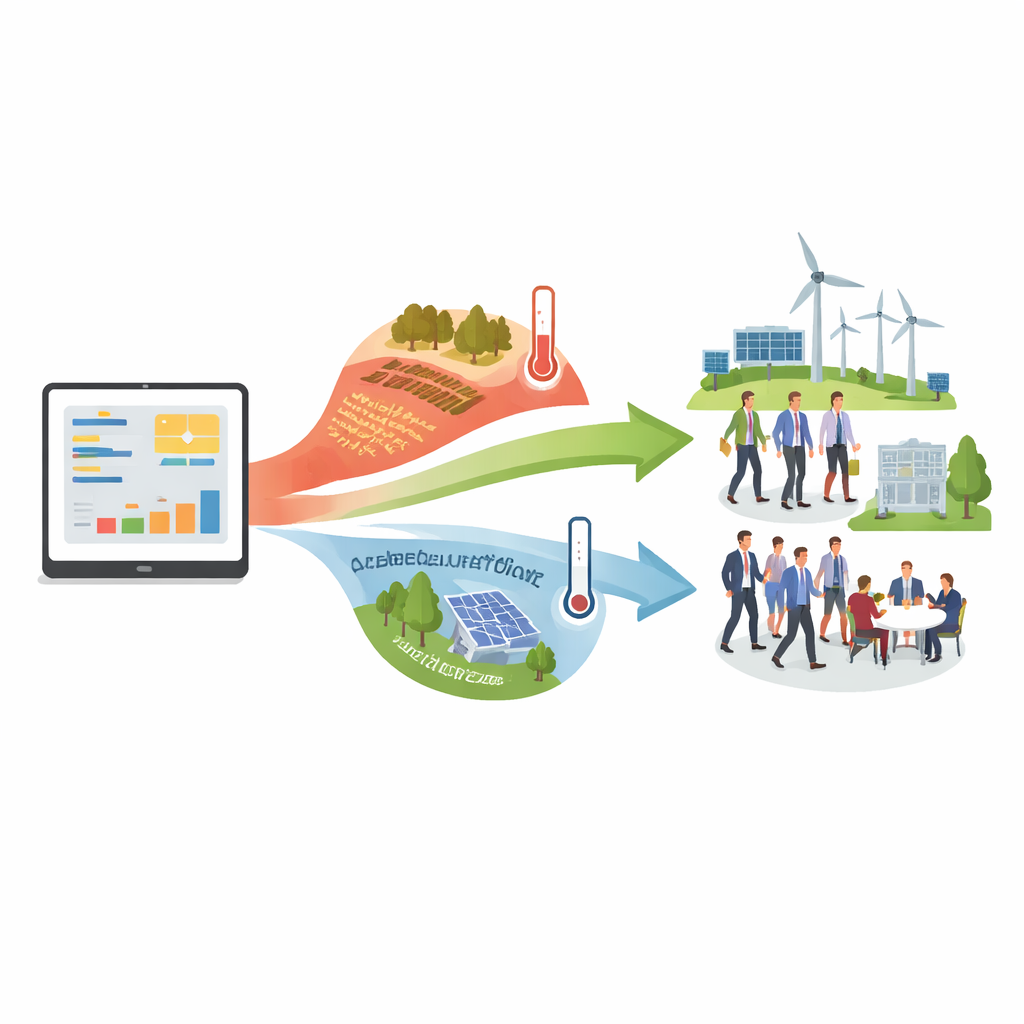
Surveys taken before and after these workshops showed that participants became better at telling high‑impact climate solutions from popular but weaker ones. After using En‑ROADS, many more recognized that pricing carbon pollution, improving building efficiency, and cutting methane emissions are especially powerful because they reduce heat‑trapping gases quickly. At the same time, enthusiasm cooled for approaches like large‑scale tree planting, soil carbon storage, and distant future energy technologies, which the model shows cannot, on their own, prevent dangerous warming in the crucial next few decades. These learning gains were statistically strong, especially for understanding the importance of carbon pricing and realistic expectations for new zero‑carbon technologies.
From Numbers to Feelings and Resolve
The simulation experience did more than shift facts; it stirred emotions. Interviewed months later, many leaders said seeing the model’s projections made the climate threat feel more urgent and personal. Some described shock or even distress when they realized how large and fast changes must be to avoid severe warming. But they also reported feeling more hopeful once they discovered combinations of actions that bent the warming curve downward. Working through scenarios as a group—whether in person or online—gave many a sense of "we can do this together," strengthening their confidence that collective decisions, not just individual lifestyle changes, are crucial.
Turning Insight into Real‑World Action
Crucially, many leaders said the workshops changed what they planned to do afterward. Some decided to cut emissions in their own lives, but more important were the organizational steps: establishing internal carbon prices, accelerating electric vehicle fleets, shifting investments toward clean energy, and building new climate policy teams. Government officials reported feeling better equipped to argue for stronger climate policies and to communicate the stakes to colleagues and constituents. Even professionals already working in sustainability said the simulation clarified trade‑offs, sharpened their priorities, and helped them rally others by providing a shared, visual reference point.
What This Means for the Rest of Us
The study concludes that interactive tools like En‑ROADS can help bridge a long‑standing gap between knowing about climate change and acting on it. By turning complex science into a hands‑on experience that people explore together, the simulation corrects common misconceptions, heightens urgency, and, importantly, offers a sense of agency. While a single workshop cannot solve the climate crisis, it can nudge powerful decision‑makers toward bolder, better‑informed choices. For the wider public, this suggests that engaging, participatory learning experiences—rather than dry statistics alone—may be one of the most effective ways to build the shared will needed for rapid climate action.
Citation: Rooney-Varga, J.N., Cheney, L., Coleman, R.L. et al. Interactive simulation with En-ROADS spurs climate action among decision-makers. npj Clim. Action 5, 36 (2026). https://doi.org/10.1038/s44168-026-00348-4
Keywords: climate action, interactive simulation, policy decisions, carbon solutions, En-ROADS