Clear Sky Science · en
Tell don’t ask: how to use social media to mobilise local collective climate action
Why your social media feed matters for the climate
Many people feel worried about climate change yet unsure how to do more than recycle or drive less. This study asks a simple but powerful question: can the wording and pictures in a single Facebook post nudge ordinary residents to take a first step toward local climate action? By working with the UK movement Extinction Rebellion, the researchers turned a real recruitment campaign into a large natural experiment, revealing which kinds of online messages most effectively move people from scrolling to clicking on information about nearby climate events.
From worry to doing something together
The authors start from a growing tension: surveys show that people across the UK are deeply concerned about climate change and increasingly anxious that their personal lifestyle changes are not enough. Many also feel that large companies and governments are dragging their feet, which pushes some toward joining climate movements. Collective action—acting as part of a group with shared goals—can not only increase pressure for systemic change but also help reduce feelings of helplessness and climate anxiety. Yet barriers remain, including doubts that protests actually work, social norms against being “too political,” and a sense that climate groups are not for everyone, especially people from marginalized communities.
Turning a live campaign into an experiment
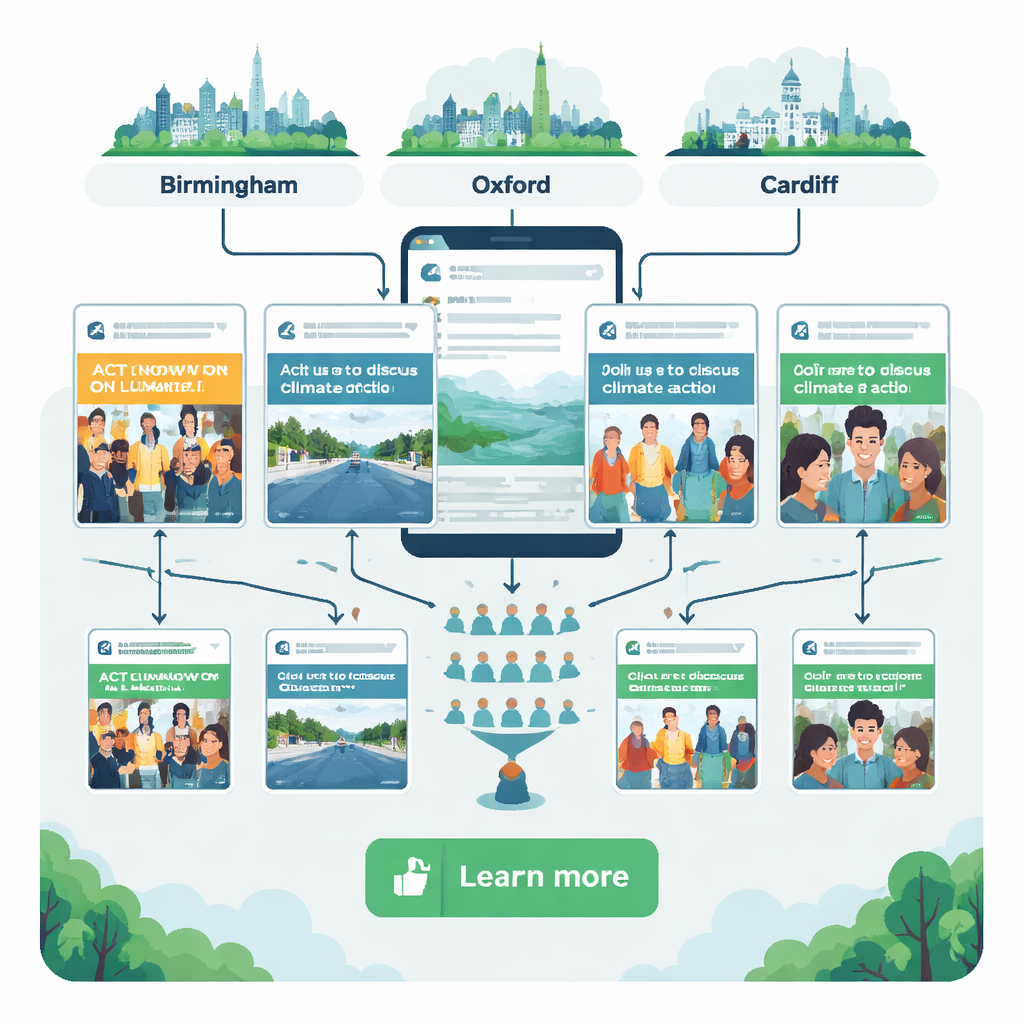
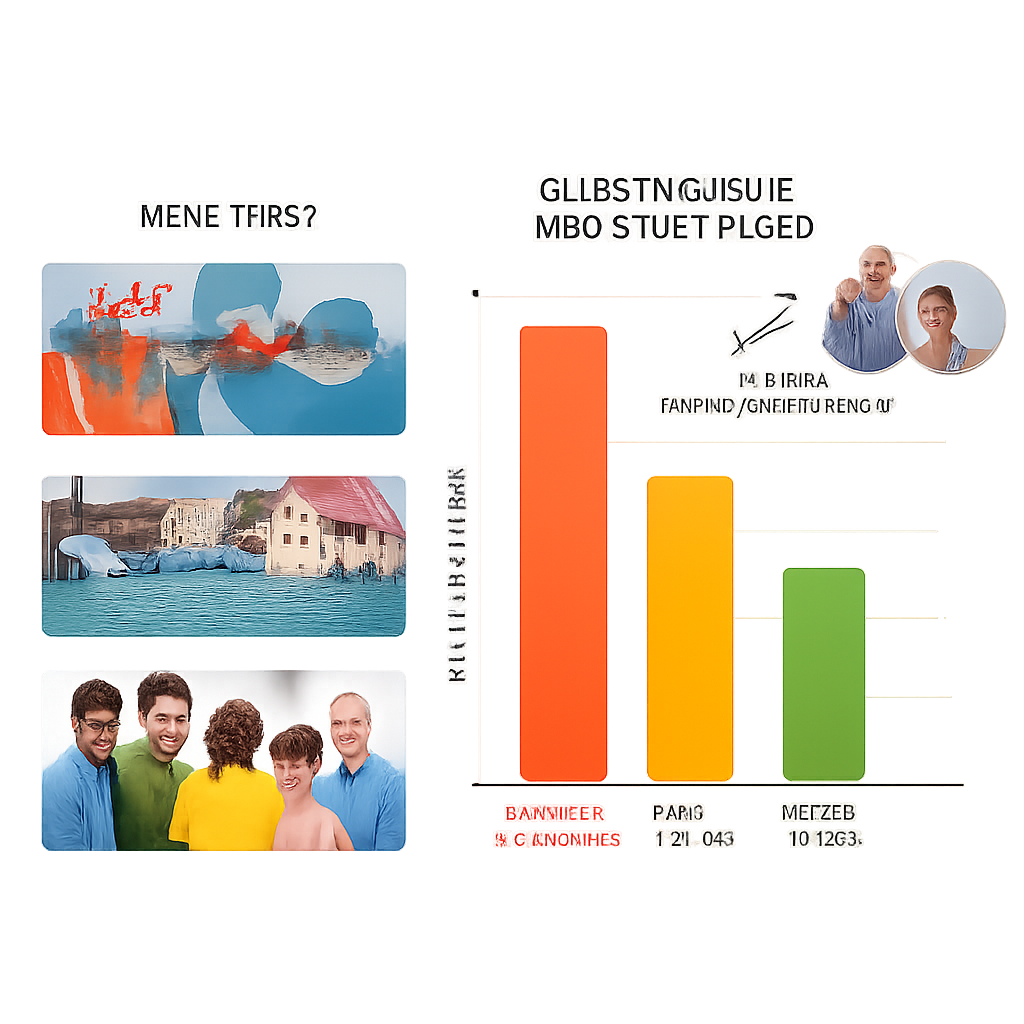
To investigate how to overcome these barriers, the team partnered with Extinction Rebellion UK to design Facebook ads inviting adults living within 30 kilometers of Birmingham, Cardiff, or Oxford to attend free local climate talks. Over one week in each city, 353,998 users were randomly shown one of several versions of the same basic post. The text either used an urgent, forceful tone—an exhortation such as “Don’t stand by idly”—or a more polite, choice-emphasizing request like “Would you like to come along?” Each message was paired with one of three image types: a street protest, a climate impact scene showing flooding, or a collage of diverse people meant to signal inclusivity. The key outcome was whether users clicked the link for more information about the talk, a low-effort but concrete step toward real-world involvement.
Urgent messages and flood images grab attention
Only a small share of users—about 1.7 percent—clicked through, but the sheer size of the audience allowed the researchers to detect clear patterns. Across the full sample, people were less likely to click when the invitation was phrased as a gentle request than when it was an exhortation. This was especially true when the post included images of flooding: in Birmingham and Oxford, the combination of an urgent call to act plus a vivid climate impact photo produced the highest click rates of any treatment. Impact images generally outperformed standard protest photos, and they also did better than the specially chosen diversity images. The only hint that requests sometimes helped came from Birmingham, where a polite tone slightly boosted clicks when paired with diversity imagery, though this effect was small and statistically weak.
Local differences and who responds
When the results were broken down by city, interesting regional differences emerged. While Birmingham and Oxford closely followed the overall pattern—exhortations plus flood imagery worked best—Cardiff residents responded more strongly to exhortations combined with protest photos, with flood images offering no clear advantage. The study could not directly test why, but possibilities include differing personal experiences with extreme weather, the visibility of local activist groups, or local political culture. Another notable finding was age-related: users aged 45 and above were more likely to click than those in their late teens and early twenties. Older adults are more active on Facebook and may be more inclined to click on ads in general, but they are also increasingly visible within climate protests, suggesting an underappreciated pool of potential activists.
What this means for climate movements
For non-specialists, the takeaway is straightforward. In this real-world test, “telling” people to act—using clear, urgent language backed by imagery of concrete climate harms—proved more effective than politely “asking” them, at least for sparking initial curiosity about local climate events. Diversity-focused photos alone did not erase deeper perceptions about who climate movements are for, and different cities showed that one size will not fit all. The study does not show whether clicking on an ad leads to long-term activism, but it demonstrates that careful choices about wording and pictures can meaningfully increase the number of people who take that crucial first step from concern to engagement.
Citation: Shreedhar, G., Hinton, J. & Thomas-Walters, L. Tell don’t ask: how to use social media to mobilise local collective climate action. npj Clim. Action 5, 21 (2026). https://doi.org/10.1038/s44168-026-00344-8
Keywords: climate activism, social media, Extinction Rebellion, online mobilization, climate communication