Clear Sky Science · en
Bacillus spore probiotics for alleviating functional constipation in children: a randomized, double-blind, placebo-controlled trial
Why Parents Should Care About Tiny Gut Helpers
For many families, a toddler who rarely passes stool, cries from tummy pain, and refuses to eat can turn everyday life into a struggle. Usual advice—more fiber, more water, maybe a laxative—often helps only a little or for a short time. This study explores whether a special type of probiotic made from hardy Bacillus spores can safely ease constipation in preschool children, while also supporting appetite, growth, and a healthier gut environment.
Constipation and the Hidden World in the Gut
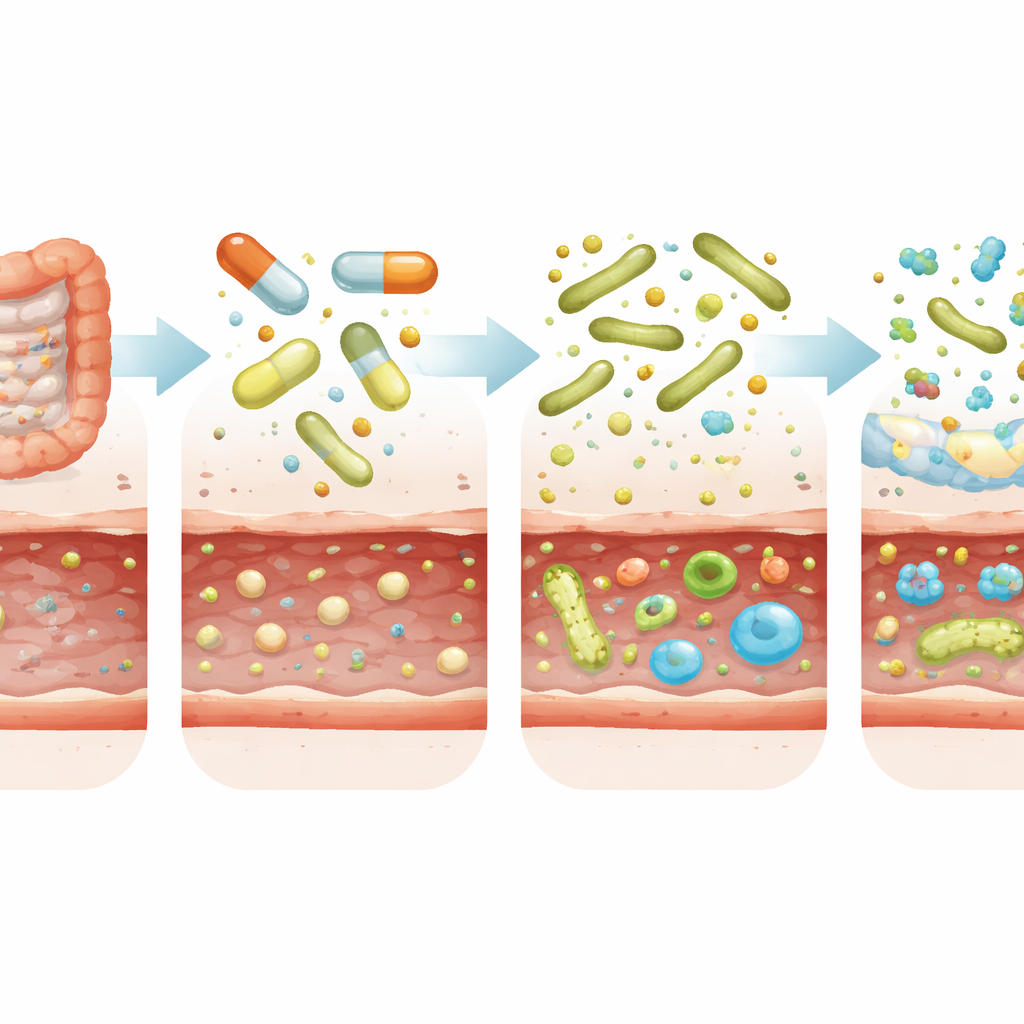
Functional constipation is the most common form of constipation in children. It means kids have infrequent or painful bowel movements without any obvious structural disease, but the impact can be serious: pain, fear of using the toilet, and slower growth. Scientists now know that the trillions of microbes in the gut help control digestion, immunity, and even how quickly food moves through the intestines. When this inner community is out of balance, constipation can follow. Traditional probiotics like Lactobacillus and Bifidobacterium sometimes help, but they are fragile and may not survive stomach acid well. Bacillus spores are different: they are tough, can pass through the stomach, and then “wake up” in the intestines, where they may crowd out harmful microbes and support gut health.
Testing Spore-Based Drops in Young Children
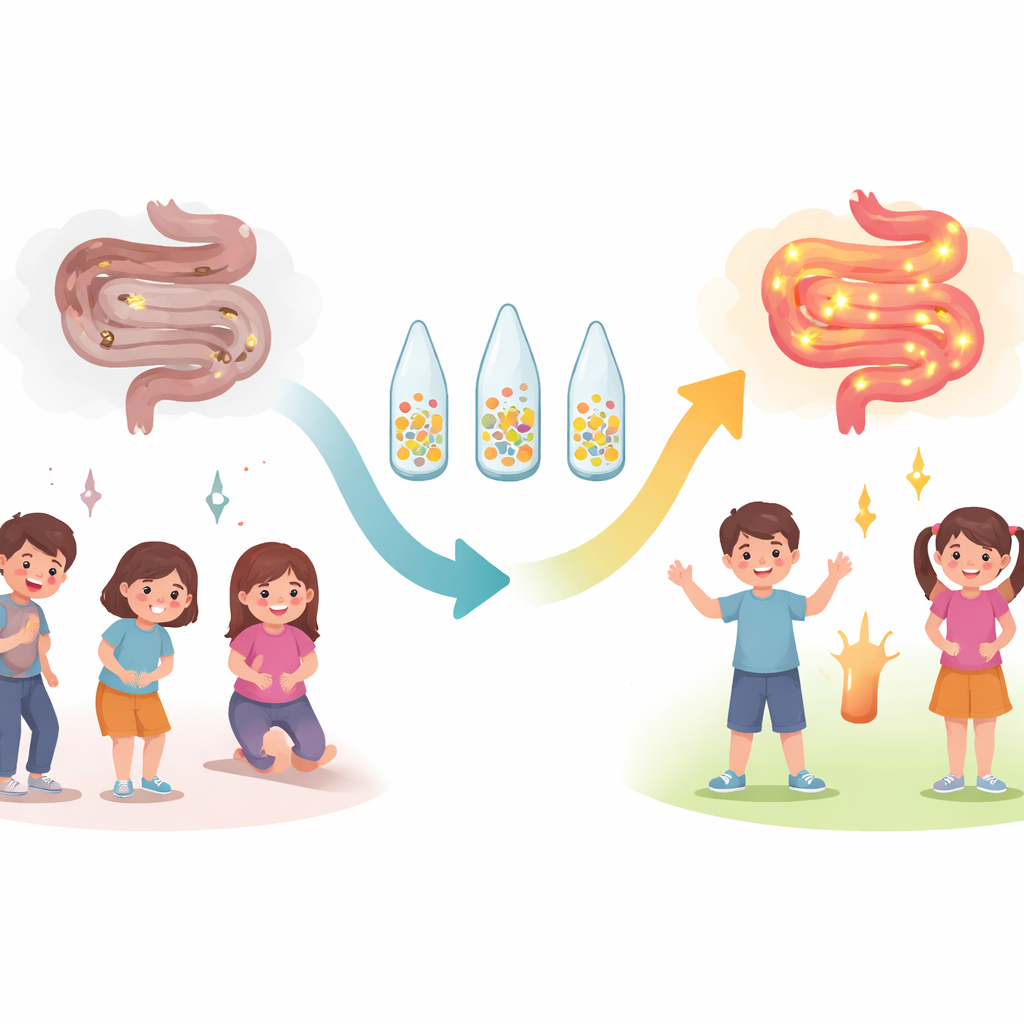
To see if these probiotics could help constipated children, researchers in Vietnam ran a rigorous trial in three preschools. They enrolled 111 children aged 2 to 5 years who met modern diagnostic criteria for functional constipation, and randomly assigned them to three groups: one received plain water as a placebo, and the other two received liquid probiotic drops. One probiotic (Kids) contained two Bacillus strains, and the other (PregMom) contained three strains. Children drank two small ampoules per day for four weeks. Neither families nor study staff knew who was getting which product. The team tracked bowel symptoms, appetite, weight, blood markers of inflammation, immune proteins in stool, and the mix of bacteria living in the gut.
Faster, Easier Bowel Movements and Better Eating
Within a week, children taking either probiotic already showed fewer constipation symptoms, and by 28 days the differences were striking. The share of children still meeting the definition of constipation dropped almost fourfold in the Kids group and more than fivefold in the PregMom group, compared with only a modest improvement in the placebo group. Put simply, treating about two children with either probiotic prevented one extra case of constipation by the end of the month. Children who took the probiotics also tended to eat better: parents reported less food refusal and shorter mealtimes, especially with the three-strain product. On average, children in the probiotic groups gained about 300 grams over four weeks, while those on placebo did not gain weight, and the risk of being underweight declined most in the PregMom group. Importantly, no side effects such as diarrhea, fever, or allergic reactions were seen.
Calmer Immunity and a Friendlier Microbiome
Beyond symptom relief, the researchers looked inside the body’s defense system. In the probiotic groups, levels of two inflammatory messengers in the blood, IL-6 and IL-23, fell over the month, while levels of IL-10, a calming signal, rose. Another inflammatory signal, IL-17, rose only in the placebo group. In the stool, levels of IgA—a key antibody that coats the gut lining and helps keep microbes in check—roughly doubled in children taking probiotics but barely changed in those on placebo. When the team examined gut bacteria using genetic sequencing, they found that probiotics nudged children’s microbiomes closer to those of healthy peers. Beneficial bacteria such as Bifidobacterium, Ruminococcus, and Akkermansia increased, while potentially harmful species like certain Clostridium and Haemophilus dropped, suggesting a shift toward a more protective, better-functioning gut community.
What This Means for Families
In everyday terms, this study suggests that a month of multi-strain Bacillus spore probiotics, taken as simple liquid drops, can safely help constipated preschool children have more regular, less painful bowel movements, eat better, and gain weight more appropriately. At the same time, these products appear to calm low-grade inflammation and rebuild a healthier balance of gut microbes. While the study was relatively short and done in one region, it adds to growing evidence that targeting the microbiome can be a powerful, child-friendly way to tackle constipation—especially in places where access to specialist care and long-term medicines is limited.
Citation: Nguyen, H.T.L., Hoang, H.T., Le, D.P. et al. Bacillus spore probiotics for alleviating functional constipation in children: a randomized, double-blind, placebo-controlled trial. Commun Med 6, 148 (2026). https://doi.org/10.1038/s43856-026-01517-6
Keywords: childhood constipation, probiotics, gut microbiome, Bacillus spores, pediatric nutrition