Clear Sky Science · en
Temperatures around conception affect metabolic health in adulthood
How the Weather Before You Were Conceived May Shape Your Waistline
Most of us blame our weight and cholesterol on what we eat or how much we exercise. But this study suggests that a tiny slice of time long before we were born—the weeks just before conception, and how cold or warm they were—may quietly nudge our bodies toward better or worse metabolic health decades later. By linking historical weather records with the health data of hundreds of thousands of adults in the UK, the researchers reveal that being conceived during an unusually chilly spell is associated with slightly leaner bodies and healthier blood fat levels in midlife.
The Hidden Power of “Good” Fat
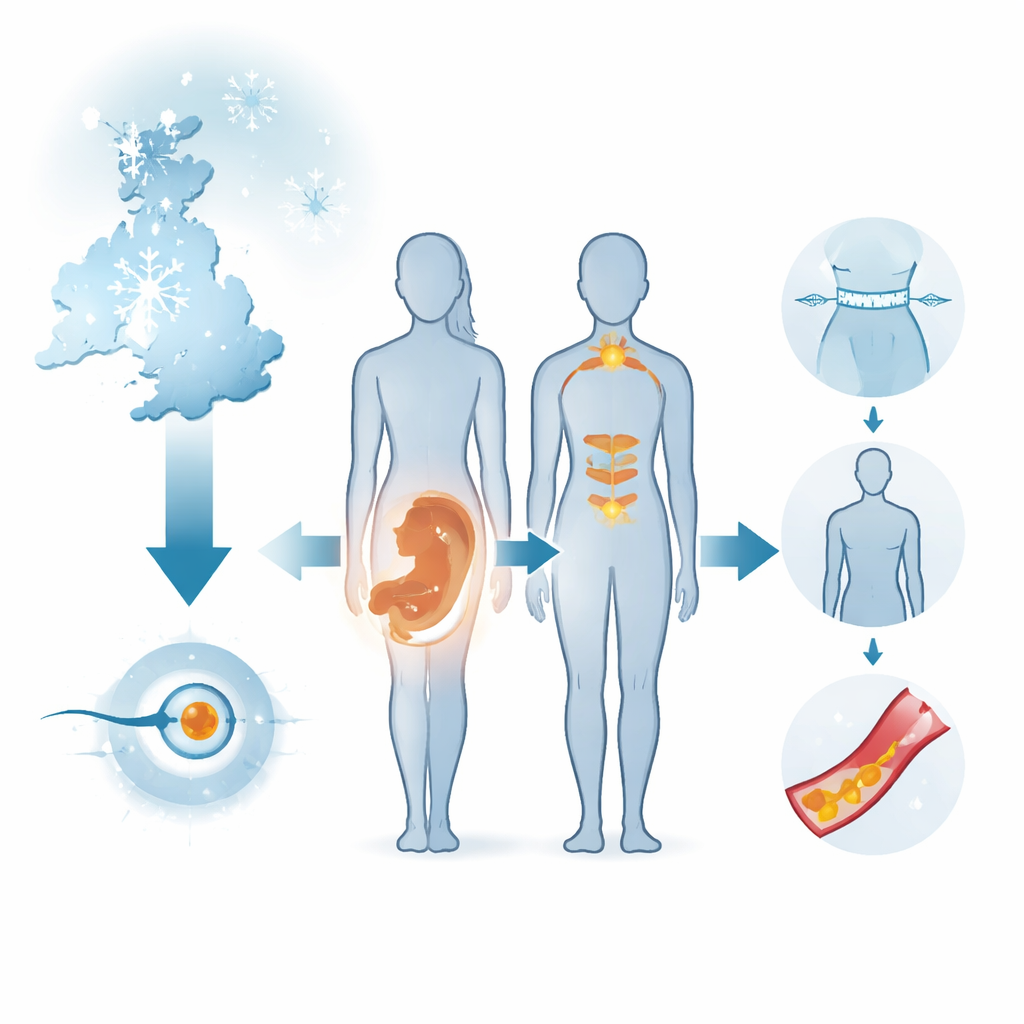
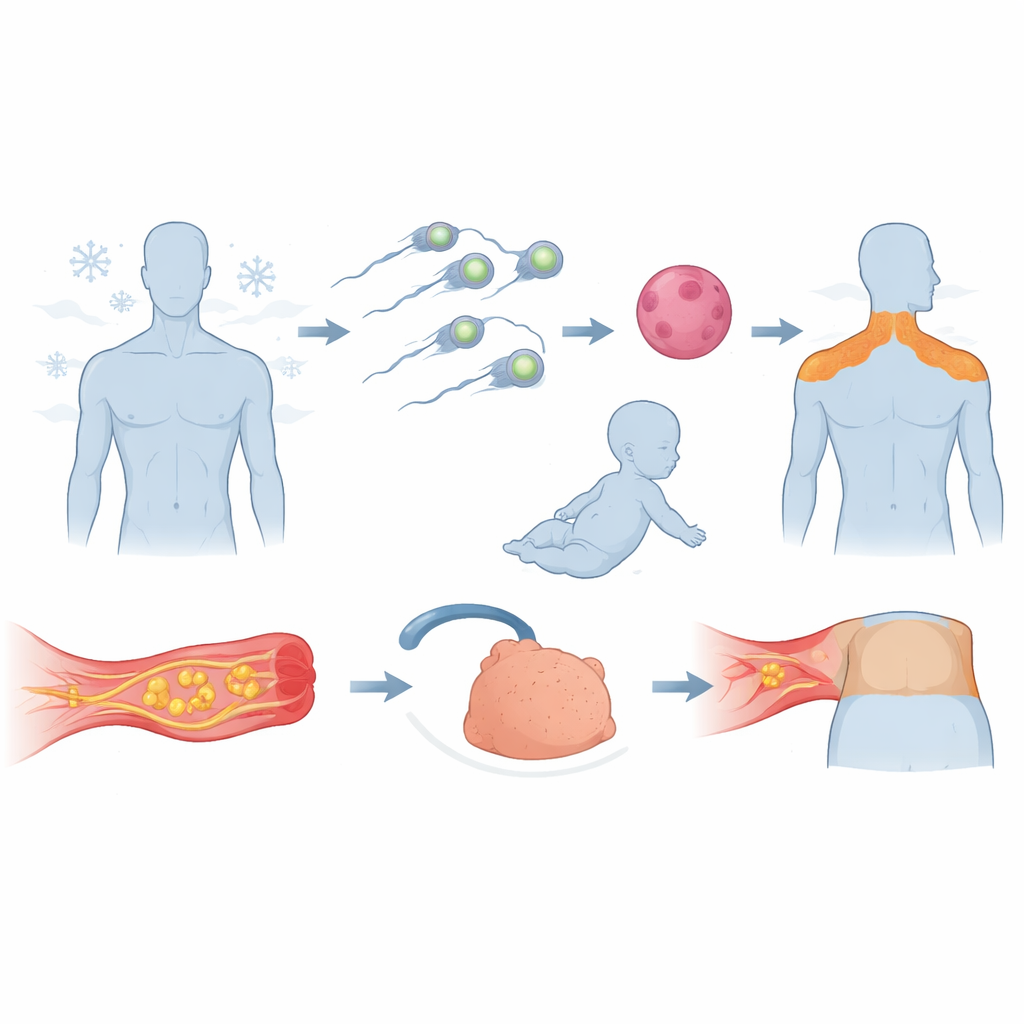
At the heart of this story is brown fat, a special kind of body fat that burns energy to produce heat rather than simply storing calories. Unlike ordinary white fat, brown fat helps us stay warm in the cold by turning fatty acids and sugar into heat, a process called non-shivering thermogenesis. People with more active brown fat tend to have lower body mass index, lower blood sugar, and lower levels of blood fats such as triglycerides and cholesterol. Experiments in mice have shown that when fathers are exposed to cold before conception, changes in their sperm can lead to offspring with more active brown fat and higher metabolism. This raised the question: could a similar process be at work in humans conceived during colder-than-usual periods?
Using Millions of Weather Readings and Thousands of Birthplaces
To answer this, the authors combined health information from about 437,500 UK Biobank participants—men and women born between 1934 and 1971—with detailed daily temperature records from 94 weather stations across the United Kingdom. They estimated each person’s date of conception by counting back from their date of birth and then calculated how much colder or warmer the weather was compared with the long-term average for that specific place and day of the year. Instead of just looking at the season, which is tied to social patterns like holidays or work schedules, they focused on short-term temperature deviations, which are more like natural “random shocks” of weather. They examined several time windows, from the estimated day of conception to periods stretching from five weeks before to three weeks after conception, to capture when the father’s sperm might have been most sensitive to cold.
Colder Conception, Healthier Middle Age
The researchers then asked whether those early temperature deviations were tied to key measures of metabolic health collected when participants were in their 50s and 60s. These measures included body mass index, waist circumference, an indicator of long-term blood sugar (HbA1c), and blood levels of triglycerides and total cholesterol. After taking into account sex, birth year, year of health assessment, and fixed characteristics of each region and birth month, a clear pattern emerged. Adults who had been conceived during colder-than-usual periods tended to have slightly lower body mass index, smaller waists, and lower triglycerides and total cholesterol. The link with long-term blood sugar was weaker, but pointed in the same direction. The effects were modest for each degree of temperature change but consistent across multiple analyses, including those that looked at the odds of crossing risk thresholds for heart disease and type 2 diabetes.
Ruling Out Other Explanations
Because this is an observational study, a big challenge is separating temperature itself from other factors that might vary with weather or season, such as who chooses to have children when. The authors tested many possible sources of bias. They repeated the analyses using different ways of assigning temperatures from weather stations, looked separately at men and women, and examined only winter conceptions. They found similar patterns each time. They also tested outcomes that should not plausibly be affected by pre-conception temperature, such as self-reported birth weight and number of siblings, and found no meaningful links. This suggests that the associations with adult metabolic health are not merely statistical flukes or side effects of other social trends.
What This Means for a Warming, Well-Insulated World
For a layperson, the main takeaway is that even small, temporary changes in the environment before conception may leave a biological imprint that lasts a lifetime. The findings are consistent with the idea that cold spells before conception can “prime” the next generation to develop more active brown fat, helping them burn energy more efficiently and maintain healthier levels of body weight and blood fats. As outdoor temperatures rise with climate change and indoor environments become ever warmer and more insulated, future children may experience less of this beneficial cold exposure. Although the differences per degree are modest, spread over whole populations they could subtly shift rates of obesity and heart disease. In short, the warmth of our homes and climate may shape not only our comfort today, but also the metabolic health of tomorrow’s adults.
Citation: Münz, T.S., Pradella, F., Lambrecht, N.J. et al. Temperatures around conception affect metabolic health in adulthood. Commun Med 6, 172 (2026). https://doi.org/10.1038/s43856-026-01496-8
Keywords: brown fat, metabolic health, early life environment, climate change, epigenetics