Clear Sky Science · en
A multi-country epidemiological analysis of mortality from landmines and other explosive ordnance
Hidden Dangers Beneath Everyday Life
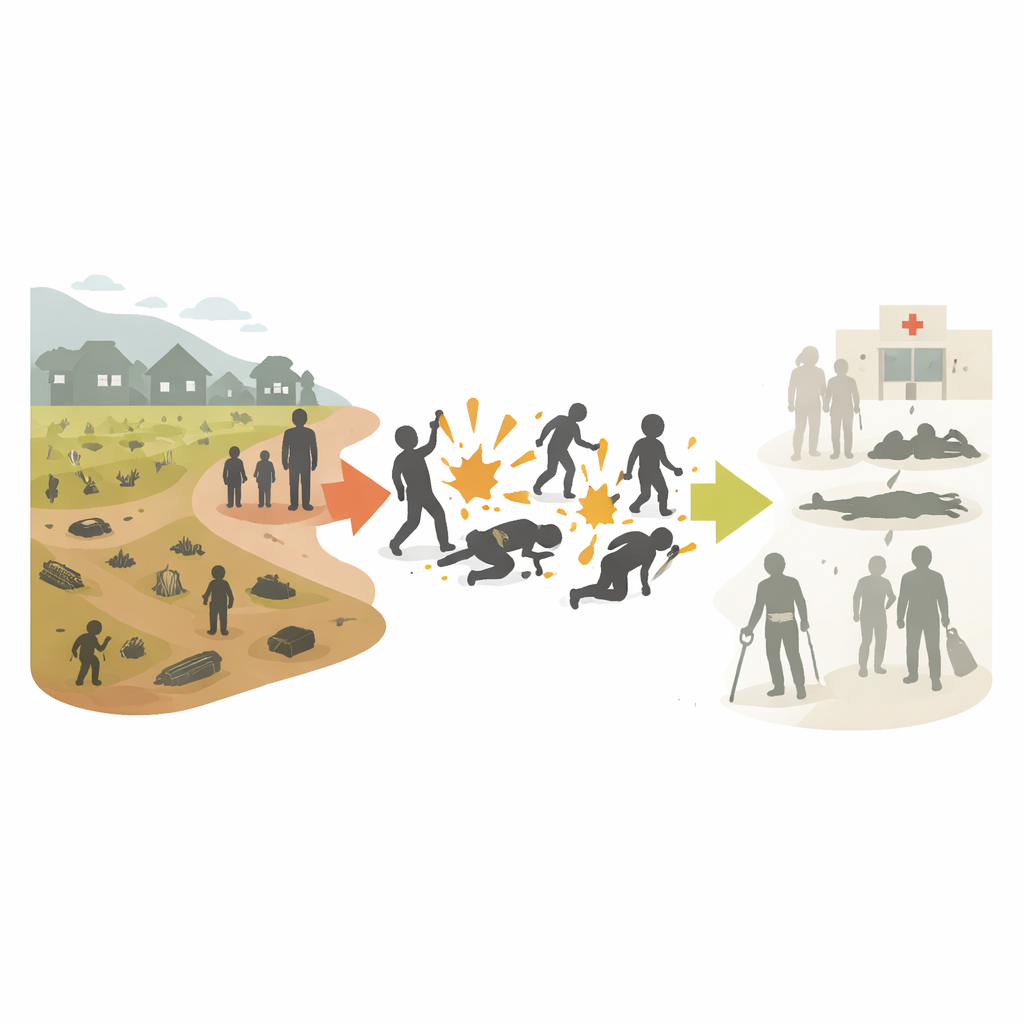
In many parts of the world, the dangers of war do not end when the shooting stops. Unseen explosives left behind in fields, beside roads and near homes continue to kill and injure people going about their daily lives. This study pulls together data from 17 countries to answer a stark question: who is most likely to die when these hidden weapons explode, and how deadly are different types of devices? The answers matter for families, health workers and policymakers trying to prevent needless deaths long after peace agreements are signed.
Where the Numbers Come From
The researchers examined records of 105,913 people who were killed or injured by landmines, improvised explosive devices and other leftover munitions in low- and lower‑middle‑income countries. These records were collected over many years by national mine‑action centers, United Nations agencies and humanitarian organizations working to clear explosives and assist victims. For each casualty, basic details were noted: age, sex, whether they were a civilian or part of the military or a demining team, what they were doing at the time, and what kind of explosive was involved. By comparing those who died with those who survived, the team calculated how often these incidents are fatal and which groups are at highest risk.
How Deadly Are Leftover Explosives?
The analysis found that explosions from these devices are alarmingly lethal: on average, nearly two out of every five people harmed (38.8%) died from their injuries. This rate is far higher than what is typically seen in well‑resourced military or civilian trauma systems, where only a small fraction of blast‑injured patients die. Most of the casualties in this study were civilians, not soldiers, and they also faced a higher risk of death than members of the military or professional deminers. Many incidents occurred during everyday activities such as farming, traveling, collecting water or food, or simply standing nearby when an old shell or bomb went off.
Who Faces the Greatest Risk?
Although men and boys made up the vast majority of those harmed—more than 88 percent of all casualties—women and girls were more likely to die when they were injured. After taking age and explosive type into account, females still had higher odds of death than males, suggesting that factors such as poorer access to timely care or social barriers might play a role. Children overall were less likely to die than adults when injured, but this did not mean they were safe. Children were more at risk of death when explosions happened during active fighting, while they were playing, or when they were simply bystanders. Older adults, particularly those between 45 and 64 years, had the highest chances of dying after an explosion, reflecting how age‑related health problems and limited services can make survival less likely.
Not All Explosives Are Alike
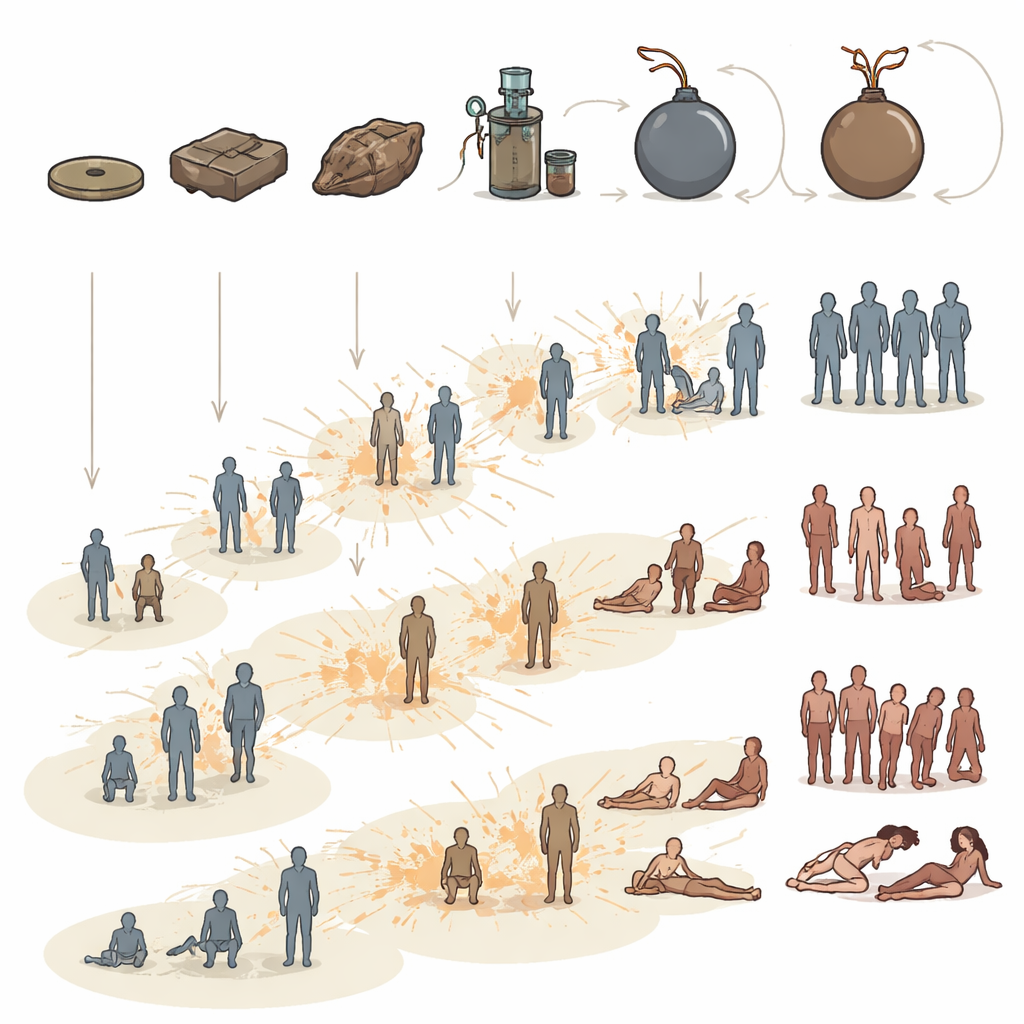
The study also compared the deadliness of different weapons. Traditional antipersonnel landmines, which are often designed to maim rather than kill, had the lowest death rate among those injured by them, although they still caused many serious wounds. In contrast, unexploded bombs and shells, as well as improvised explosive devices built from everyday materials, were much more likely to kill when they detonated. When the researchers adjusted for country and year, improvised devices stood out as especially deadly, with far higher odds of causing death than standard mines. These devices are frequently triggered remotely and can be packed with large explosive charges or extra metal to increase harm.
What This Means for Communities and Care
For people living in affected regions, this study confirms that explosive remnants of war are not just scattered hazards but a major, ongoing public health threat. The high death rates—especially among civilians, women, older adults and those struck by improvised or unexploded devices—highlight where prevention and medical support are most urgently needed. Clearing contaminated land, warning communities about risks and strengthening local emergency and surgical care could save many lives. In plain terms, the research shows that these hidden weapons are both deadly and unfair in whom they hurt most, and that better preparation and targeted care offer a real chance to turn potential deaths into survivable injuries.
Citation: Pizzino, S., Durham, J., Wild, H.B. et al. A multi-country epidemiological analysis of mortality from landmines and other explosive ordnance. Commun Med 6, 140 (2026). https://doi.org/10.1038/s43856-026-01430-y
Keywords: landmines, explosive ordnance, war injuries, civilian casualties, public health