Clear Sky Science · en
Global Disease Burden of Traumatic Joint Dislocation from 1990 to 2021 and its prediction to 2045
Why Joint Injuries Matter to Everyday Life
Most people think of a dislocated joint as a painful but short‑lived mishap on the playing field or in a car crash. This study shows that hip, knee, and shoulder dislocations are far more than one‑off emergencies: they leave millions of people worldwide living with lasting pain and disability, and they strain health systems, especially in poorer countries. By tracking these injuries across more than 30 years and into the future, the authors reveal who is most at risk, how the burden is shifting between men and women and rich and poor nations, and where prevention and treatment could make the biggest difference.
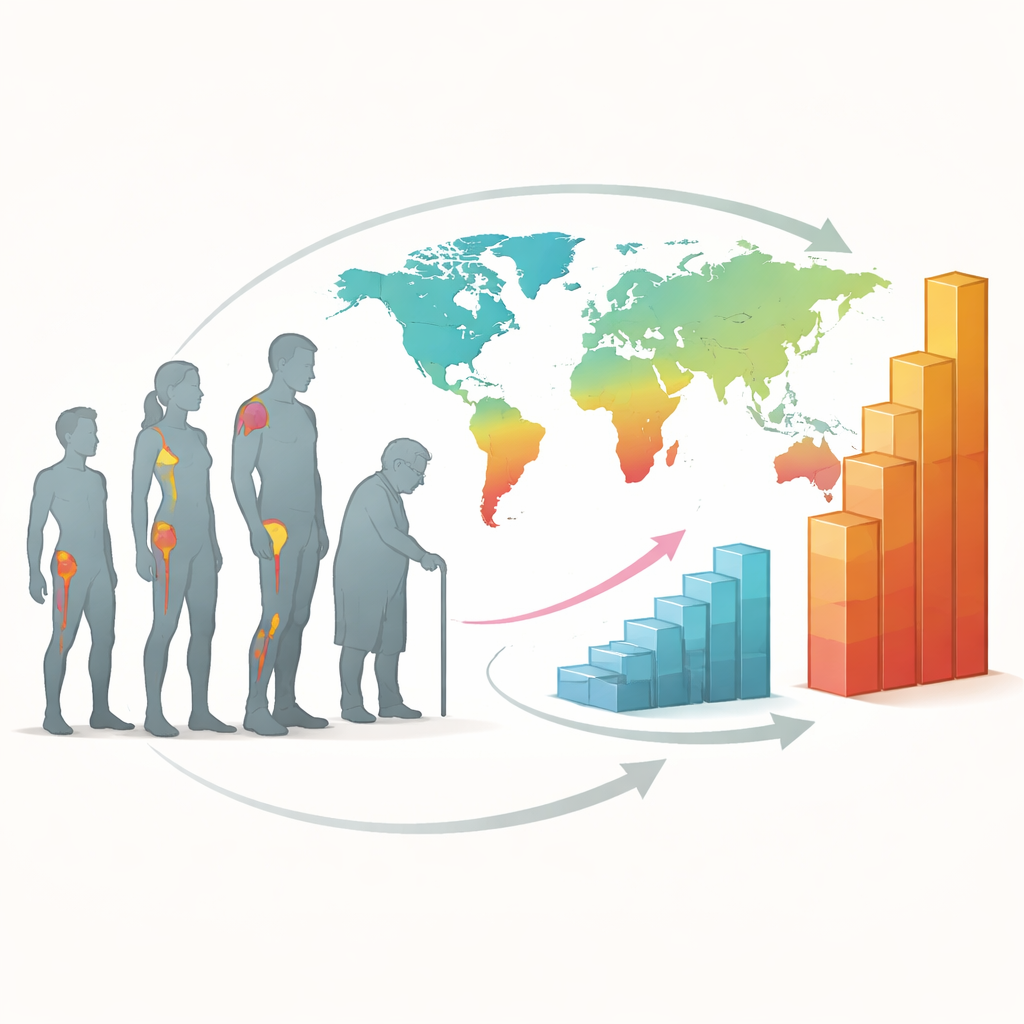
How the Study Took a Global View
To see the big picture, the researchers drew on the Global Burden of Disease project, a massive international effort that compiles health data from hospitals, surveys, death records, and insurance claims in 204 countries and regions from 1990 to 2021. Sophisticated statistical models were used to fill in gaps where data were sparse and to make fair comparisons between countries with very different populations and age structures. Instead of just counting how many injuries occurred, the team focused on “years lived with disability,” an indicator of how much healthy life is lost when a person continues to suffer from pain, stiffness, or limited movement long after the joint has been put back in place.
More Cases, But Slower Risk Per Person
The analysis shows a striking pattern: between 1990 and 2021, the total number of hip, knee, and shoulder dislocations and the years lived with disability from them all went up, yet the rates per 100,000 people actually went down slightly. In other words, population growth and aging are driving more cases overall, but an individual’s average risk has eased a bit. Hip dislocations created the largest burden of long‑term disability and were most common in people over 30, especially those over 80. Knee and shoulder dislocations were more frequent in children, teens, and young adults, often linked to sports, work, and road traffic injuries, but also showed a second surge in older age as falls became more common.
Who Bears the Heaviest Load
Across all three joints, men still have more dislocations and more disability than women, largely because they are more exposed to high‑energy trauma from contact sports, heavy labor, and traffic crashes. Yet women’s rates are rising faster, particularly in middle‑ and older‑age groups, which the authors suggest may reflect changing lifestyles and persistent barriers to timely care. A key finding is the deep inequality between countries: places with lower socio‑demographic development—measured by income, education, and birth rates—carry a disproportionate share of the burden. These regions often have more hazardous jobs, fewer protections on the roads, weaker health systems, and less access to rehabilitation, meaning that an injury that might be managed well in a wealthy country can lead to lifelong disability elsewhere.
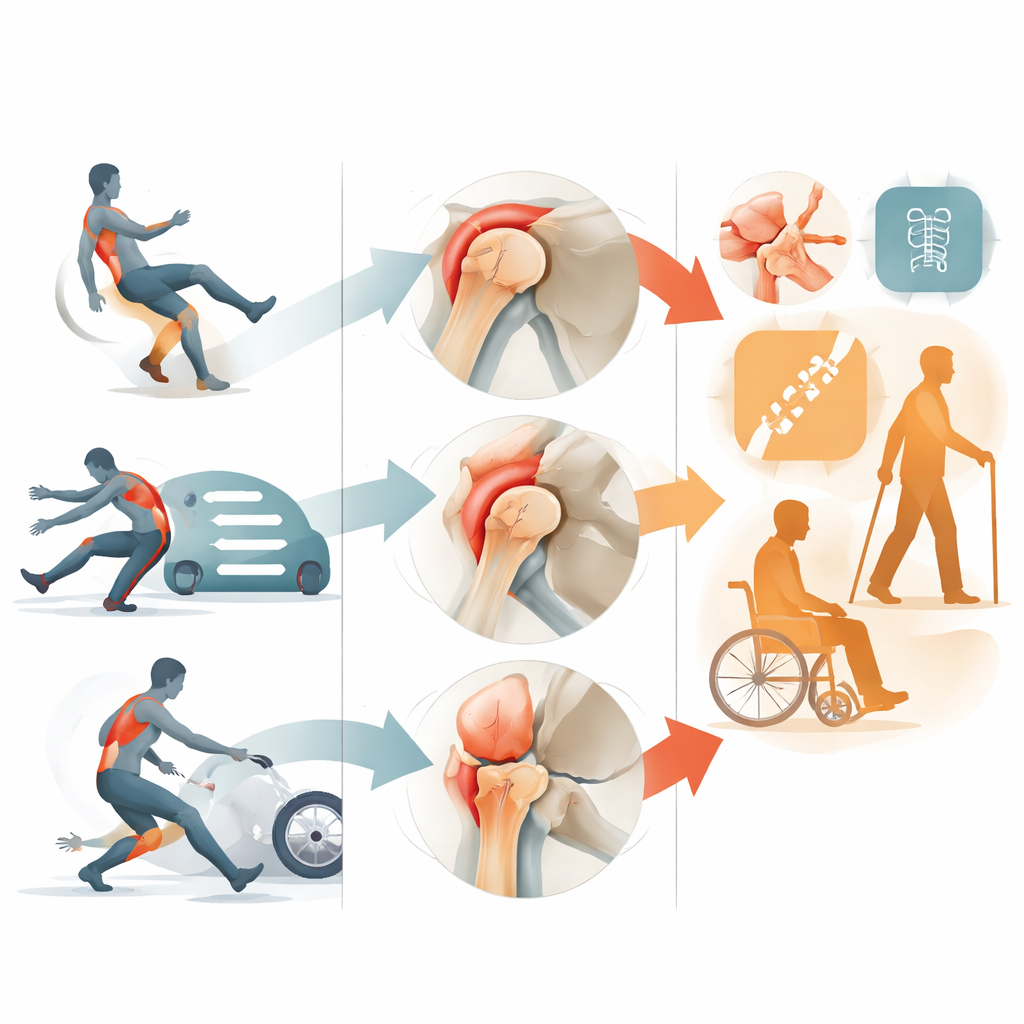
Why Causes and Context Matter
The study also traces what is driving these injuries. Falls and road traffic injuries emerge as the dominant causes of dislocations worldwide, especially for older adults whose weaker muscles and bones make them more vulnerable. Contact injuries, including those from sports and interpersonal violence, play a larger role in hip and knee dislocations, while mechanical forces such as heavy loads or machinery are particularly important for shoulder injuries. By comparing each country’s burden with what would be expected for its level of development, the authors identify large “efficiency gaps” in many nations—evidence that better policies, safer environments, and improved medical care could substantially reduce disability even without major economic growth.
What This Means for the Future
Using age‑period‑cohort modeling, the researchers project that by 2045 the absolute numbers of people living with joint dislocations and their consequences will continue to rise, even as the risk per person slowly declines. The greatest unmet needs are in low‑income regions, among older adults at high risk of falling, and among younger people in high‑risk jobs or sports. For readers, the takeaway is clear: traumatic hip, knee, and shoulder dislocations are a global, long‑lasting problem, not just a painful moment in the emergency room. Targeted prevention—safer roads, fall‑prevention programs for seniors, protective measures in sports and workplaces—combined with timely treatment and rehabilitation can significantly cut the toll these injuries take on people’s mobility, independence, and quality of life.
Citation: Huang, J., Tang, H., Chen, J. et al. Global Disease Burden of Traumatic Joint Dislocation from 1990 to 2021 and its prediction to 2045. Commun Med 6, 135 (2026). https://doi.org/10.1038/s43856-026-01418-8
Keywords: joint dislocation, hip knee shoulder injuries, global health burden, falls and road injuries, musculoskeletal disability