Clear Sky Science · en
Assessments of social vulnerability on central nervous system cancer disparities in the United States
Why Your Neighborhood Matters for Brain Cancer
When we think about cancer, we often focus on genes, tumors and treatments. But this study asks a different question: how much does the place you live, the money you earn, the people in your home, and your ability to get around shape your chances of surviving brain and other central nervous system cancers? By linking nationwide cancer records with a government score of community hardship, the researchers show that where and how people live in the United States is closely tied to how long they live after a serious brain cancer diagnosis.

A National Look at Brain and Nerve Cancers
The team examined records from more than 116,000 adults diagnosed with primary central nervous system cancers—tumors that start in the brain, spinal cord or eyes—between 1975 and 2017. These records come from a large U.S. cancer registry that tracks who gets which cancers, what treatments they receive and how long they survive. The researchers then combined this information with a Centers for Disease Control and Prevention tool called the Social Vulnerability Index, which scores every U.S. county on how hard it might be for residents to bounce back from disasters and health crises.
Many Kinds of Disadvantage, One Combined Score
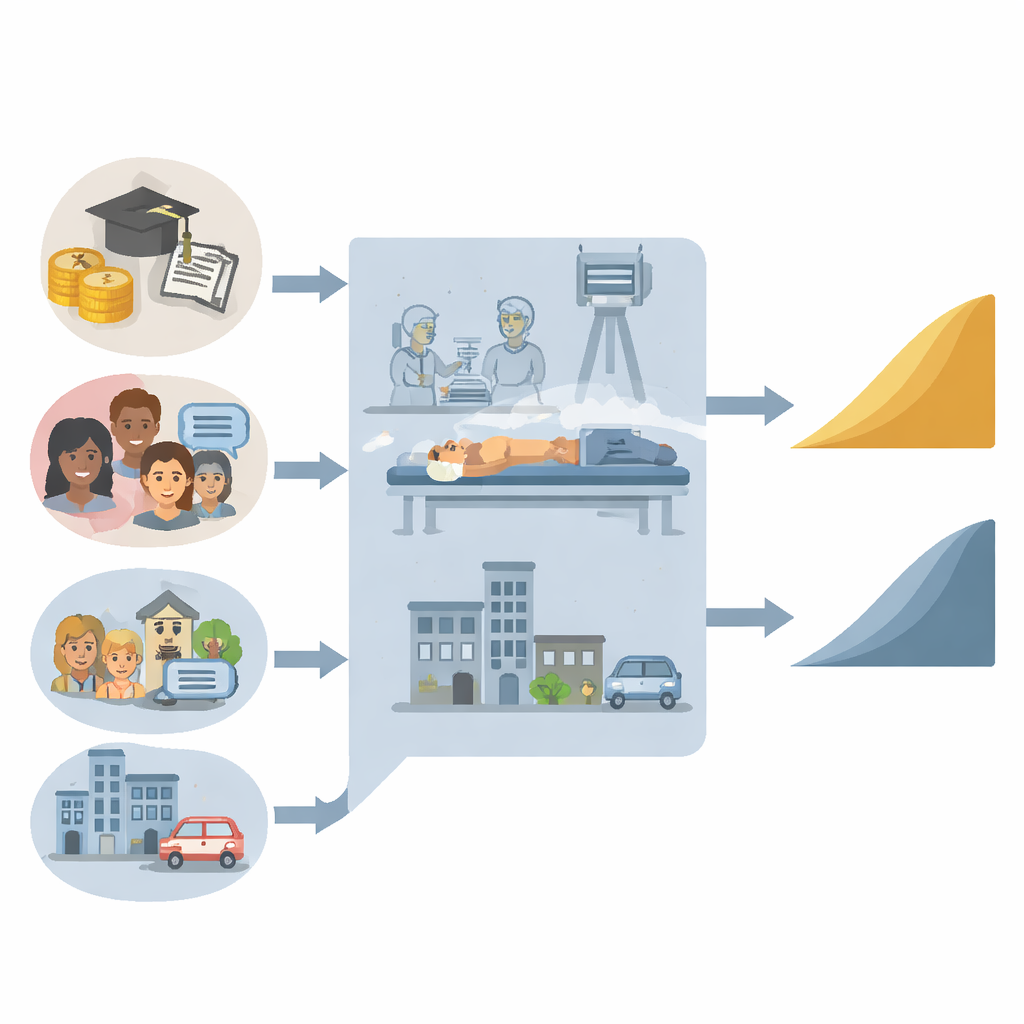
The Social Vulnerability Index does not look at medical care directly. Instead, it measures 15 everyday features of communities, grouped into four themes: income and employment, minority and language status, household makeup (such as how many children, older adults or people with disabilities live there) and housing and transportation (for example, crowded homes or limited access to a car). Each county receives a score from very low to very high vulnerability. The researchers sorted patients into five equally sized groups based on how vulnerable their counties were, from the least to the most challenged.
Higher Vulnerability, Shorter Lives
Across every major type of central nervous system cancer they studied, patients living in the most socially vulnerable counties survived for shorter periods than those in the least vulnerable areas. Depending on the tumor type, average survival time dropped by about 22% to 46% between the lowest and highest vulnerability groups. In other words, two people with similar brain tumors but living in very different community conditions could face very different odds of long-term survival, even before considering their personal medical histories.
Gaps in Surgery and Radiation Treatment
The study also uncovered differences in the treatments people received. Patients from more vulnerable counties were less likely to undergo major brain surgery or to receive radiation therapy when those treatments were considered standard care for their tumor type. These treatment gaps appeared across several kinds of malignant brain tumors. Certain aspects of vulnerability, such as language barriers and transportation and housing challenges, were especially tied to lower odds of receiving these key treatments, sometimes even more strongly than income alone.
Which Social Factors Matter Most
By looking separately at each of the four themes in the Social Vulnerability Index, the researchers could see which kinds of disadvantage were most strongly linked to poorer outcomes. For survival, strains related to income and work showed the biggest impact, closely followed by issues with housing and transportation and by household structure, such as living alone or in a single-parent home. When it came to surgery and radiation, living in communities with more residents who spoke a minority language or had other language-related challenges, and those with weaker housing and transportation resources, often made the largest difference in whether patients received recommended care.
Turning Data Into Action for Patients
This work does not prove that social conditions directly cause worse outcomes, but it strongly suggests that community-level hardship and barriers are deeply intertwined with who gets full, timely brain cancer treatment and who survives longer. Because the Social Vulnerability Index is publicly available, hospitals, health systems and policy makers can use it to pinpoint counties where extra support—such as language services, transportation help, outreach to high-risk households or targeted funding—could have the greatest effect. In clear terms, the study shows that improving everyday living conditions and access to care may be just as important as new drugs or surgical tools in giving people with brain and nerve cancers a fair chance at better outcomes.
Citation: Fei-Zhang, D.J., Lutfallah, S.C., Mensah, J. et al. Assessments of social vulnerability on central nervous system cancer disparities in the United States. Commun Med 6, 153 (2026). https://doi.org/10.1038/s43856-026-01409-9
Keywords: brain cancer disparities, social vulnerability, health inequities, access to cancer care, social determinants of health