Clear Sky Science · en
Asymptomatic school-age children carry the majority of transmissible Plasmodium falciparum infections
Why Hidden Infections in Children Matter
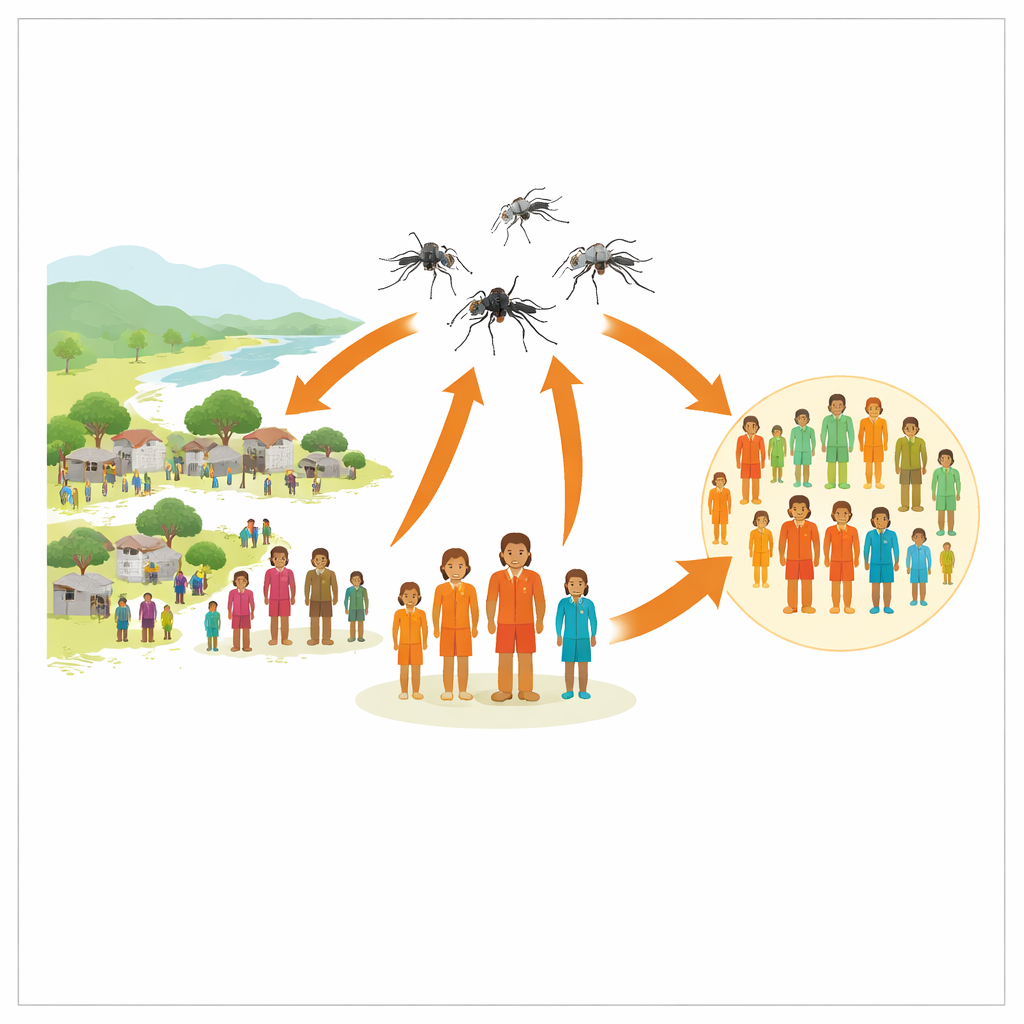
Malaria is usually pictured as a sudden, high fever that sends someone to a clinic for life-saving treatment. But much of the real danger lies in quiet infections that cause few or no symptoms while still feeding the parasite to mosquitoes. This study, carried out in rural Malawi, asks a simple but powerful question: who in the community is actually keeping malaria transmission going? The answer turns out to be school-age children, many of whom feel well but carry the parasite stage that infects mosquitoes.
Following Families Through a Malaria Year
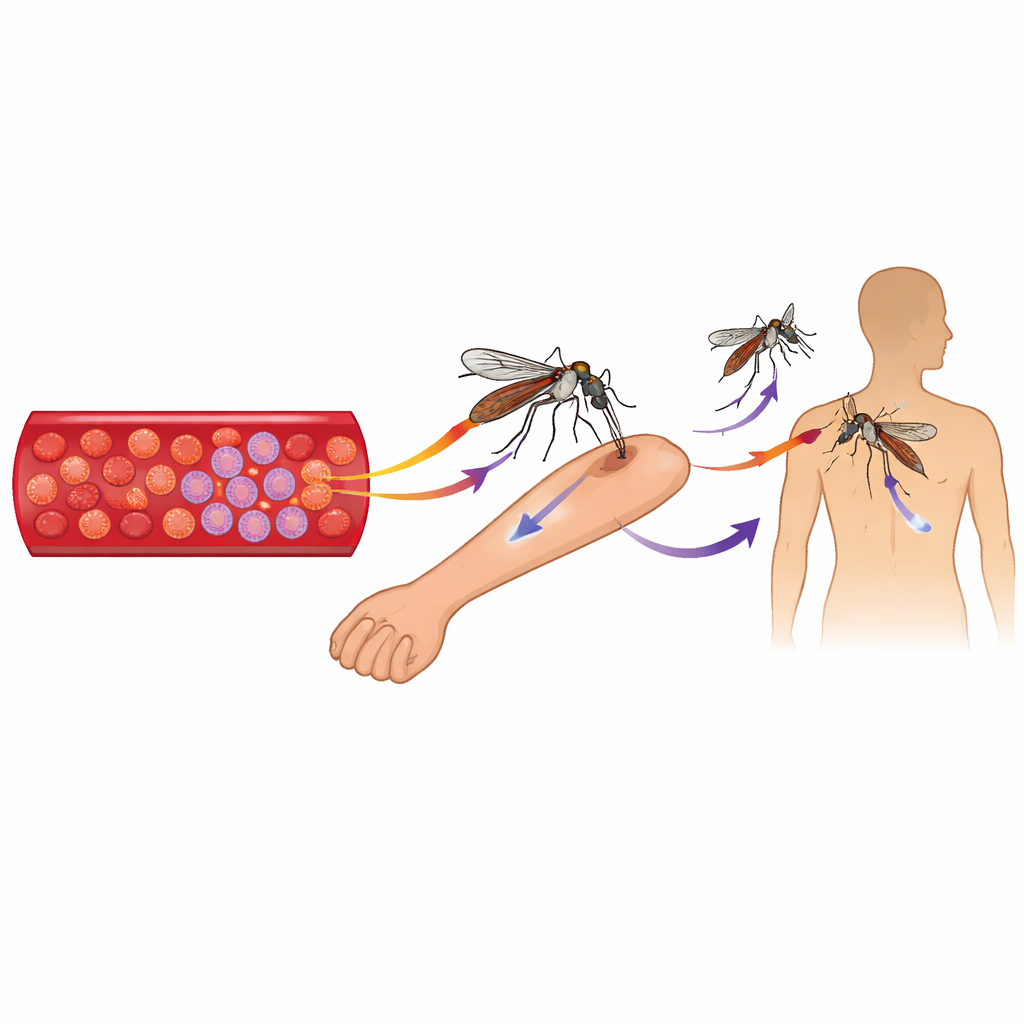
Researchers mapped clusters of neighboring households around two health centers in southern Malawi and invited everyone to take part. Over one year, 947 people from 238 households gave small finger-prick blood samples at regular community visits, and whenever they went to the clinic because they felt sick. Sensitive molecular tests were used to pick up Plasmodium falciparum, the parasite that causes the most severe malaria, and to detect its special sexual stage, called gametocytes, which are the only form mosquitoes can pick up and pass on. By repeating this process thousands of times, the team could see not just who was infected, but who repeatedly harbored the transmissible stage.
Most People Get Infected, Few Truly Spread
Over the year, nearly three-quarters of participants had malaria parasites detected at least once, showing that exposure was common. Yet only about one-third of those infected ever had gametocytes in their blood, and just 23% of all participants were ever found with gametocytes at all. High-density gametocyte infections – the ones most likely to infect mosquitoes – were rarer still, appearing in only about 6% of people. These infections were not scattered evenly. Instead, they clustered in certain individuals who tested positive for gametocytes again and again, and in a small subset of households where multiple members repeatedly carried high levels of transmissible parasites.
School-Age Children as Silent Hubs of Spread
Age turned out to be the strongest and most consistent factor linked to carrying gametocytes. Children between 5 and 15 years old were far more likely than younger children or adults to have infections that contained gametocytes, and they experienced these infections more often. Even after accounting for how frequently they were infected in general, school-age children were still more prone to carrying the transmissible stage and to doing so at densities that matter for mosquito infection. When the team tallied the total amount of gametocytes in the community over time, more than half were found in school-age children, who made up only about one-third of the local population. Younger children under five also carried a disproportionate share, but their contribution was still smaller, and adults accounted for only a tiny fraction.
Why Routine Checkups Beat Clinic Visits
The study distinguished between routine community visits and clinic visits when people felt ill. Surprisingly, most gametocytes were found during the routine checkups, when participants often reported no symptoms, and not during clinic visits. In other words, many people who appeared healthy were quietly infectious to mosquitoes. This contrast was particularly striking in young children, who harbored many gametocytes during scheduled visits but comparatively few when they showed up at the clinic. The findings imply that treating only those who come to health facilities with fever will miss a large reservoir of transmission, which lives mainly in symptom-free school-age children.
Targeting the Right Children to Cut Transmission
By combining who was infected, how often they had gametocytes, and how dense those gametocytes were, the researchers estimated the impact of hypothetical control strategies. They found that if all infections in asymptomatic school-age children could be cleared during the rainy season, when mosquitoes are most abundant, the total amount of gametocytes in the community would drop by about two-thirds. Doing the same for all children under five would cut the gametocyte pool by only about one quarter. The study concludes that school-age children are the main human source sustaining malaria transmission in this setting, and that adding targeted prevention and treatment programs for this age group—alongside continued protection of young children and pregnant women—could significantly accelerate progress toward reducing malaria.
Citation: Buchwald, A.G., Vareta, J., Nwagbata, O. et al. Asymptomatic school-age children carry the majority of transmissible Plasmodium falciparum infections. Commun Med 6, 157 (2026). https://doi.org/10.1038/s43856-026-01407-x
Keywords: malaria transmission, school-age children, asymptomatic infection, Plasmodium falciparum, gametocytes