Clear Sky Science · en
Risk of congenital malformation in newborns from mothers with kidney diseases in a nationwide cohort study
Why this study matters for families
Many women live with kidney problems, and more of them are becoming pregnant thanks to better medical care. But families and doctors still have a pressing question: does a mother’s kidney disease raise the chance that her baby will be born with a serious birth defect? This nationwide study from South Korea followed hundreds of thousands of mothers and babies to provide one of the clearest answers so far—and offers practical guidance for planning and monitoring pregnancies when kidney disease is in the picture.
A closer look at mothers and babies nationwide
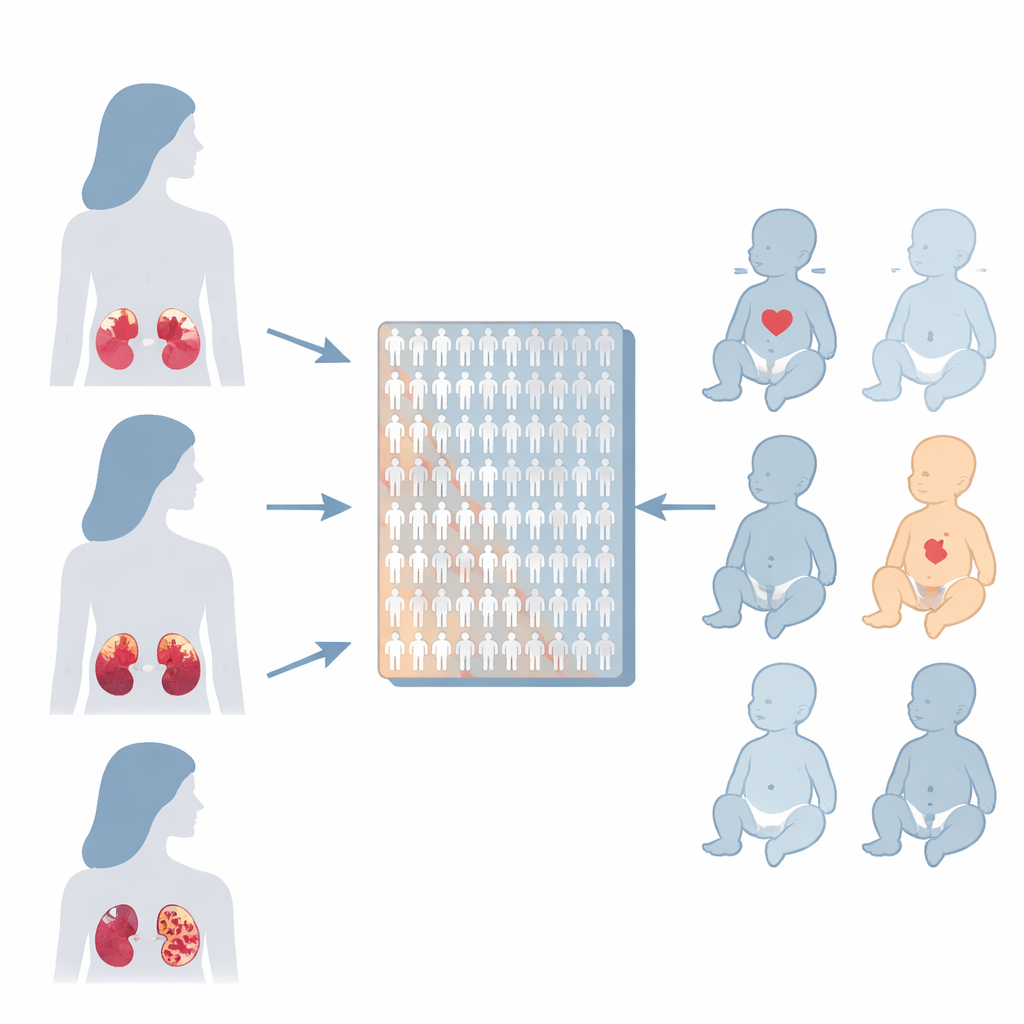
The researchers used South Korea’s National Health Insurance data, which covers almost the entire population, to track pregnancies and births between 2008 and 2017. They focused on women who had clear health records before pregnancy, including lab tests of kidney function. Mothers were divided into three groups: those without kidney disease, those with chronic kidney disease (CKD), and a much smaller group with end-stage kidney disease (ESKD), meaning kidneys that had failed and required dialysis or a transplant. In total, the study analyzed more than 780,000 children born to over half a million mothers—large enough to detect even modest changes in risk.
Measuring birth defects and other influences
The team looked for major congenital malformations—structural birth defects that can cause serious medical, surgical, or social problems—diagnosed during a child’s first year of life. These included problems of the heart, brain and nervous system, digestive system, urinary tract, limbs, and chromosomes, among others. To avoid confusing kidney disease with other risk factors, the researchers adjusted their analysis for many influences known to affect birth defect risk: the mother’s age, whether this was her first or later birth, the baby’s sex, family income, where the family lived, and whether the mother had high blood pressure or diabetes before pregnancy.
What the study found about risk
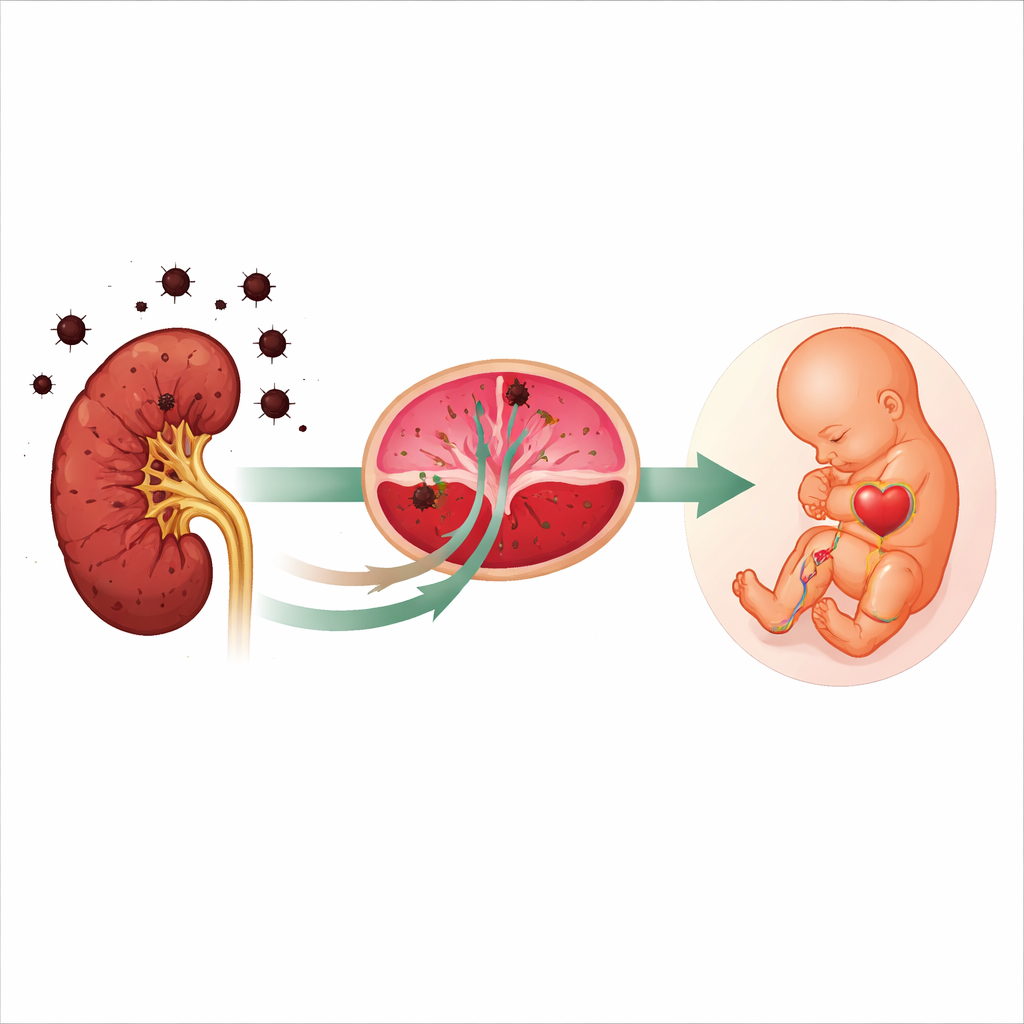
Compared with babies of healthy mothers, babies of mothers with kidney disease were more likely to have major birth defects. About 4.8% of babies born to healthy women had a major defect, compared with 5.3% in the CKD group and 9.7% in the ESKD group. After accounting for age, income, and other conditions, kidney disease itself still stood out as an independent risk factor. For CKD, the odds of a major defect were about 7% higher than in healthy women; for ESKD, the odds were about 70% higher. Among babies of CKD mothers, urinary tract defects in particular were more common, along with some digestive problems and cleft lip or palate. In ESKD, heart defects and chromosomal problems were especially elevated, though the number of such pregnancies was small.
Dialysis, transplants, and added health problems
The study also explored how different treatments for severe kidney failure were linked to risk. Mothers with a kidney transplant had a clearly increased chance of having a baby with a major defect, while mothers on dialysis also showed a higher risk that did not reach clear statistical certainty—likely because there were relatively few dialysis pregnancies. High blood pressure amplified risk in women with CKD: those with both kidney disease and hypertension had a stronger link to birth defects than those with kidney disease alone. This suggests that more than one chronic condition can combine to strain the placenta and fetus, and that careful management of blood pressure may be especially important.
What this means for parents and doctors
For families, the findings do not mean that kidney disease makes a healthy baby impossible—most babies in all groups were born without major defects. But the study shows that kidney disease, especially in its more advanced forms, does raise the chances of serious problems, and that this risk is not completely explained by age, diabetes, or other factors. For doctors, it highlights the need for early counseling before pregnancy, detailed planning of medications, and close monitoring during pregnancy for women with kidney disease. Better understanding of how kidney damage, toxins in the blood, and pregnancy-related changes affect the developing baby could eventually lead to safer treatments and more tailored care for this growing group of mothers.
Citation: Han, S.H., Kim, Z., Jeong, S. et al. Risk of congenital malformation in newborns from mothers with kidney diseases in a nationwide cohort study. Commun Med 6, 149 (2026). https://doi.org/10.1038/s43856-026-01397-w
Keywords: chronic kidney disease, pregnancy, birth defects, maternal health, neonatal outcomes