Clear Sky Science · en
Deep learning using electroencephalogram (EEG) data for diagnosing and predicting SSRI response in major depressive disorder
Why Brain Waves Could Change Depression Care
For millions of people living with major depression, getting better often means enduring a slow and frustrating trial‑and‑error search for the right medication. This study asks a simple but powerful question: instead of guessing, could doctors read patterns in a person’s brain activity to both confirm the diagnosis and predict whether a common antidepressant will actually work for them?
Looking Inside the Brain Without Surgery
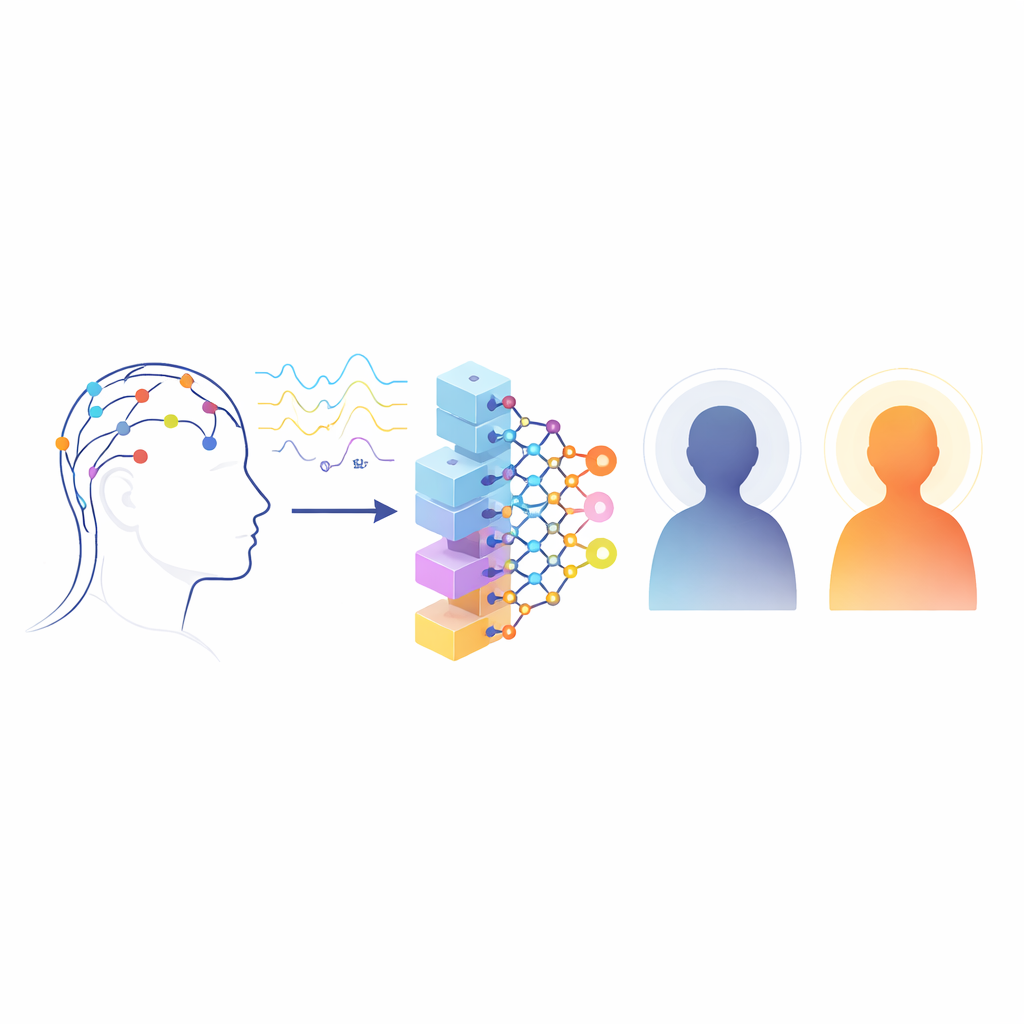
The researchers focused on electroencephalography, or EEG, a century‑old technique that records the brain’s natural electrical rhythms using small sensors placed on the scalp. EEG is already used to diagnose epilepsy and sleep disorders, and it is relatively inexpensive and widely available. Yet in psychiatry it is rarely used to guide treatment, even though depression arises from changes in brain function. The authors argue that this leaves the brain as a “black box” in routine care: doctors see symptoms like sadness and fatigue, but they do not routinely measure what the brain itself is doing.
Teaching Computers to Recognize Depression Patterns
To open that black box, the team turned to deep learning, a form of artificial intelligence that is especially good at spotting subtle patterns in complex data. They gathered resting‑state EEG recordings from six independent groups of volunteers around the world: 146 people without current mental illness and 203 patients with major depression. All recordings were standardized to use just ten shared sensor locations and a modest sampling rate, resembling what could realistically be done in everyday clinics. The deep learning model was trained on part of the data and then tested on brain recordings from people it had never “seen” before, ensuring that it was learning general brain signatures rather than memorizing individuals.
From Signal to Treatment Forecast
Once trained, the model could distinguish depressed patients from healthy volunteers with about 68% accuracy at the level of whole people, not just brief snippets of EEG. More strikingly, when the researchers asked the system to predict which depressed patients would respond to a widely used antidepressant class—selective serotonin reuptake inhibitors, or SSRIs—it correctly separated responders from non‑responders about 79% of the time. In practical terms, simulations suggest that using such a tool to guide whether a patient starts an SSRI or switches to an alternative could raise the initial treatment success rate from roughly 50% to about 70%. That translates into far fewer people spending weeks on a medication that will not help them.
What the Computer “Sees” in Brain Waves
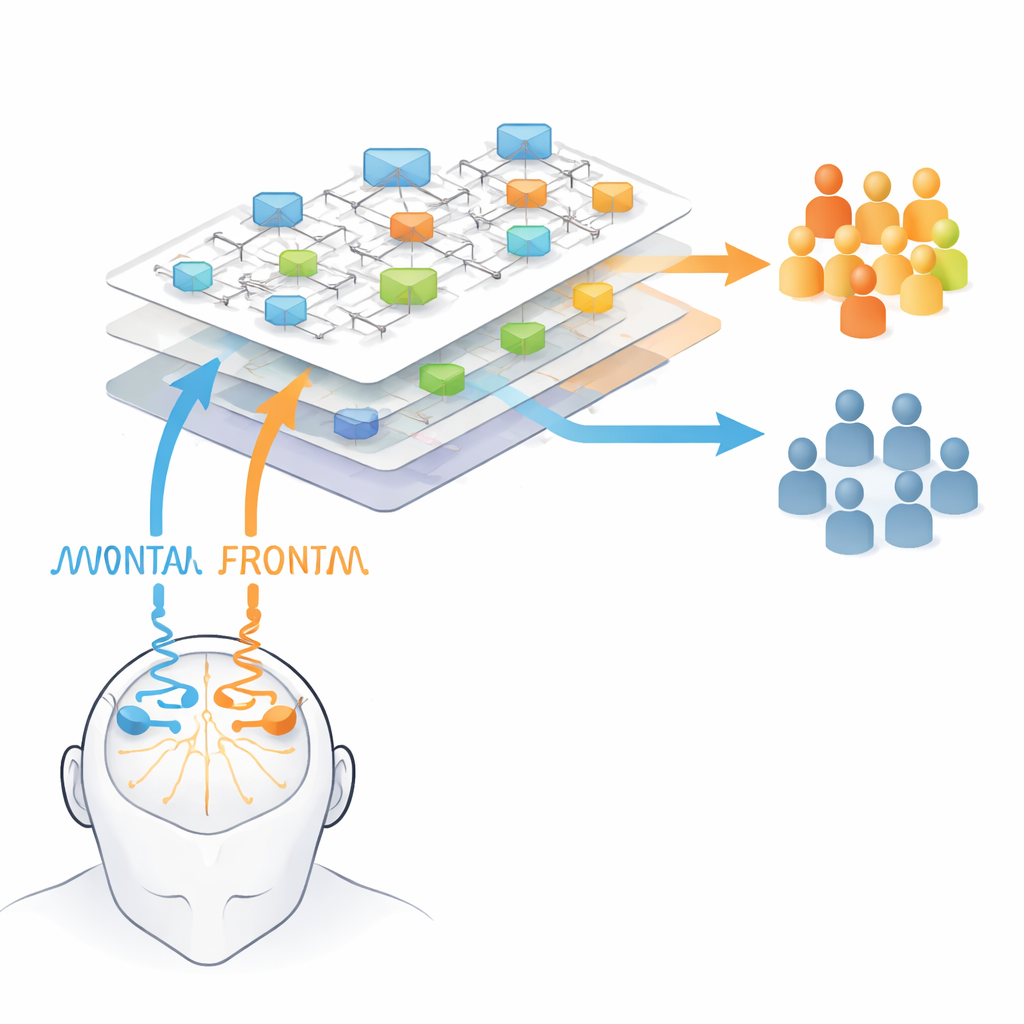
A common criticism of modern AI is that it can be a black box: it makes predictions, but does not explain how. Here, the authors tackled that problem by using a visualization method called Grad‑CAM to highlight which parts of the EEG most influenced the model’s decisions. They found that activity in the so‑called alpha band—gentle brain rhythms in the 8–12 cycles‑per‑second range—over specific frontal and parietal regions was especially important. These areas have been linked in earlier work to emotional regulation and to networks that are overactive in depression. The study also compared the deep learning system with more traditional machine‑learning approaches and another popular EEG‑specific network design. Those simpler models performed notably worse, especially for predicting treatment response, underscoring that the richer deep learning approach was capturing additional, clinically relevant structure in the signals.
Limits, Real‑World Hurdles, and Promise
The authors caution that their work is not a finished diagnostic product. While the models were tested on unseen patients from multiple centers, the datasets still varied in details such as timing of symptom assessments and medication combinations, and they used only ten EEG sensors—too few to pinpoint exact brain sources. The accuracy, although encouraging, is not perfect, and questions remain about how factors like sex differences and co‑occurring disorders might influence the patterns. Yet the study shows that even low‑cost, short EEG recordings can carry enough information for AI to meaningfully assist in both diagnosis and treatment selection.
What This Could Mean for Patients
In plain terms, this research suggests that a brief, inexpensive brain‑wave test analyzed by a smart computer program could help doctors move from guesswork toward personalized care in depression. By identifying objective brain markers that flag both the presence of major depression and the likelihood of responding to SSRIs, EEG‑based deep learning tools could shorten the time people spend suffering on ineffective treatments and reduce the overall burden on patients, families, and health systems. While larger, more standardized studies are still needed before such tools become routine, this work charts a realistic path toward using everyday brain measurements to match the right person with the right antidepressant sooner.
Citation: Olbrich, S., Jaworska, N., de la Salle, S. et al. Deep learning using electroencephalogram (EEG) data for diagnosing and predicting SSRI response in major depressive disorder. Commun Med 6, 159 (2026). https://doi.org/10.1038/s43856-026-01394-z
Keywords: major depressive disorder, EEG, deep learning, antidepressant response, personalized psychiatry