Clear Sky Science · en
Host gene expression analysis in the detection of bacterial and viral etiology in children hospitalized with a suspected severe infection
Why this research matters for kids with serious infections
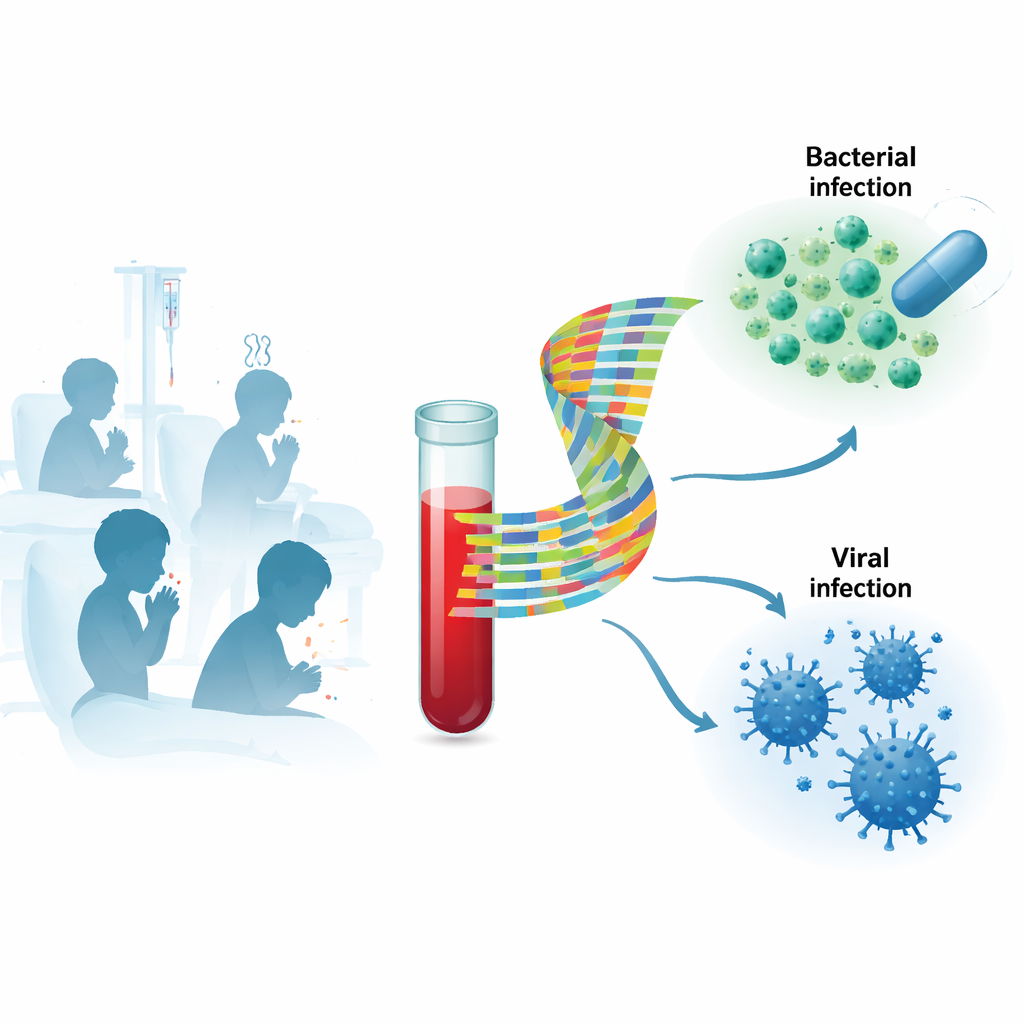
When a child arrives at the hospital with a high fever and looks very ill, doctors must quickly decide whether the cause is a bacterial infection, which usually needs antibiotics, or a viral infection, which often gets better on its own. Today’s tests are far from perfect, and many children receive antibiotics “just in case.” This study explored whether reading the body’s own signals in the blood—specifically, patterns of gene activity—can more accurately tell bacterial and viral infections apart in children with suspected severe illness.
Looking at the body’s alarm system instead of the germ
Traditional tests try to find the germ directly, for example by growing bacteria from blood or detecting viral genetic material with PCR. These approaches can be slow, can miss the real culprit, and often pick up harmless “bystander” viruses, especially in young children who frequently carry respiratory viruses. The researchers instead focused on the host response: which genes in a child’s blood cells are switched on or off during infection. Because the immune system reacts differently to bacteria and viruses, the pattern of active genes may act like a fingerprint of the infection type, even when it is hard to find or interpret the germ itself.
Studying a real-world mix of sick children
The team enrolled 268 children aged 4 weeks to 16 years in Finland. Most were hospitalized with suspected severe infections; a smaller group had milder confirmed viral infections treated as outpatients, and some were healthy controls. Doctors collected detailed clinical data, standard lab tests such as C-reactive protein and procalcitonin, and nasal swabs for respiratory viruses. Blood samples were used to measure activity of thousands of genes using RNA sequencing. Each child’s illness was carefully classified as bacterial, viral, mixed bacterial–viral, unclear, or noninfectious, and then also grouped more simply as “bacterial” or “viral” for key analyses.
Finding a simple two-gene signal
When the scientists first looked broadly at blood gene activity across all children, they found that samples grouped into several clusters, but these clusters did not map neatly onto “bacterial” versus “viral” labels. Healthy children were clearly different from those with definite bacterial infections, whereas gene patterns in definite viral infections were more varied. To cut through this complexity, the researchers split the patients into two sets: a discovery group of children with respiratory infections and a validation group with other types of infections, such as kidney or skin infections. In the discovery group, they searched for very small combinations of genes that could best distinguish bacterial from viral illness, then tested how well those same combinations worked in the validation group.
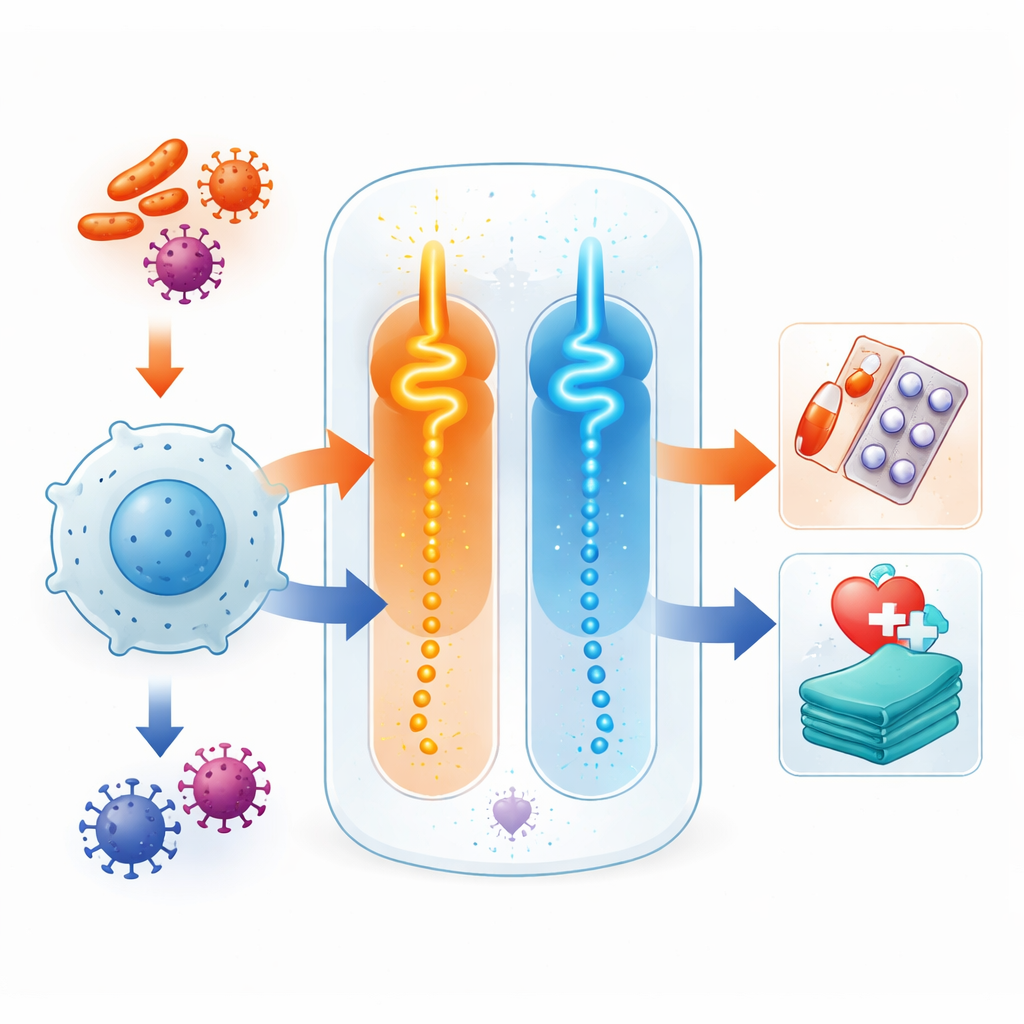
They identified one particularly promising pair of genes, called TSPO and SECISBP2. Together, the activity levels of just these two genes could separate bacterial (including mixed bacterial–viral) infections from purely viral infections with high accuracy. Measured as the area under the receiver operating characteristic curve, this two-gene signal reached 0.93 in the discovery set and 0.81 in the validation set; across both groups combined it was 0.87, with a sensitivity of about 77% and specificity of about 87%. In other words, the signal correctly flagged most bacterial cases while rarely mislabeling viral infections as bacterial. It also performed better than widely used blood markers such as C-reactive protein and procalcitonin in this study population.
What these two genes might be doing
TSPO is involved in how mitochondria—the cell’s energy factories—handle stress and help control inflammation. Previous work has linked higher TSPO activity to more severe bacterial infections and sepsis, and experiments suggest that stimulating immune cells with bacterial components can boost TSPO and fuel the release of inflammatory molecules that help kill microbes. In this study, TSPO tended to be more active in bacterial infections and less active in viral ones. SECISBP2, on the other hand, helps the body build selenium-containing proteins that have antioxidant, immune, and antiviral roles. Selenium is known to support immune cells and reduce the severity of some viral illnesses. Here, SECISBP2 activity was generally higher in viral infections, fitting with the idea that the body ramps up selenium-related defenses when fighting viruses.
What this could mean for future care
The authors stress that their findings are early but encouraging. A simple test that reads just these two genes from a small blood sample could one day help emergency teams decide more confidently whether a very sick child needs antibiotics. Because the two-gene signal worked not only in lung infections but also in other serious infections, it may be useful across a wide range of real-world cases, including those where bacterial and viral germs are found together. However, the study was done in a single country and relied on the best available but imperfect definitions of bacterial versus viral disease. Larger studies in different hospitals and rapid, clinic-ready versions of the test will be needed before it can guide everyday decisions. Still, this work shows that the body’s own gene activity may hold the key to smarter antibiotic use and better care for children with serious infections.
Citation: Piri, R., Valta, M., Lempainen, J. et al. Host gene expression analysis in the detection of bacterial and viral etiology in children hospitalized with a suspected severe infection. Commun Med 6, 204 (2026). https://doi.org/10.1038/s43856-025-01370-z
Keywords: pediatric infections, gene expression, bacterial versus viral, antibiotic stewardship, host response diagnostics