Clear Sky Science · en
Sociodemographic disparities in Hepatitis C care utilization and testing in the United States
Why this matters for everyday health
Hepatitis C is a virus that can silently damage the liver for years, yet today we have medicines that can almost always cure it. Despite this good news, many people in the United States are still not being tested or treated in time. This study looks at how and where people with hepatitis C are actually getting their care, and who is being left out, using national data from doctors’ offices and emergency rooms across the country between 2010 and 2019.
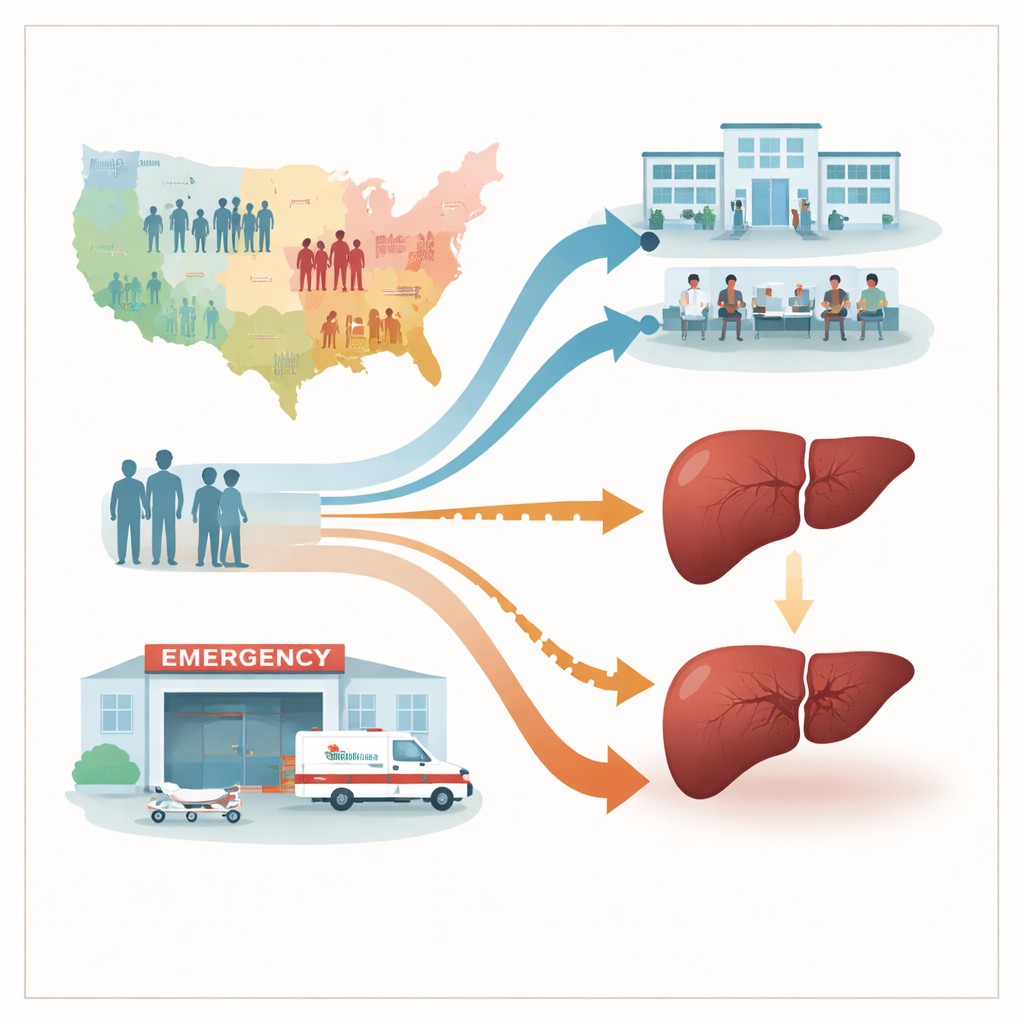
Who is getting care and where they go
The researchers examined nearly a decade of visit records and estimated that about 23 million medical visits involved adults with known chronic hepatitis C. Most of these visits happened in doctors’ offices rather than emergency rooms. Men, people born between 1945 and 1965 (the so‑called baby boom generation), and those covered by Medicare were especially likely to show up in these counts. Visits were more common in large metropolitan areas and in the western part of the country. Overall, people with hepatitis C who were White and privately insured were much more likely to receive care in an office setting, where long‑term treatment and follow‑up are easier to arrange.
When the emergency room becomes the main doorway
A very different pattern emerged for people facing financial or social disadvantages. Patients with Medicaid insurance and those with a documented substance use disorder were far more likely to receive hepatitis C–related care in emergency rooms rather than in offices. Black and Hispanic patients were also more likely to rely on Medicaid, which in turn was accepted by fewer primary care practices for new patients. This combination steered many people from marginalized groups toward emergency care. The study found that for people with both hepatitis C and substance use disorder, emergency room use was several times higher than for those without substance use problems, suggesting that the sickest and most vulnerable patients often depend on the most fragmented part of the health system.
Who actually gets tested for the virus
Finding hepatitis C early requires a simple blood test, but the study shows that this test is rarely ordered in routine care. Among more than 3.7 billion primary care visits by adults without known liver disease between 2014 and 2019, only about 1% included a hepatitis C test. Even in visits where testing made the most sense—such as first‑time checkups or preventive care appointments—the test was done less than 1 in 10 times, while other common blood tests were ordered far more often. Black patients were tested at a higher rate than White patients during each visit, but because they also faced more barriers to regular office care, this per‑visit advantage may not translate into better overall detection. People with Medicaid insurance and those considered at higher risk, including individuals with substance use disorder or severe kidney disease, did not receive hepatitis C testing at meaningfully higher rates than everyone else.

The impact of age, place, and addiction
The analysis also tracked how care patterns changed over time. After screening recommendations expanded for baby boomers in 2012 and new, highly effective drugs became available, office visits for people with hepatitis C increased—mainly among White, privately insured patients. In contrast, the number of visits by Black patients with hepatitis C did not grow in the same way, and younger adults with substance use disorder increasingly relied on emergency rooms. Rural areas, where hepatitis C is spreading quickly because of the opioid crisis, had similar per‑visit testing rates as cities, but fewer specialists and longer travel distances, adding another layer of difficulty for patients needing ongoing treatment.
What this means for the path forward
To a layperson, the core message is straightforward: the people most at risk for hepatitis C are often the least likely to be tested and treated in the settings best suited for long‑term care. Instead, they are turning to emergency rooms, where follow‑up is harder and chances to cure the infection are more easily lost. The authors argue that reaching national goals to eliminate hepatitis C will require shifting more testing and treatment to places where vulnerable patients actually show up—such as emergency departments, community clinics, and programs serving people who use drugs—and ensuring strong links from these entry points to ongoing care. Policy changes that expand insurance acceptance, support telemedicine, and introduce rapid, on‑the‑spot hepatitis C tests in community and justice settings could help close these gaps and bring curative treatment to the people who need it most.
Citation: Buckholz, A.P., Ying, X., Liu, Y. et al. Sociodemographic disparities in Hepatitis C care utilization and testing in the United States. Commun Med 6, 155 (2026). https://doi.org/10.1038/s43856-025-01352-1
Keywords: hepatitis C, health disparities, emergency department care, Medicaid and insurance access, substance use disorder