Clear Sky Science · en
Increasing engagement with cognitive-behavioral therapy (CBT) using generative AI: a randomized controlled trial (RCT)
Why this matters for everyday mental health
Many people with anxiety or depression wait weeks or months for therapy, or go long stretches between sessions with little support. In that in‑between time, self‑help tools can offer a lifeline—but only if people actually use them. This study asks a timely question: can a new kind of interactive, artificial‑intelligence–driven app keep people more engaged in proven coping strategies, and do that safely, compared with traditional workbook-style materials?
Two ways to deliver the same kind of help
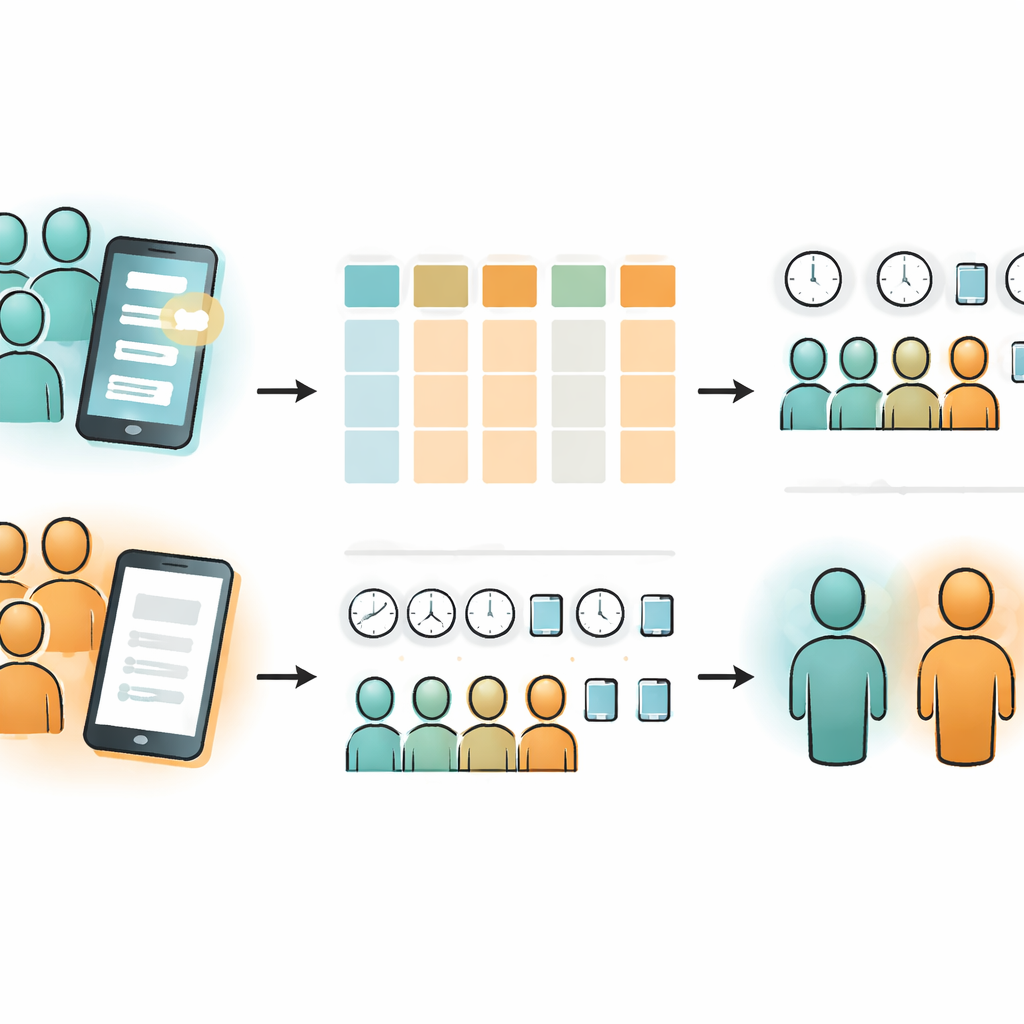
The researchers focused on cognitive behavioral therapy (CBT), a well‑established approach that helps people change unhelpful thinking patterns and behaviors. They recruited 540 adults in the United States who reported at least mild to moderate symptoms of anxiety or depression, using standard screening questionnaires. None were currently in therapy. Everyone was offered the same core CBT content on low mood, worry, or sleep problems, but delivered in two different ways: a smartphone app powered by generative AI, or a static digital workbook similar to the homework handouts people might receive in standard care.
What makes the AI app different
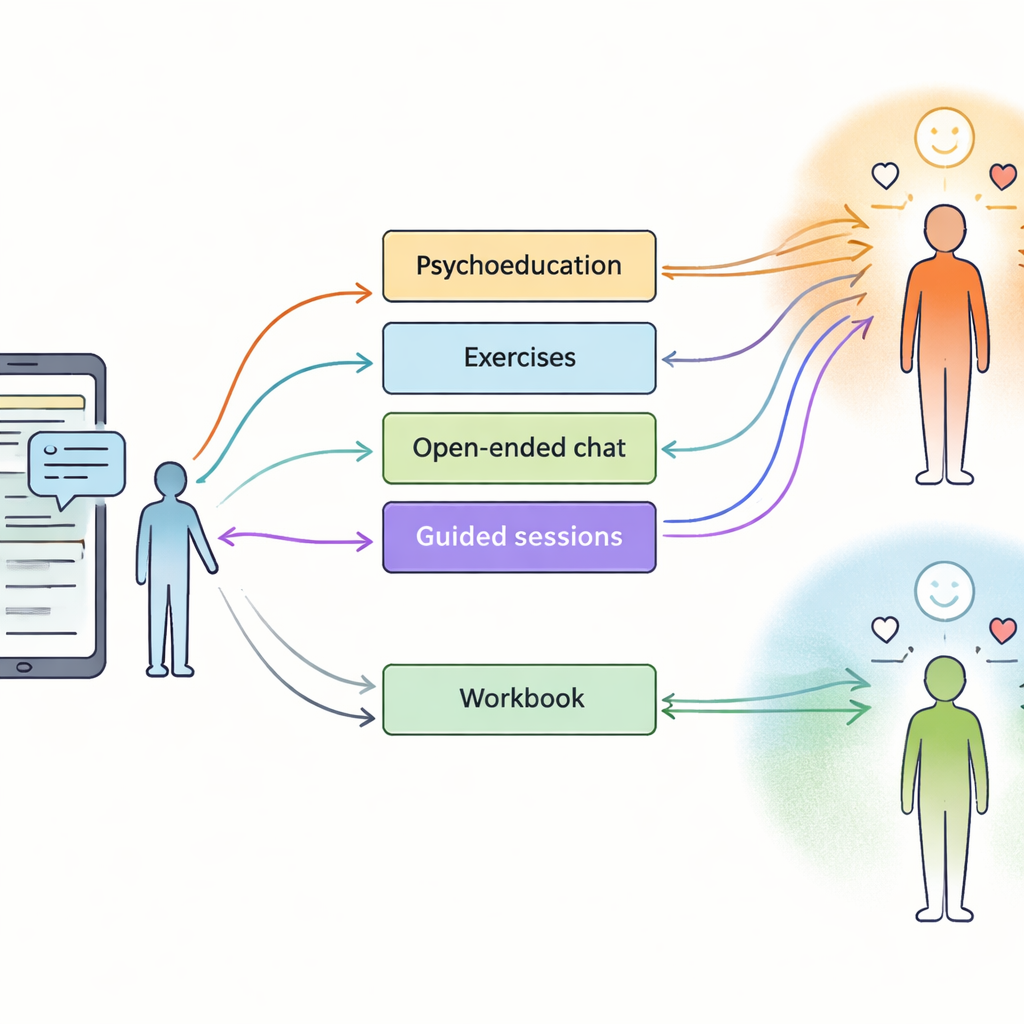
The app, called Limbic Care, centers on a conversational chatbot built from large language models wrapped in additional safety and clinical rules. Rather than reading and filling out worksheets, users talk with the app, which can explain concepts, walk them through structured CBT exercises, and provide supportive, non‑directive chat. A key feature is “guided sessions,” in which the system analyzes what a person types, identifies patterns linked to anxiety, low mood, or sleep trouble, and then recommends tailored exercises. A built‑in “cognitive layer” monitors both what users say and what the AI replies, pulling from a curated knowledge base when needed and redirecting people to crisis resources if risk signals appear.
How the trial was run
Participants were randomly assigned in a 3:2 ratio to either the app or the digital workbook and asked to use their assigned tool on their own for six weeks. They were paid only for completing weekly surveys, not for using the app or workbook, to better reflect real‑world motivation. The main things the team tracked were how often and how long people used their materials, and how their anxiety and depression scores changed over time. They also monitored sleep, day‑to‑day functioning, and any adverse events, plus user ratings of ease of use, usefulness, and trust in AI‑based tools.
What the researchers found
The AI app clearly won on engagement. Over six weeks, people using Limbic Care opened it about 2.4 times more often and spent roughly 3.8 times longer with it than those using the digital workbook. This extra engagement held up even though use tapered off for both groups as the weeks went by. At the same time, symptom improvements looked very similar. On average, both groups showed modest but meaningful drops in anxiety and depression, along with improvements in sleep and everyday functioning. Statistical tests and additional Bayesian analyses indicated no reliable difference between the app and workbook in overall symptom reduction or in the number or seriousness of adverse events.
Digging deeper into how people used the app
Because the group‑level outcomes were so similar, the team explored whether different ways of using the app were linked to better results. They found that people who spent more total time with either tool tended to improve more, suggesting that engagement itself matters. Within the app group, one pathway stood out: users who chose to try the more structured, AI‑guided sessions showed greater reductions in anxiety and bigger gains in overall wellbeing than those who stuck to simpler lessons and exercises, or than workbook users with comparable engagement. Other features, like quick psychoeducation snippets or open‑ended chat, did not show the same added benefit on their own.
What this means for the future of care
To a lay reader, the bottom line is that an AI‑enabled CBT app appears to be a safe and more engaging way to access self‑help materials than static workbooks, at least over six weeks of unsupervised use. However, simply making a tool more engaging did not automatically produce stronger overall symptom relief. The most promising gains came when people used the app’s more personalized, therapy‑like guided sessions, hinting that carefully designed AI features could boost outcomes when people know how—and are encouraged—to use them. The authors suggest that, rather than replacing human therapists, such tools may work best as a bridge and amplifier: keeping people practicing skills between sessions, supporting those on waiting lists, and potentially improving care when combined with human guidance.
Citation: McFadyen, J., Habicht, J., Dina, LM. et al. Increasing engagement with cognitive-behavioral therapy (CBT) using generative AI: a randomized controlled trial (RCT). Commun Med 6, 129 (2026). https://doi.org/10.1038/s43856-025-01321-8
Keywords: cognitive behavioral therapy, mental health apps, generative AI, anxiety and depression, digital self-help