Clear Sky Science · en
Comprehensive cross-sectional and longitudinal comparison of sixteen markers of biological aging from the Berlin Aging Study II
Why Some People Grow Old Differently
Many of us know older adults who stay sharp and active well into their eighties, and others who begin struggling much earlier. Doctors and scientists increasingly think this gap reflects not just years lived, but how fast our bodies are truly aging on the inside. This study asked a simple but powerful question: among the many proposed measures of “biological age,” which ones actually help forecast who will stay healthy and who will face problems like frailty, diabetes, or heart disease in the years ahead?
Looking Under the Hood of Aging
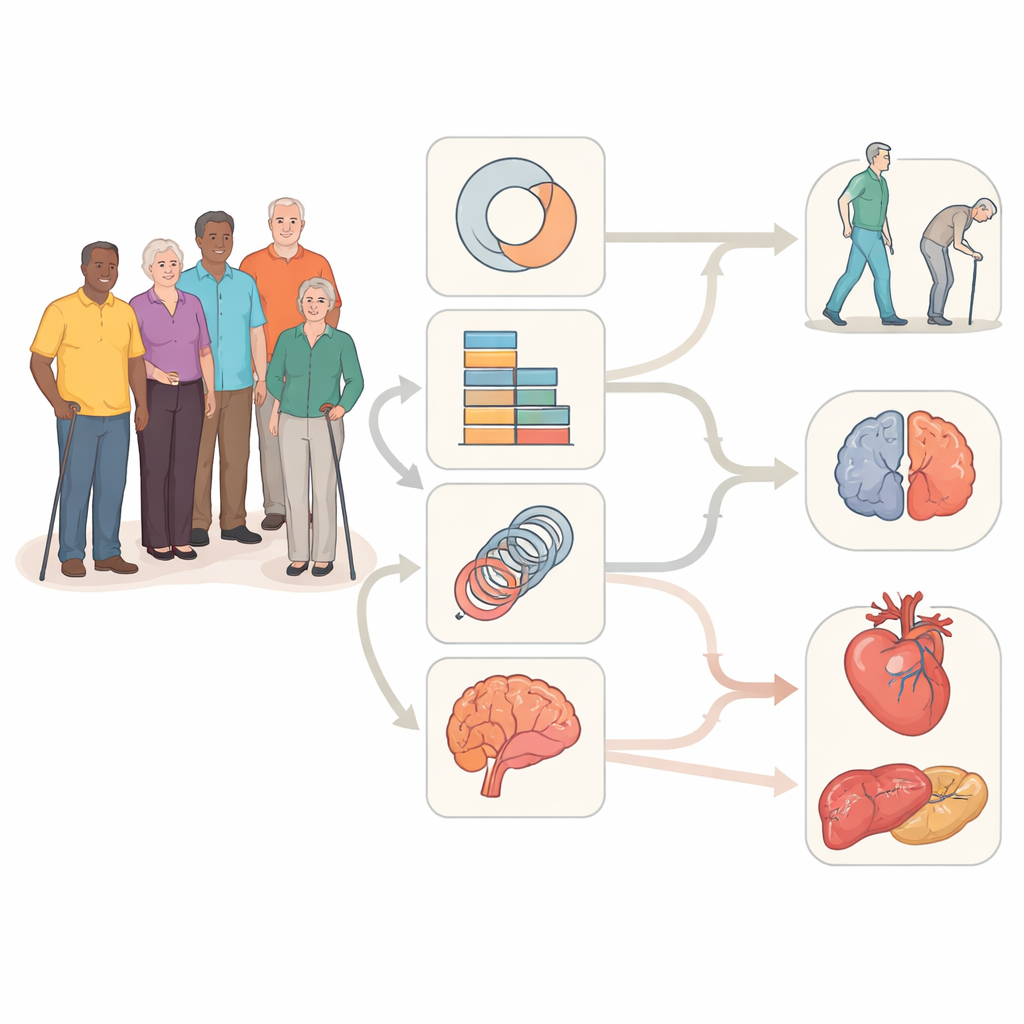
The researchers followed more than 1000 adults from Berlin, most in their late 60s at the start, over about seven years. At the beginning, each participant provided blood samples, underwent physical and mental tests, and answered detailed questionnaires. From these data, the team calculated sixteen different aging markers. Some came from chemical tags on DNA (so‑called epigenetic “clocks”), some from blood proteins, others from the length of chromosome ends called telomeres, and still others from simple lab panels or even people’s own expectations about their future health. In addition, a subset had brain scans used to estimate how old their brains appeared.
From Numbers to Real-World Health
To see which markers really mattered, the scientists compared them with many aspects of health, both at the start and again seven years later. They looked at frailty, walking ability, thinking speed, mood, independence in daily tasks, nutrition, overall disease burden, and specific conditions such as type 2 diabetes, metabolic syndrome, and cardiovascular risk. Crucially, they did not just ask, “Who is sicker now?” but “Which markers measured at the beginning can tell us who will develop problems later?” They also checked whether adding an aging marker to a basic model using only age and sex would improve doctors’ ability to identify people at risk.
The Standout Warning Lights
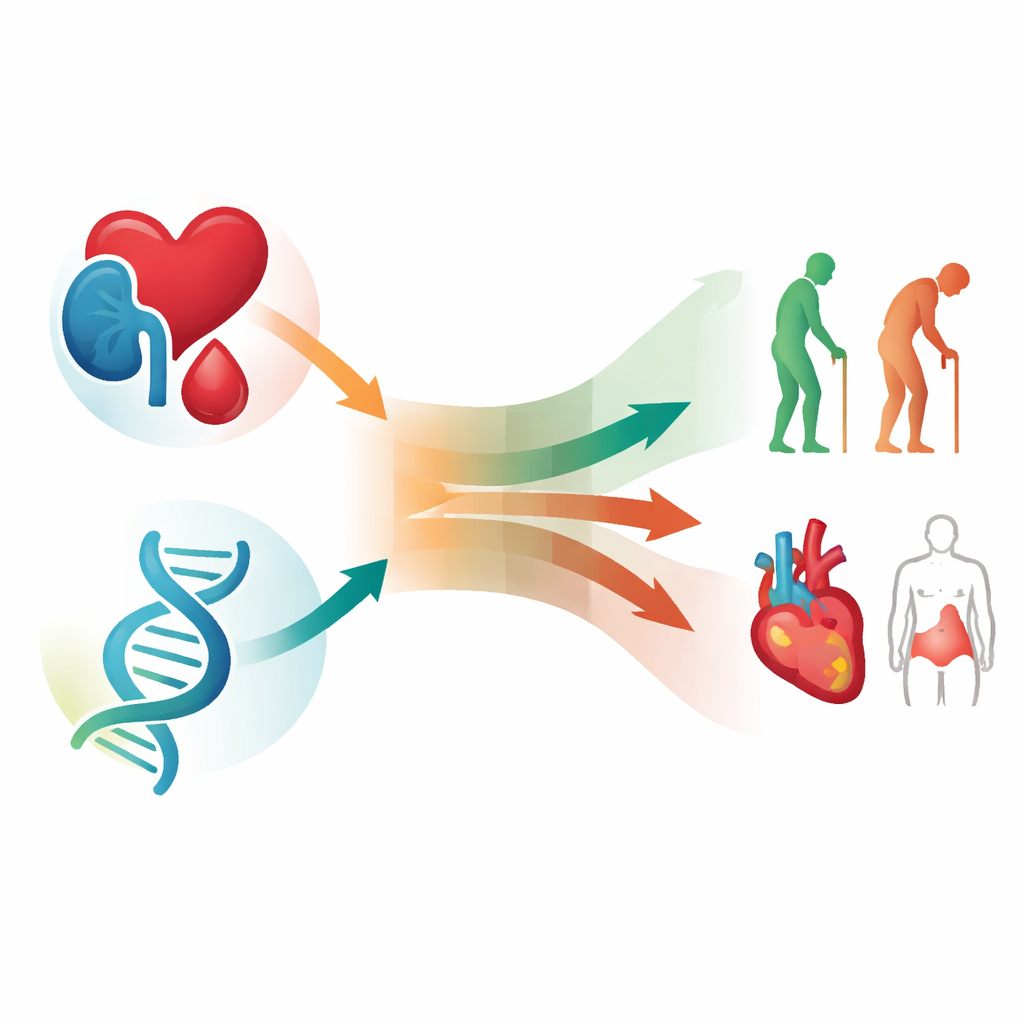
Among the sixteen candidates, two stood out clearly. One was the “Allostatic Load Index,” which bundles together routine clinical measures—such as blood pressure, cholesterol, blood sugar, and related lab values—into a single score reflecting how much wear and tear the body is under. The other was “DunedinPACE,” a DNA‑based measure that estimates how quickly a person is aging biologically, like a speedometer for the aging process. Both markers were consistently linked with worse health across time, especially with future frailty, higher cardiovascular risk, and metabolic syndrome. When added to simple prediction models, they boosted accuracy substantially—by up to 24 percentage points for identifying who would later develop diabetes or metabolic syndrome, and by notable margins for cardiovascular risk and frailty.
Different Clocks, Different Stories
Not all popular aging markers performed equally well. Several well‑known epigenetic clocks designed mainly to predict calendar age, as well as measures based on skin features, blood proteins, or brain imaging, showed little or no strong link with later health problems in this relatively healthy group. Psychological measures such as how old people felt or how long they expected to stay healthy did relate to future frailty and mood, suggesting that our outlook may capture aspects of vulnerability that standard tests miss. Overall, the pattern of results showed that different aging measures capture different slices of the aging process rather than a single universal “biological age.”
What This Means for Aging and Care
For non‑specialists, the main message is that some simple or single‑sample tests can reveal hidden strain in the body years before it turns into obvious disease. In this study, a composite stress score based on routine lab values (Allostatic Load) and a DNA‑based pace‑of‑aging measure (DunedinPACE) were especially good at flagging older adults who later developed diabetes, metabolic syndrome, or frailty. While the work does not yet justify routine clinical screening, it suggests that carefully chosen aging markers could help doctors and researchers identify at‑risk individuals earlier, tailor prevention efforts, and evaluate whether new lifestyle or drug interventions are truly slowing the underlying aging process rather than just treating disease after it appears.
Citation: Vetter, V.M., Drewelies, J., Homann, J. et al. Comprehensive cross-sectional and longitudinal comparison of sixteen markers of biological aging from the Berlin Aging Study II. Commun Med 6, 168 (2026). https://doi.org/10.1038/s43856-025-01233-7
Keywords: biological aging, frailty, cardiovascular risk, metabolic syndrome, epigenetic clocks