Clear Sky Science · en
The 201 Trial: a placebo-controlled randomized phase 2 study of safety and tolerance of the c-Abl kinase inhibitor risvodetinib in untreated Parkinson’s disease
Why this study matters to families facing Parkinson’s
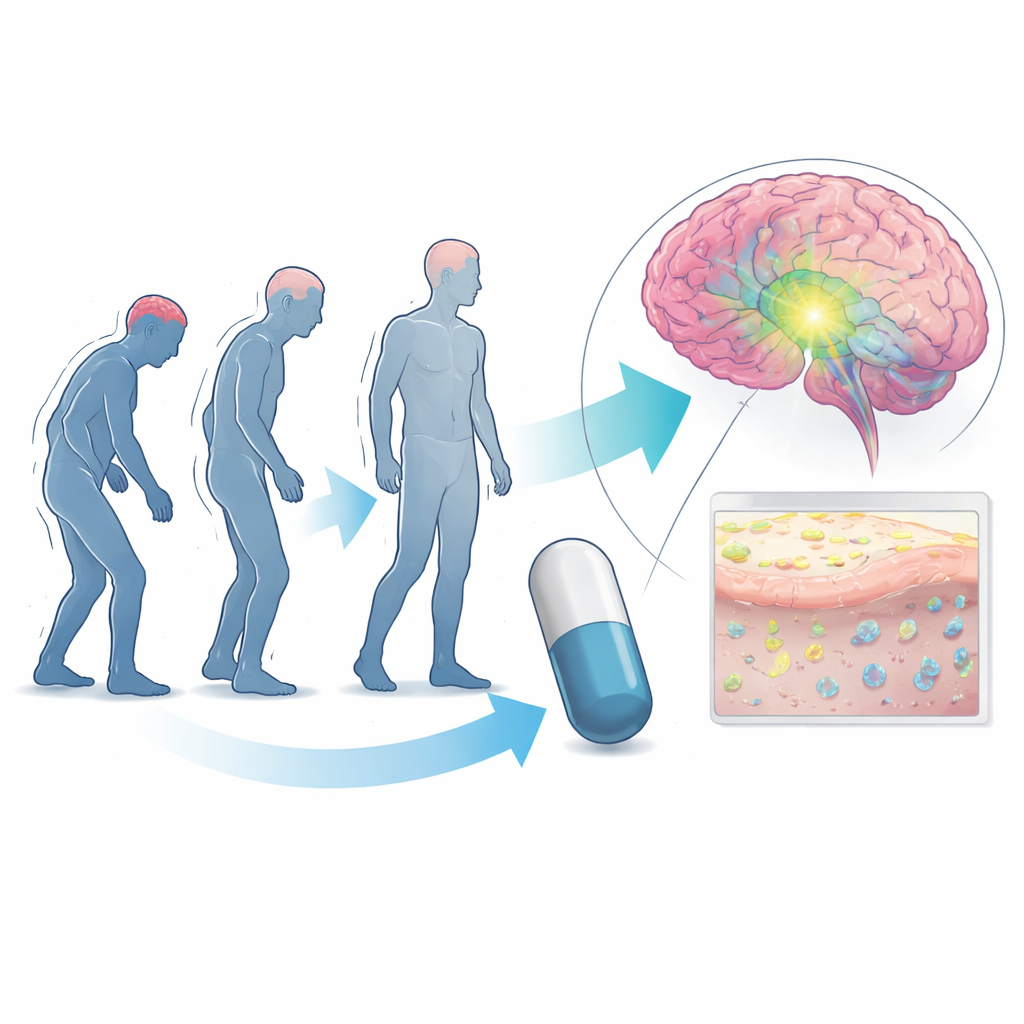
Parkinson’s disease slowly robs people of movement and independence, and today’s medicines mainly ease symptoms without changing the course of the illness. This study tested a new pill, risvodetinib, in people with early, untreated Parkinson’s disease to see if it was safe and whether it might begin to tackle the disease at its roots. Instead of just masking tremor or stiffness, the drug aims to interfere with a stress signal in nerve cells that is thought to drive nerve death and the buildup of harmful proteins.
A fresh target inside vulnerable brain cells
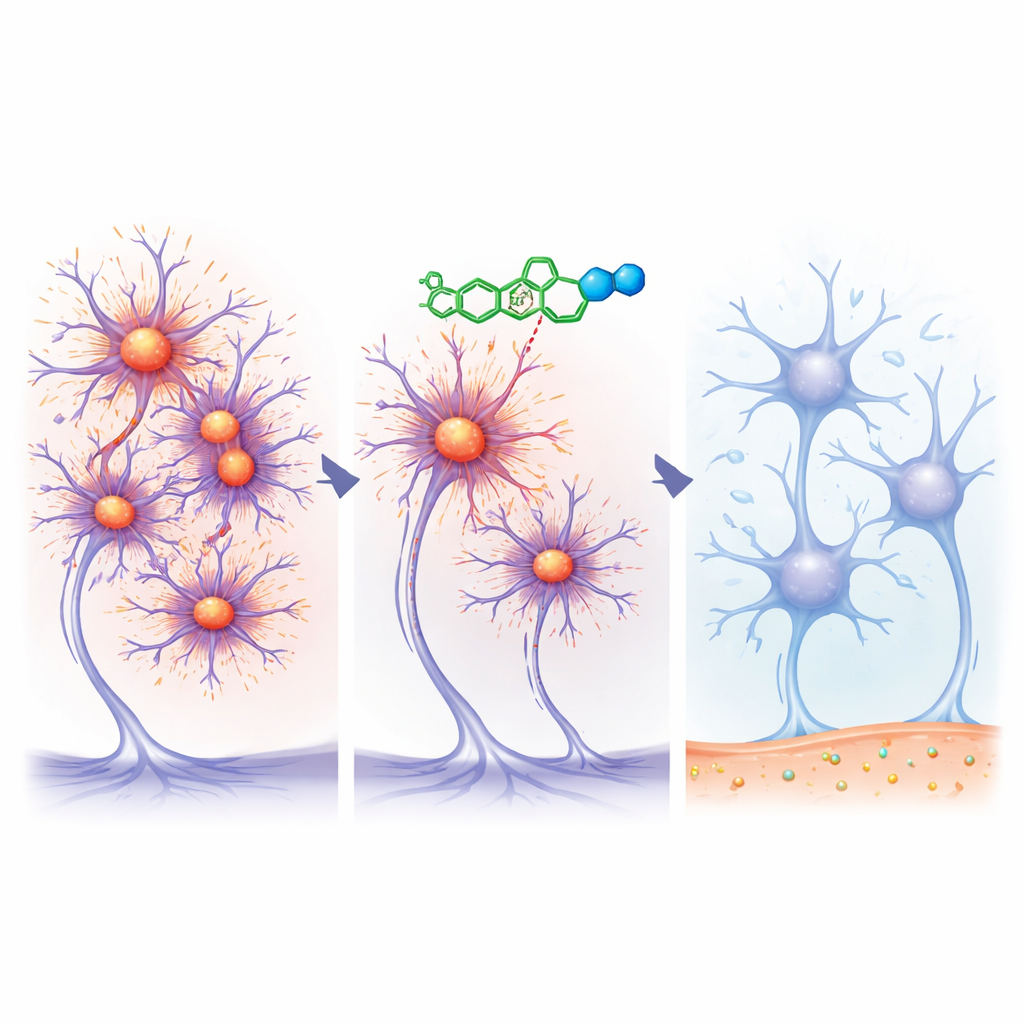
Scientists have long known that Parkinson’s is linked to clumps of a protein called alpha‑synuclein that accumulate inside nerve cells and spread through the nervous system. These clumps can trigger a cellular stress sensor called c‑Abl, which then sets off a chain reaction that pushes cells toward death. Risvodetinib is a pill designed to slip into the brain and selectively block c‑Abl. In animal models of Parkinson’s, once‑daily dosing protected nerve cells, reduced harmful protein buildup and improved movement. These encouraging results led researchers to launch what they call the “201 Trial,” the first longer dosing study of risvodetinib in people.
How the 201 Trial was set up
The trial enrolled 137 adults across the United States who had been recently diagnosed with Parkinson’s and had not yet started standard anti‑Parkinson’s drugs. Participants were randomly assigned to receive one of three daily doses of risvodetinib (50, 100 or 200 milligrams) or a placebo for 12 weeks, followed by a two‑week safety follow‑up. Neither participants nor doctors knew who received the active drug. The main goal was not to prove benefit on symptoms, but to carefully track side effects, serious medical events and how many people could stay on the medication for the full course.
Safety, side effects and day‑to‑day function
Risvodetinib passed this first safety test. About 95% of people who entered after a brief regulatory pause completed the 12‑week treatment period, with nearly perfect pill‑taking. The number of people who experienced at least one new medical complaint was similar in the risvodetinib and placebo groups, and no deaths occurred. Serious problems, such as infections or injuries requiring hospital care, were rare and judged unrelated to the study drug. Side effects commonly seen with other drugs in the same broad family, such as heart strain, marked swelling or eye damage, were minimal or absent. Overall, risvodetinib looked surprisingly gentle for a drug that acts on a powerful signaling enzyme.
Because the study was short and relatively small, it was not expected to show clear clinical improvement. Indeed, standard movement and daily‑living scales changed little over 12 weeks, and the main combined movement score did not differ significantly between risvodetinib and placebo. A few measures showed small, “nominal” gains at some doses, such as modest improvements in self‑rated daily activities, but these signals are too weak and brief to count as proof that the drug helps symptoms. Importantly, risvodetinib did not appear to worsen movement or non‑movement features overall.
A glimpse at the disease process in the skin
To look beyond symptoms, the team used an unusual window into the disease: tiny skin biopsies. Nerve fibers in the skin of people with Parkinson’s can also collect abnormal alpha‑synuclein, and this can be visualized with fluorescent microscopy. About 40% of participants agreed to repeated skin samples, and 36 had usable tissue both before and after treatment. In the placebo group, many people showed unchanged or rising levels of protein deposits over 12 weeks, though a few showed spontaneous drops. Among those taking risvodetinib, increases in deposits were less common, and the proportion of people with reduced deposits grew with higher doses, reaching roughly two‑thirds in the highest‑dose group. However, the groups were small and the differences did not reach standard statistical thresholds, so the findings are suggestive rather than definitive.
What this means for the future of treatment
The 201 Trial shows that blocking c‑Abl with risvodetinib can be done safely for at least three months in people with early Parkinson’s disease, at drug levels that are much higher than those used for existing cancer drugs that hit the same pathway. Early skin‑biopsy results hint that the medicine may be nudging the underlying disease process by helping nerve cells clear harmful protein buildup, but stronger, longer studies are needed to confirm this and to learn whether such changes translate into slower symptom progression. For now, the study does not claim that risvodetinib improves how people feel or function—only that it appears safe enough to justify the next step: larger, longer trials to test whether it can truly alter the course of Parkinson’s disease.
Citation: Werner, M.H., McGarry, A., Meyer, C. et al. The 201 Trial: a placebo-controlled randomized phase 2 study of safety and tolerance of the c-Abl kinase inhibitor risvodetinib in untreated Parkinson’s disease. Nat Aging 6, 626–635 (2026). https://doi.org/10.1038/s43587-026-01084-4
Keywords: Parkinson’s disease, neuroprotection, clinical trial, protein aggregation, tyrosine kinase inhibitor