Clear Sky Science · en
Extreme heat and humidity reduce the recreational value of urban green spaces
Why hot summers are changing our time in the park
City parks are often the coolest, greenest places we can escape to on a summer day. They offer shade, play areas for children, and a chance to relax away from traffic and concrete. But as summers become hotter and more humid, even these inviting spaces can start to feel stifling. This study asks a simple but important question: how much are we losing, in real money terms, when extreme heat and stickiness drive people out of urban green spaces—and what can cities do to keep parks welcoming?
What the researchers set out to understand
The authors focused on Sapporo, a northern Japanese city long known for its relatively mild summers but now facing record-breaking heat. Urban green spaces there are central to everyday life, supporting exercise, play, and mental well-being. The team wanted to measure not just how visits change on hot, humid days, but how those changes translate into lost “recreational value” for city residents. By putting a price tag on this loss, they aimed to give city planners a clear basis for comparing the costs of cooling measures with the benefits that parks provide.
How phone data and surveys were combined
To tackle this, the researchers built a three-step framework that blends what people actually do with what they say they would do under future conditions. First, they used anonymized mobile phone GPS data to count how many people visited 18 major parks on summer days and how far they traveled to get there. From these patterns, they calculated how much value, in dollars, visitors effectively gain from each trip—beyond what they spend on fuel, time, and any fees. Second, they ran an online survey in which more than a thousand local residents chose between going to a park or staying home under different imagined summer conditions, varying temperature, humidity, travel time, and whether the park had water play areas or air‑conditioned rooms for cooling off. Third, they combined these pieces to see how visit probabilities and total park value would shift as summers grow hotter and more humid.
What hotter, stickier days do to park value
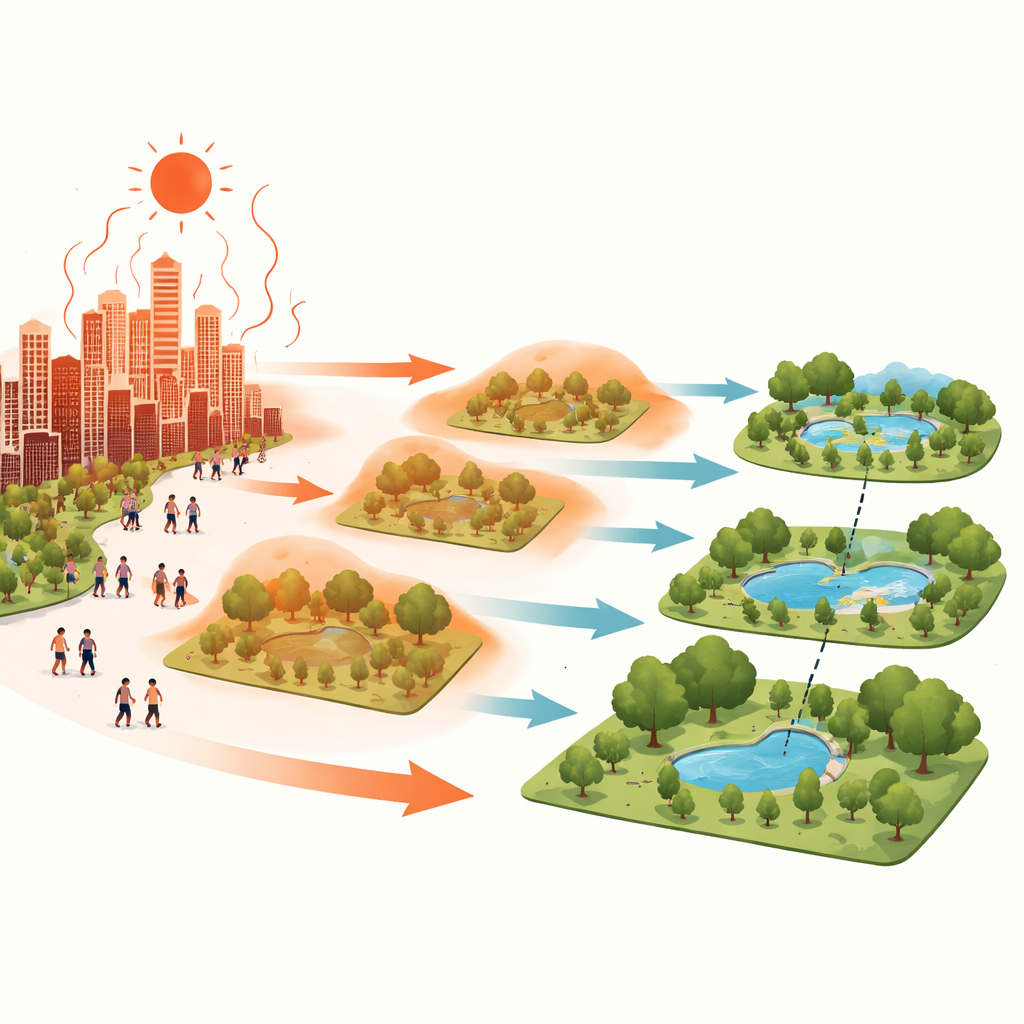
Under today’s typical pleasant summer conditions in Sapporo, the city’s main parks together deliver about 49 million US dollars’ worth of recreational value each year. The analysis shows that as maximum daily temperatures and humidity rise, that value drops sharply because people are much less likely to venture out. For example, under an extreme scenario of 34 °C and 80% humidity, the loss in annual recreational value could exceed 22 million dollars—nearly half of the current total. Even at more moderate changes, like 30 °C with current humidity, the city would still lose over 10 million dollars’ worth of enjoyment each year. The study also highlights that humidity matters almost as much as temperature: simply raising humidity from 50% to 80% at today’s average temperatures already leads to a noticeable economic loss.
Not all parks—and not all features—are equal
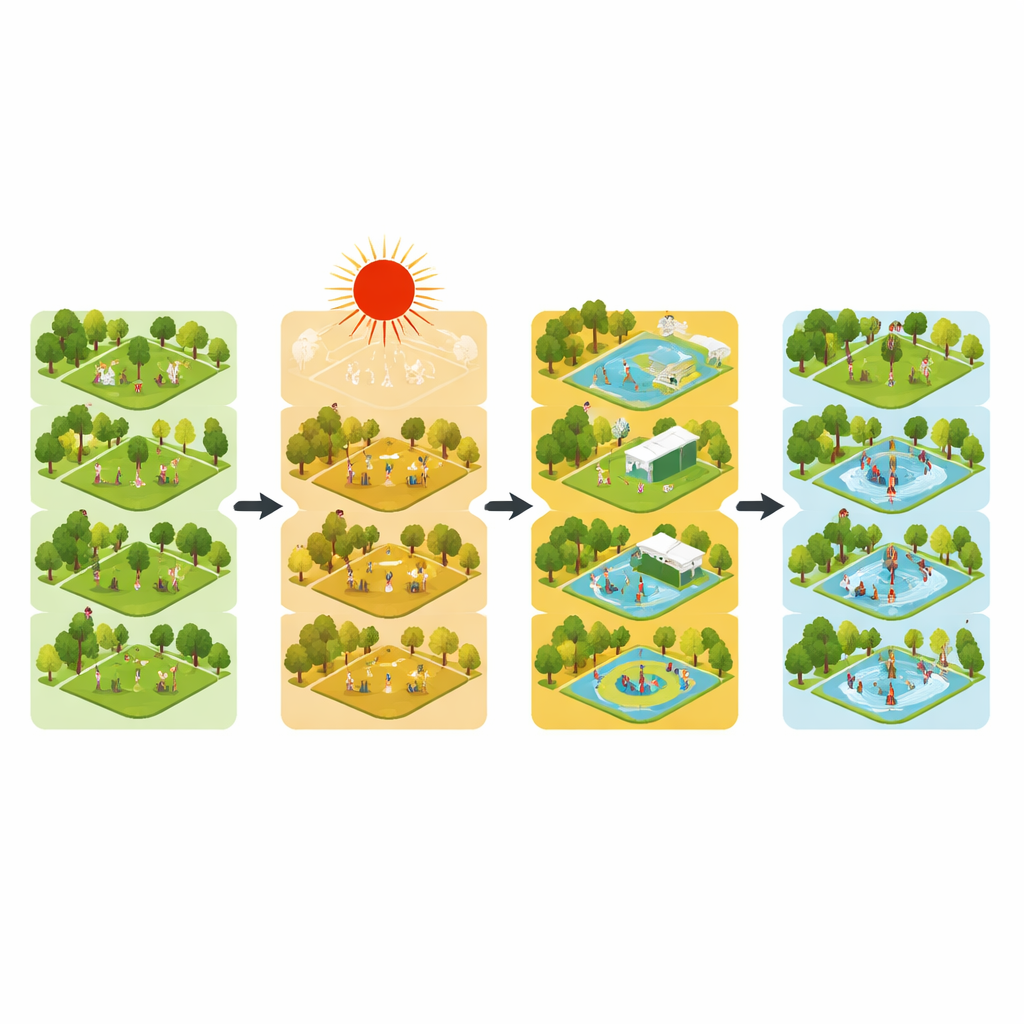
The heat-related losses are uneven across parks. Central, highly visited parks such as Odori, Nakajima, and Maruyama are projected to suffer the largest drops in total value, because many visitors decide that hot, muggy conditions are not worth the trip. In contrast, some parks on the city’s edge lose less value overall, even when the comfort per visit falls, because they start with fewer visitors. Crucially, the study finds that certain design features can cushion the blow. Parks with water play zones or air‑conditioned indoor spaces retain more of their visitors under extreme heat and humidity. A simple cost example from one park shows that building and operating a water facility would cost tens of thousands of dollars per year, but could prevent recreational losses several times larger, suggesting that such features can be highly cost‑effective climate adaptations.
What this means for future city planning
For city planners, the message is not that parks become less important as summers grow harsher—it is the opposite. Because heat and humidity can quietly erase millions of dollars’ worth of health and happiness benefits, cutting park budgets or removing cooling features may be a false economy. Instead, the study argues, cities should deliberately invest in shade, water, breezes, and indoor refuges within green spaces, prioritizing the busiest parks and those serving vulnerable groups. By recognizing the real economic value of a comfortable afternoon in the park, especially in places unaccustomed to extreme heat, urban leaders can plan greener, cooler spaces that continue to support public well‑being in a warming world.
Citation: Wang, J., Mameno, K., Owake, T. et al. Extreme heat and humidity reduce the recreational value of urban green spaces. Commun Earth Environ 7, 253 (2026). https://doi.org/10.1038/s43247-026-03389-z
Keywords: urban green spaces, heat and humidity, climate adaptation, park recreation, Sapporo Japan