Clear Sky Science · en
Methane record at Plateau Rosa confirms its role as background station with episodic sensitivity to European emissions
Watching a Hidden Heat‑Trapping Gas from a Mountain Peak
Methane is a powerful heat‑trapping gas, and in recent decades its concentration in the air has risen faster than expected. To understand why, scientists need clean vantage points where the air is well mixed and far from smokestacks or city streets. This study turns a high‑alpine observatory in the north‑western Italian Alps, called Plateau Rosa, into just such a window on Europe’s methane emissions, revealing where the gas is coming from and how well current computer models track it.
A High Window Above the Crowded Lowlands
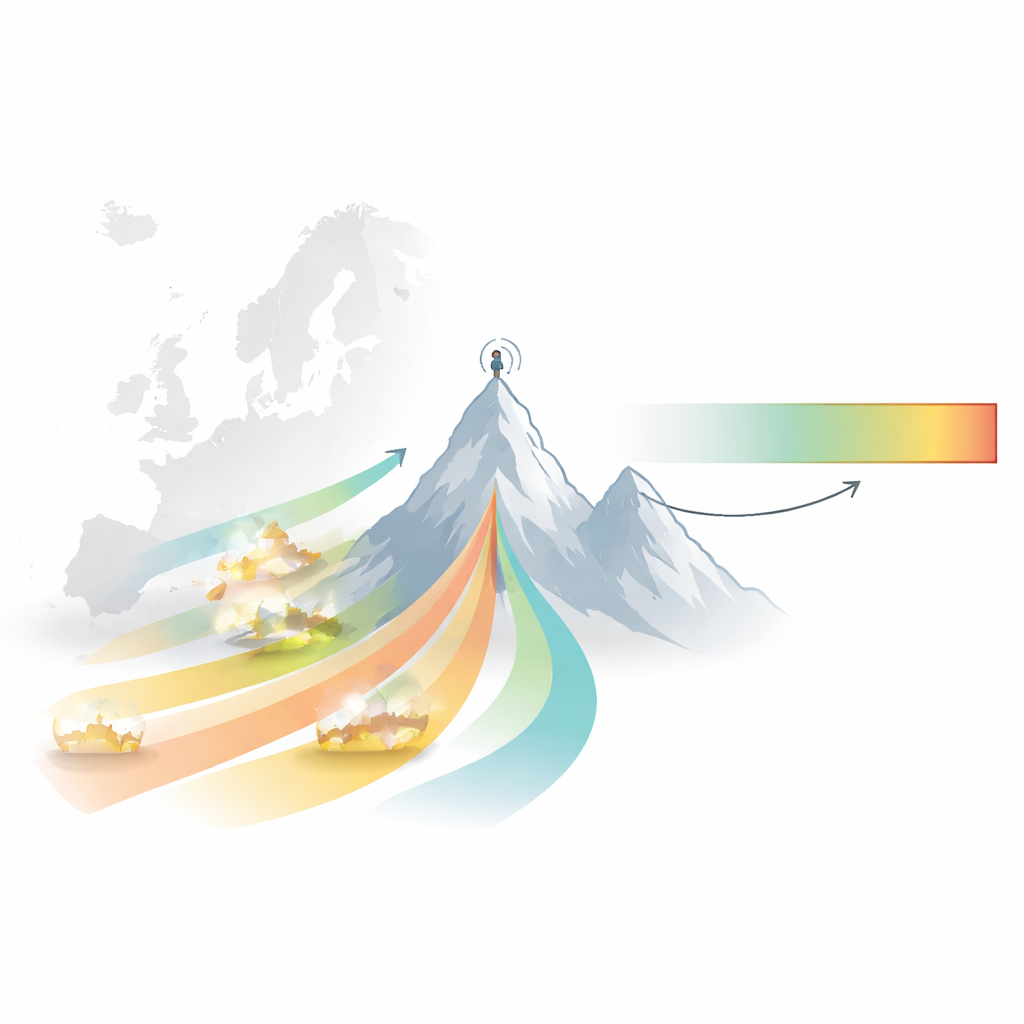
Perched at 3,480 meters above sea level near the Matterhorn, Plateau Rosa usually sits above the churning lower layer of the atmosphere where local pollution builds up. Air reaching the station has often travelled long distances, carrying the large‑scale “background” signal of greenhouse gases rather than the immediate footprint of a nearby farm or town. The station continuously measures methane (along with carbon dioxide) with very precise instruments and standardised quality checks. Because few sites in Europe combine such high altitude with long records, Plateau Rosa is strategically placed to track regional methane levels and trends across the continent.
Separating Calm Background Air from Pollution Spikes
Even at this lofty site, not all air is pristine. At times, air rich in methane from lower valleys or regional pollution plumes washes over the station. To make sense of the data, the researchers first built a careful “background selection” method that picks out the most stable hours—those with very little variation from one hour to the next—and uses them to define the underlying baseline. They then compared this observation‑based background to a model‑based estimate derived from a European transport model called FLEXPART‑COSMO, driven by weather forecasts and large‑scale methane fields. The two backgrounds usually agreed but not perfectly: the model missed some seasonal shifts and showed an average difference of about 17 parts per billion, especially in spring and late autumn.
Following Air from Source Regions to the Summit
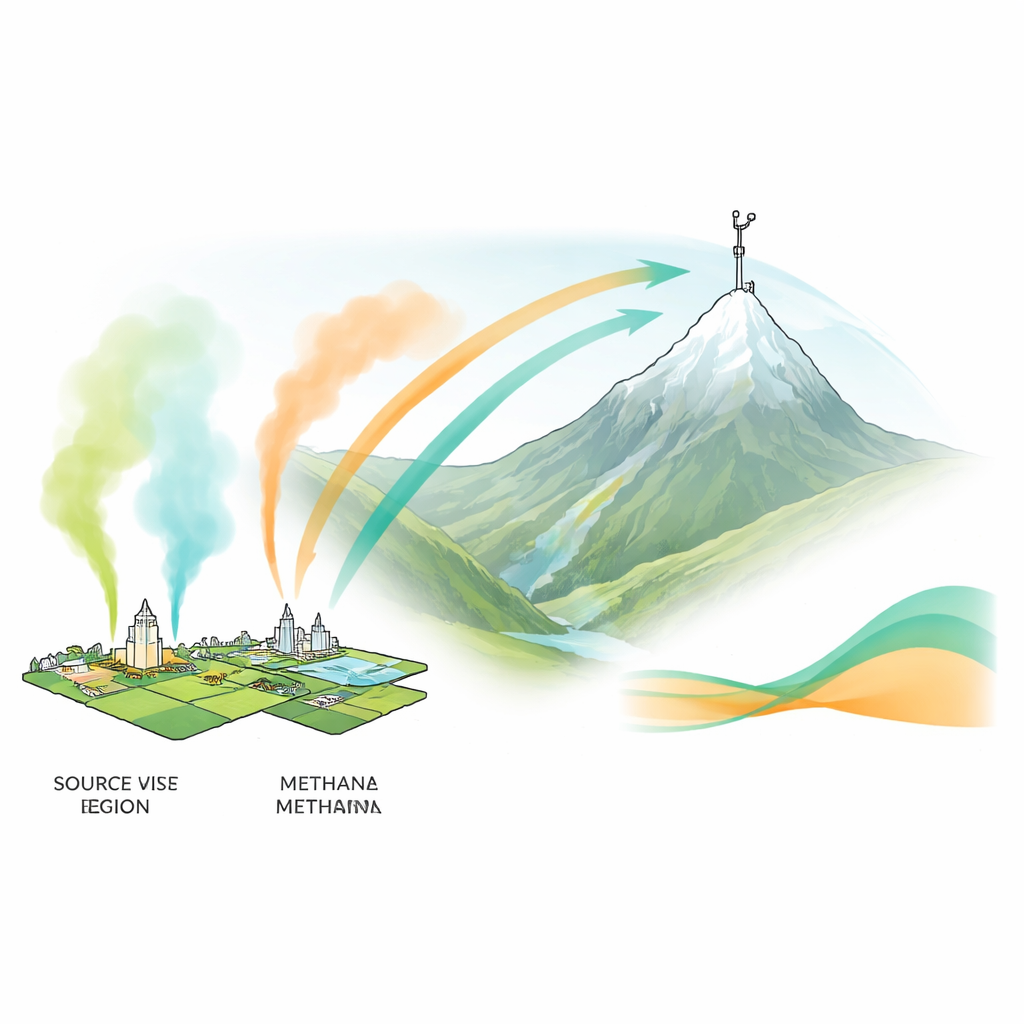
To see which parts of Europe most affect Plateau Rosa, the team released virtual particles from the station in the model and traced them backward in time, building “footprints” that show where the sampled air had been. They then combined these footprints with two different methane emission maps. One, from the Copernicus Atmosphere Monitoring Service, blends bottom‑up estimates with satellite and ground‑based observations and includes both human and natural sources. The other, the EDGAR inventory, focuses on human activities but offers finer detail by sector, such as agriculture, waste, fossil fuels and building heating. By comparing the modelled methane contributions from these inventories to real measurements at Plateau Rosa, the scientists could test both the transport model and the emission maps.
What the Peaks Reveal About Europe’s Methane
Over 2018–2024, methane at Plateau Rosa showed a steady rise, similar to other high‑alpine stations and the marine background site at Mace Head off Ireland. Superimposed on this trend were 30 clear “pollution events,” each lasting more than six hours and standing well above the background. Most of these events were linked to air passing over northern Italy, especially the densely populated and intensively farmed Po Valley just south of the Alps. Modelled sector contributions pointed to agriculture and waste—such as livestock, manure and landfills—as the dominant sources in these cases. When air masses arrived from Germany, Poland, Czechia, the Netherlands or the UK, emissions tied to fossil fuel extraction, gas handling and coal mining became more prominent. Yet, for many events, the model underestimated the size of the methane spikes, suggesting that some regional emissions, particularly from northern Italy, Switzerland, parts of France and Spain, may be too low in current inventories or that the model does not fully capture complex mountain airflows.
Why This Mountain Record Matters
To a non‑specialist, the key message is that Plateau Rosa behaves as a true background station most of the time, sampling well‑mixed air that reflects broad European and global methane trends. Only occasionally does it “taste” strong pollution plumes, and those episodes point clearly toward major emitting regions, especially agricultural hubs and fossil fuel systems. The study shows that our best models and emission maps can reproduce the overall behaviour of methane at this site, but they still miss part of the story—particularly summer upslope transport and some regional sources. Improving these tools is crucial if countries are to verify promised cuts in methane emissions and to use mountain‑top measurements as reliable sentinels for a rapidly changing atmosphere.
Citation: Zazzeri, G., Apadula, F., Henne, S. et al. Methane record at Plateau Rosa confirms its role as background station with episodic sensitivity to European emissions. Commun Earth Environ 7, 260 (2026). https://doi.org/10.1038/s43247-026-03294-5
Keywords: methane emissions, Alpine background station, Plateau Rosa, atmospheric monitoring, greenhouse gases