Clear Sky Science · en
An abrupt drop in weathering flux amplified the Artinskian Warming Event during the Late Paleozoic Ice Age
When Ancient Climate Change Mirrors Today
Long before humans began burning fossil fuels, Earth went through a dramatic natural warm-up that melted vast ice sheets and transformed climates worldwide. This study zooms in on that ancient episode—the Artinskian Warming Event about 290 million years ago—to ask a question that matters today: what happens when the planet’s natural cooling systems suddenly weaken at the same time greenhouse gases rise?
A World Emerging from a Deep Freeze
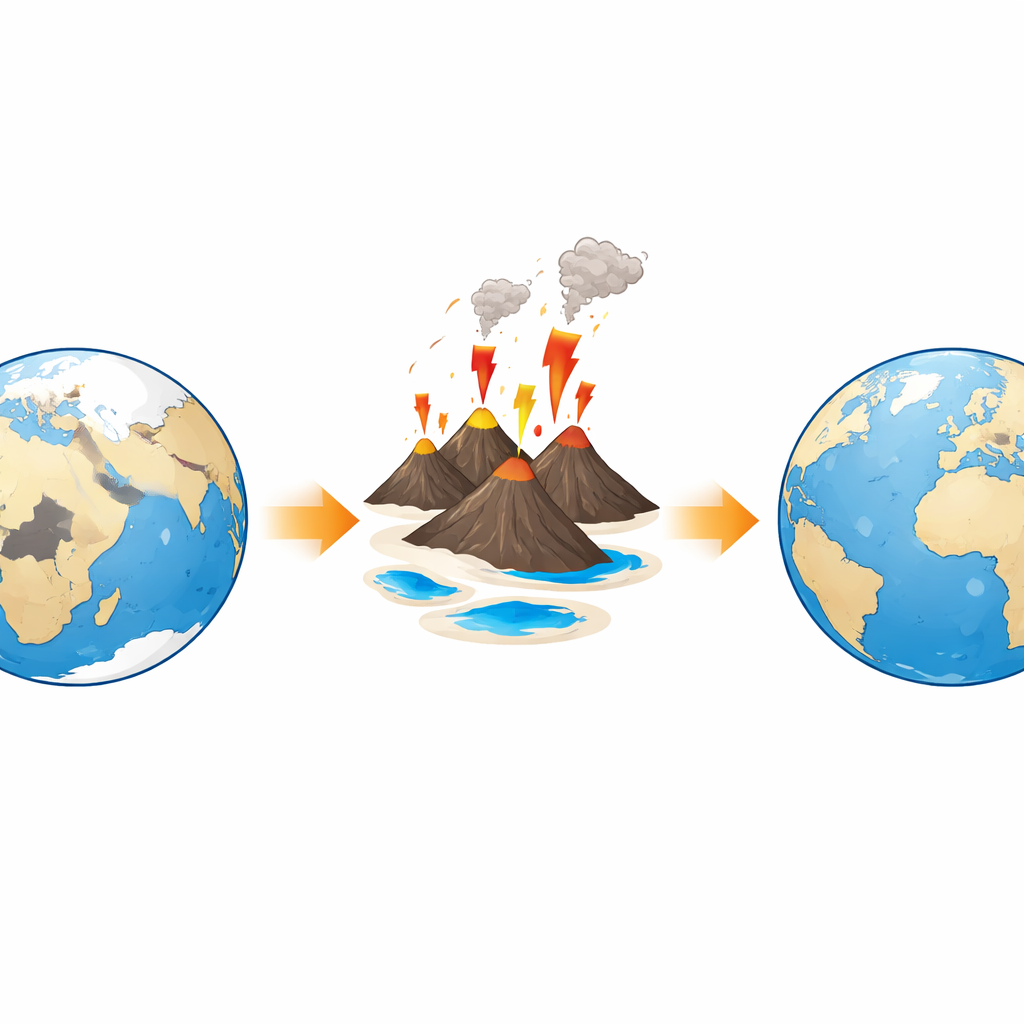
Roughly 300 million years ago, Earth was locked in a long ice age. Huge ice sheets spread across the southern supercontinent Gondwana, and sea levels were low. By the early Permian period, however, that icy world was starting to unravel. Glaciers retreated, shallow seas flooded continents, and tropical regions grew hotter and drier. Geologists call one especially sharp burst of warming during this time the Artinskian Warming Event. It was marked by rising ocean temperatures, shrinking glaciers, collapsing swamp forests, and stressed marine life—changes that make it one of the best ancient analogues for rapid climate shifts in our own future.
Reading Climate Clues in Ancient Seafloor Rocks
The authors studied a thick stack of limestone laid down on a continental slope in what is now South China, then located near the equator. These rocks quietly recorded changes in the chemistry of seawater and the land nearby. The team measured forms of carbon in both carbonate minerals and organic matter, the amount of organic carbon, traces of mercury (a signal of volcanic activity), and the chemical makeup of tiny grains of land-derived material trapped in the limestone. From those grains they calculated weathering indices—numbers that reveal how intensely rocks on land were broken down by heat, water, and air. Together, these measurements provide a timeline of how the carbon cycle, volcanism, and continental weathering evolved during the buildup and peak of the warming event.
Volcanoes Ignite Warming, but Rock Weathering Lets It Run
The chemical signals show that during the key interval of the Artinskian Warming Event, carbon isotope values in the rocks dropped sharply, indicating a rapid injection of carbon into the atmosphere–ocean system. At the same time, mercury levels spiked, echoing intense volcanic activity from several large igneous provinces and volcanic arcs. These eruptions would have released large amounts of carbon dioxide, kick-starting the deglaciation. Yet something else surprising emerges from the data: indices of chemical weathering rise, showing that warm, humid conditions initially sped up the breakdown of rocks on land—a natural process that normally pulls CO₂ out of the air and helps stabilize climate. To understand why warming nevertheless intensified, the authors used an established model that links temperature, rainfall, and rock type to how much CO₂ weathering removes.
When a Natural Thermostat Shrinks in Size
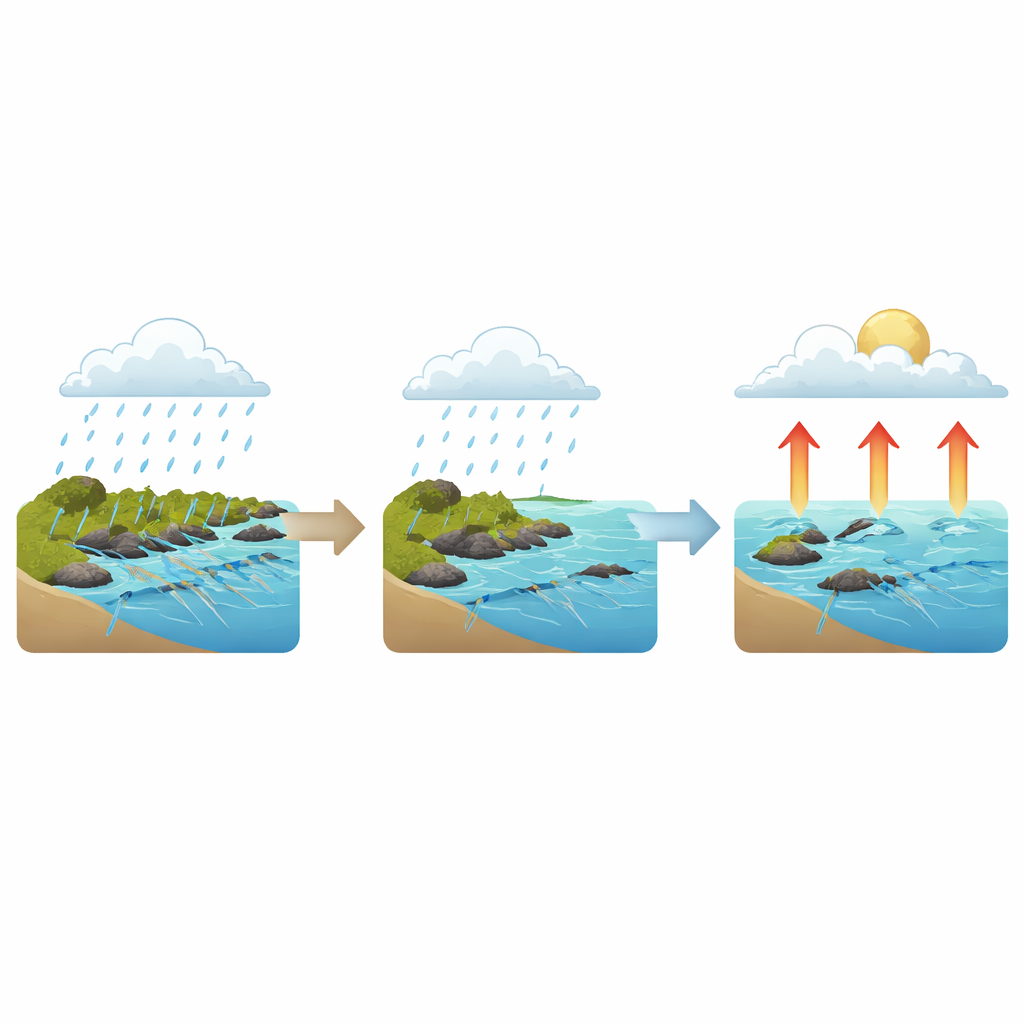
The model focuses on dark, calcium- and magnesium-rich volcanic rocks in the tropics, which are especially effective at consuming CO₂ as they weather. By combining their weathering indicators with reconstructions of where these rocks sat near the equator and how much land was exposed above sea level, the team estimated the total “weathering flux”—the overall capacity of these rocks to draw down CO₂. As seas rose and continents drifted, the area of exposed tropical mafic rock shrank even while local weathering rates stayed high. Their calculations show a sustained drop in this low-latitude weathering flux during the warming event. In other words, Earth’s most powerful natural CO₂ sponge was suddenly smaller, so less greenhouse gas was removed from the atmosphere even as volcanoes kept adding more.
Life and Landscapes Under a Hotter Sky
This one–two punch—extra carbon from volcanoes plus a weakened rock-weathering sink—helps explain why the Artinskian Warming Event became the most intense phase of melting in the Late Paleozoic Ice Age. The consequences rippled through the Earth system. Ice sheets retreated dramatically, tropical regions dried out, wildfire activity likely increased, and coastal swamps that had stored vast amounts of plant material collapsed. Marine communities, including complex shell-bearing microfossils called fusulines, suffered major losses. The study suggests that when multiple warming mechanisms operate together, climate can shift faster and farther than with any single cause.
What This Ancient Story Means for Us
To a non-specialist, the core message is straightforward: Earth’s climate is controlled not only by how much carbon goes into the air, but also by how effectively the planet’s surface can pull that carbon back out. During the Artinskian Warming Event, volcanic emissions raised CO₂, while rising seas and shifting continents quietly reduced the area of highly reactive rocks that normally help cool the planet. This combination amplified warming and drove a profound reorganization of climates and ecosystems. Today, humanity is adding carbon even faster than ancient volcanoes did, while also altering landscapes that influence weathering and carbon storage. The ancient record warns that when natural brakes on warming weaken at the same time the accelerator is floored, the climate system can respond with abrupt, long-lasting change.
Citation: Sun, S., Chen, A., Ogg, J.G. et al. An abrupt drop in weathering flux amplified the Artinskian Warming Event during the Late Paleozoic Ice Age. Commun Earth Environ 7, 257 (2026). https://doi.org/10.1038/s43247-026-03288-3
Keywords: ancient climate warming, rock weathering, volcanic CO2, ice age deglaciation, Permian Earth history