Clear Sky Science · en
Fine slab structure and mechanism of deep earthquakes beneath central Japan
Earthquakes Where Rocks Should Not Break
Most earthquakes strike near Earth’s surface, where cold, brittle rock can snap. Yet some of the planet’s strongest shocks rumble hundreds of kilometers down, in regions so hot and squeezed that rocks ought to flow rather than fracture. This study peers deep beneath central Japan to map the hidden structure of a sinking oceanic plate and uncovers how subtle changes in minerals and traces of water may be setting off these mysterious deep quakes.
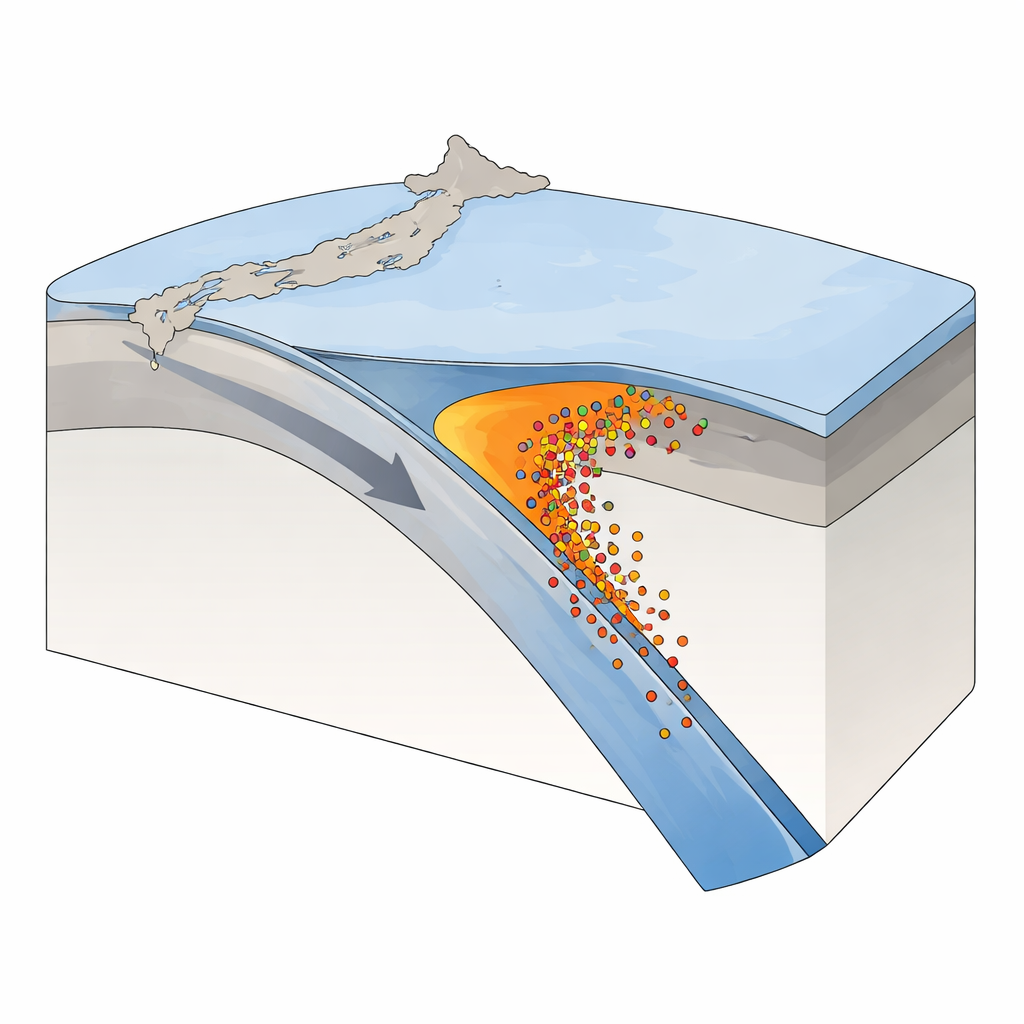
A Busy Neighborhood Deep Beneath Japan
Central Japan sits at a geological crossroads where several tectonic plates collide and dive beneath one another. An old, cold portion of the Pacific seafloor is plunging downward beneath Japan, forming a gigantic slab of rock that sinks into Earth’s mantle. Because Japan is blanketed with sensitive seismometers and has decades of high-quality earthquake records, this region is an ideal natural laboratory for studying how and where deep earthquakes occur inside the subducting slab.
Seeing Inside a Sinking Plate
The authors analyzed 572 earthquakes deeper than 300 kilometers recorded by more than a hundred seismic stations. Using an advanced imaging technique called double-difference tomography, they tracked how fast different types of seismic waves travel through the slab. Variations in wave speed reveal changes in rock properties, much like medical CT scans reveal structures inside the human body. The new images show a striking low-speed belt inside the Pacific slab at depths of roughly 330 to 380 kilometers, sandwiched between faster regions above and below. This three-layer pattern is much finer than what previous models could resolve.
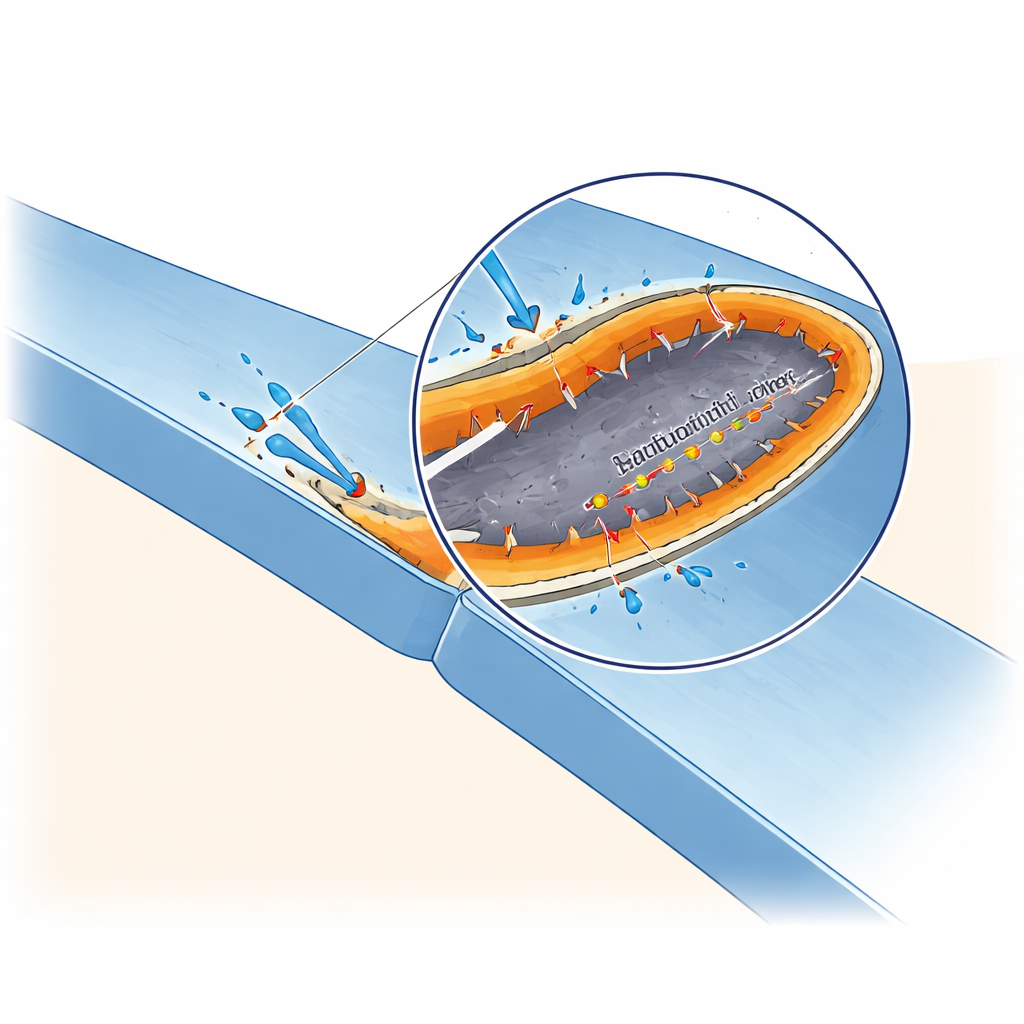
A Hidden Tongue of Delayed Transformation
To interpret these patterns, the study focuses on olivine, a common green mineral that dominates Earth’s upper mantle. Under great pressure, olivine should change into denser forms. But in very cold slabs the change can be delayed, leaving a core of “out-of-equilibrium” olivine known as a metastable wedge. The tomography results match this idea: the middle low-speed layer likely marks a tongue-shaped zone where olivine is actively transforming, while the layers above and below host more stable mineral forms. Subtle differences between wave speeds suggest that small amounts of water are also present around this metastable zone, even at these extreme depths.
Water, Squeezing, and Runaway Rupture
The team also examined how the slab is being squeezed and stretched by analyzing many earthquake focal mechanisms, which record how each event slipped. At intermediate depths, the slab is mostly stretched, consistent with earlier studies that link earthquakes there to the breakdown of water-rich minerals. Below about 300 kilometers, however, the stress flips: the slab is squeezed along its length. In this deeper realm, the authors argue, tiny pockets of olivine at the edge of the metastable wedge suddenly collapse into denser minerals under compression, forming “anticracks” that can join up into faults. Small earthquakes likely start around the rim of the wedge, where some water-bearing minerals dehydrate and speed up this transformation. As these ruptures grow, they can propagate into the drier interior of the wedge and even beyond, producing larger deep-focus earthquakes.
Why These Deep Quakes Matter
The study concludes that deep earthquakes beneath central Japan are best explained by a combined process: mineral transformations in a cold, metastable olivine wedge, boosted by dehydration at great depth and guided by the way the slab is stressed. This work provides one of the clearest images yet of that hidden wedge and its internal layering, tying together mineral physics, water in the deep Earth, and real earthquake patterns. While the details may differ in other subduction zones, the results bring scientists closer to a general explanation for how rocks manage to break in places where, by ordinary rules, they should simply bend.
Citation: Zhang, X., Jiang, G., Zhao, D. et al. Fine slab structure and mechanism of deep earthquakes beneath central Japan. Commun Earth Environ 7, 256 (2026). https://doi.org/10.1038/s43247-026-03280-x
Keywords: deep-focus earthquakes, subduction zones, Japan trench, metastable olivine wedge, seismic tomography