Clear Sky Science · en
Kaplan-Meier and Cox survival analysis of fuel oil-contaminated Black Sea birds reveals potential conservation measures
Why this matters for coastal wildlife
When oil spills into the sea, the first images we often see are birds soaked in thick, dark fuel. This study takes a hard look at what happens next: how many of those birds actually survive after being cleaned, and whether there might be better ways to protect them in the first place. Focusing on a major fuel oil spill in the Black Sea, the researchers use detailed rescue records and medical-style survival analysis to reveal which species stand a chance, which do not, and why prevention may save far more lives than heroic washing efforts alone.
A massive spill and a wave of casualties
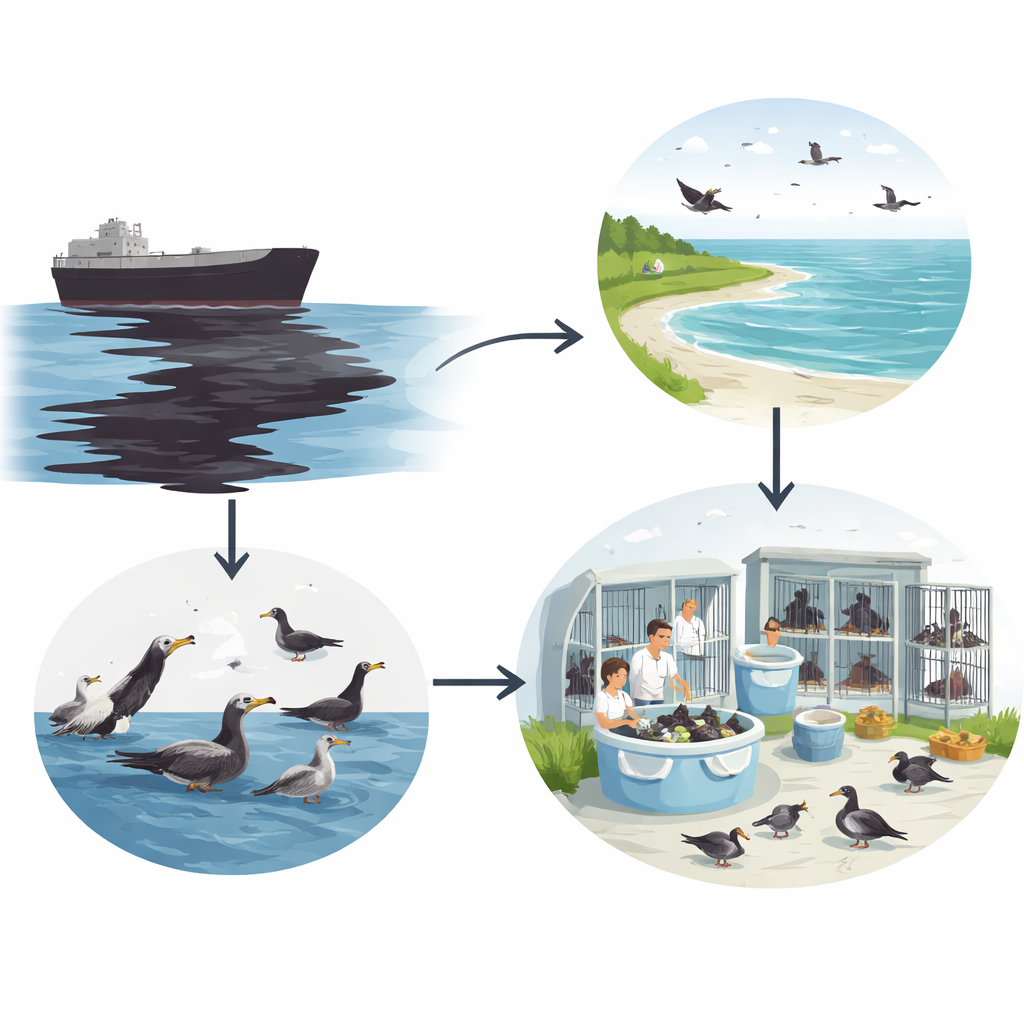
In December 2024, an accident involving two tankers in the Kerch Strait released about 4000 tons of heavy fuel oil into the Black Sea. Powerful storms delayed containment for nearly two days, allowing the slick to spread into long streaks tens of kilometers in length. As the oil drifted toward shore, thousands of seabirds and coastal birds became coated. Within three months, over 8200 oiled birds had been brought to cleaning stations; nearly 80 percent of them died. At the same time, dozens of dolphins also perished, highlighting the broad ecological damage caused by the spill.
What rescuers can do—and where it falls short
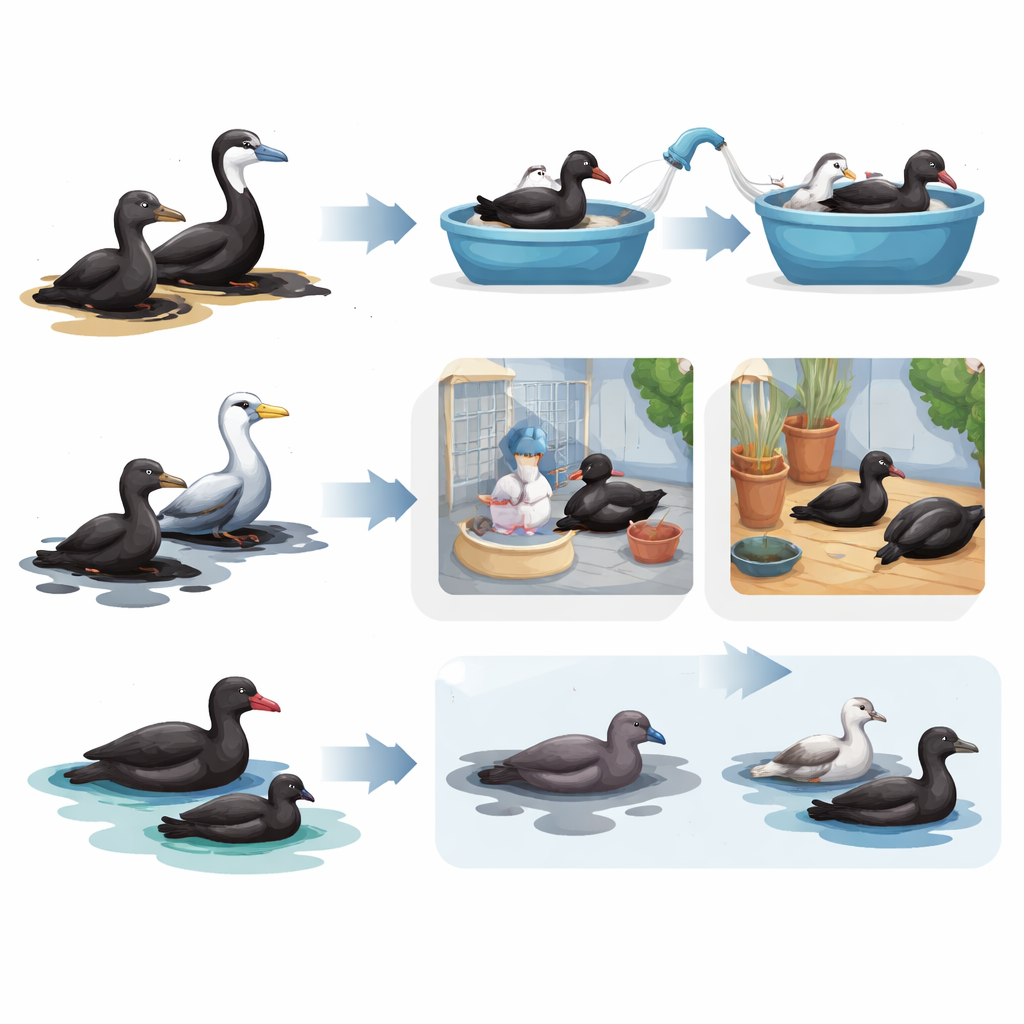
Bird rescue teams followed widely used procedures. First, they carefully cleaned the eyes, beak, and mouth, then dusted the body with potato starch to soak up the fuel oil, and finally washed the feathers with warm water and dish detergents. Surviving birds were dried, warmed, fed, and placed in small pools before transfer to longer-term rehabilitation centers. Despite this intensive care, mortality remained very high, especially for birds that had been in contact with oil for more than 24 hours. Even when plumage looked clean, many animals later died from internal damage to lungs, liver, kidneys, and gut, or from pneumonia, hypothermia, and stress related to long handling times and harsh cleaning agents.
Who survives and who does not
Using statistical tools commonly applied in medicine—the Kaplan–Meier method and Cox survival models—the authors tracked how long different bird species lived after washing and rehabilitation. Deep-diving species such as grebes fared worst: their survival curves plunged within the first 10–20 days, and almost none were alive after 85 days. These birds depend on extremely dense, waterproof plumage and spend much time underwater, so any loss of insulation or extra oil intake is quickly fatal. By contrast, coots and gulls, which float higher on the water and dive less, showed moderate survival rates. Timing also mattered greatly: birds admitted to care within the first two weeks had survival probabilities around 25 percent, but for those arriving later with severe neurological signs, only about 5 percent survived.
Lessons from the numbers
The survival models confirmed that species identity and initial condition strongly shaped outcomes. Compared with a reference gull species, grebes faced a much higher day‑to‑day risk of death, while coots and some gulls were closer to average. Birds sent to rehabilitation centers were generally in worse shape and showed higher overall mortality than those that only received washing, even though they received more intensive care. This pattern suggests that once internal organs are badly damaged by heavy oil, cleaning feathers alone cannot reverse the decline. The results argue for triage strategies: prioritizing species and individuals with realistic chances of survival and recognizing when washing may be futile or even inhumane.
Turning to prevention and smarter deterrence
Given the limited success of large-scale washing, the authors argue that the most effective way to protect birds is to keep them away from oil in the first place. They review a range of deterrence techniques—visual scares, loud sounds, drones, boats with repellents, and even the presence of predators such as falcons—many of which are already used at airports and farms. However, they stress that these tools must be tailored to each species’ behavior and communication. For example, some birds quickly ignore generic loud noises, but instinctive alarm calls or distress screams can remain effective without losing their impact. Diving birds like grebes, which tend to dive rather than fly from danger, may need underwater deterrents or completely different strategies.
What this means for future spills
For a general reader, the message is stark but hopeful. The study shows that once birds are heavily coated in fuel oil, even the best cleaning and rehabilitation efforts rescue only a minority, and some species almost never recover. Instead of relying mainly on dramatic rescue scenes after a spill, the authors recommend shifting resources toward rapid containment of oil, early detection of slick movement, and species‑specific bird deterrence plans developed in advance. In simple terms, scaring birds away from danger zones before they land in the oil could save far more lives than trying to scrub them clean afterward.
Citation: Gorbachev, S., Gorovykh, O.G., Mani, A. et al. Kaplan-Meier and Cox survival analysis of fuel oil-contaminated Black Sea birds reveals potential conservation measures. Commun Earth Environ 7, 249 (2026). https://doi.org/10.1038/s43247-026-03274-9
Keywords: oil spill birds, wildlife rehabilitation, seabird mortality, Black Sea ecology, bird deterrence