Clear Sky Science · en
Shipping and water diversion pathways expand the global area at risk from invasive freshwater bivalves
Hidden Hitchhikers in Our Rivers
Most of the goods we use every day travel the world by ship or through massive canals that move water between distant rivers. Along for the ride are tiny stowaways—larvae of invasive freshwater mussels—that can clog pipes, damage dams, and disrupt entire ecosystems. This study focuses on the golden mussel, a small shellfish that has already invaded parts of Asia and South America, and asks a pressing question: how are global shipping and huge water‑transfer projects quietly expanding the areas of the world that are at risk?
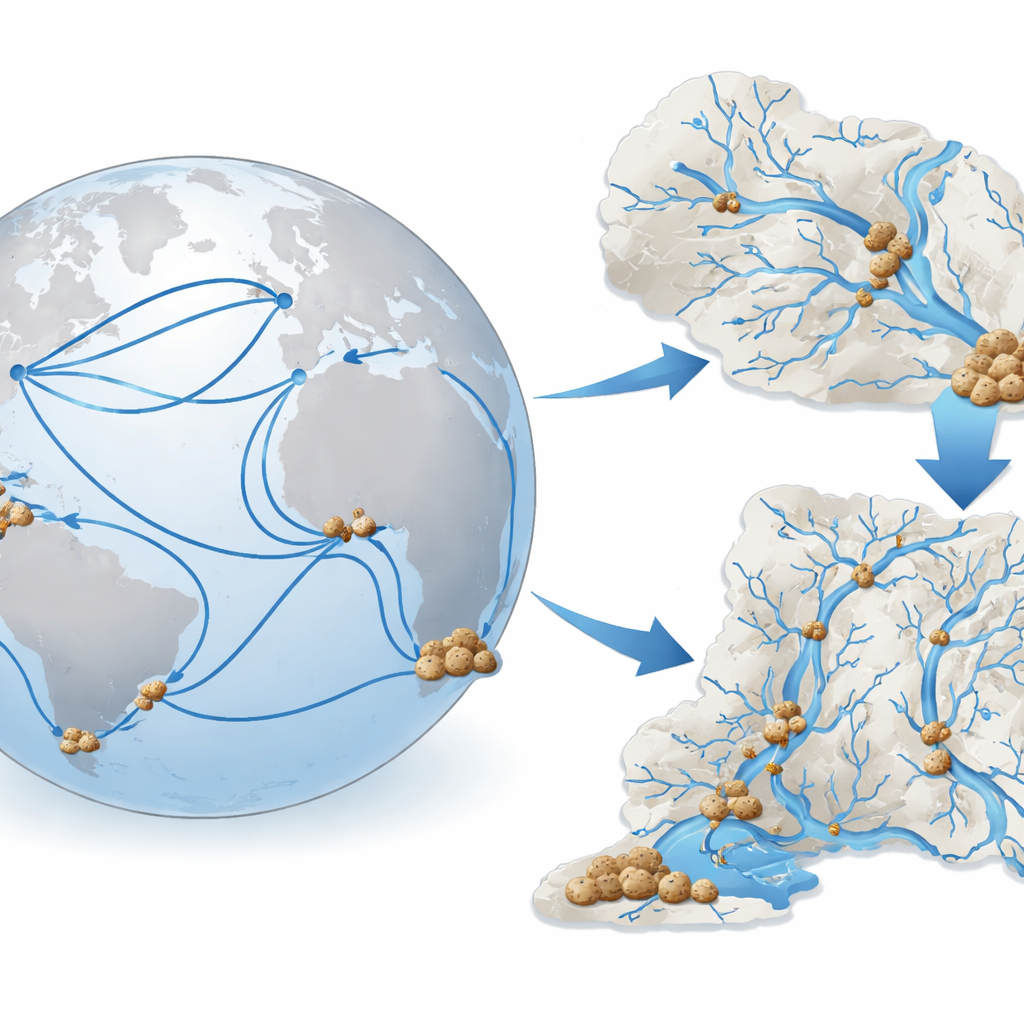
How Trade Turns into Biological Traffic
The authors begin by explaining that biological invasions unfold in stages: a species is transported, introduced to a new place, manages to establish a population, and then spreads. Many earlier studies looked mainly at where a species could survive based on climate and water conditions. But that misses a key point: even if a river is perfectly suitable, an invader cannot arrive without a pathway. Here, the researchers join these pieces together, building a framework that links environmental suitability with the real routes by which golden mussels travel—chiefly commercial shipping and giant projects that divert water from one river basin to another.
Mapping the Future Front Lines
Using global data on river basins, climate, shipping routes, and water transfer schemes, the team simulated where and when golden mussels are most likely to invade. Their model tracks water bodies as they move from “unreached” to “exposed” to “invaded,” depending on how much infested water arrives and how favorable local conditions are. The simulations show that risk was largely limited to the mussel’s native range in East and Southeast Asia until the mid‑20th century. After containerized shipping took off in the 1950s and global trade accelerated, high‑risk areas expanded rapidly to coasts in North and South America, Europe, Australia, and the Indochina Peninsula. Since the 1990s, the total area at high risk has grown sharply, mirroring the boom in seaborne trade and large water transfer projects.
Coasts as Gateways, Rivers as Highways
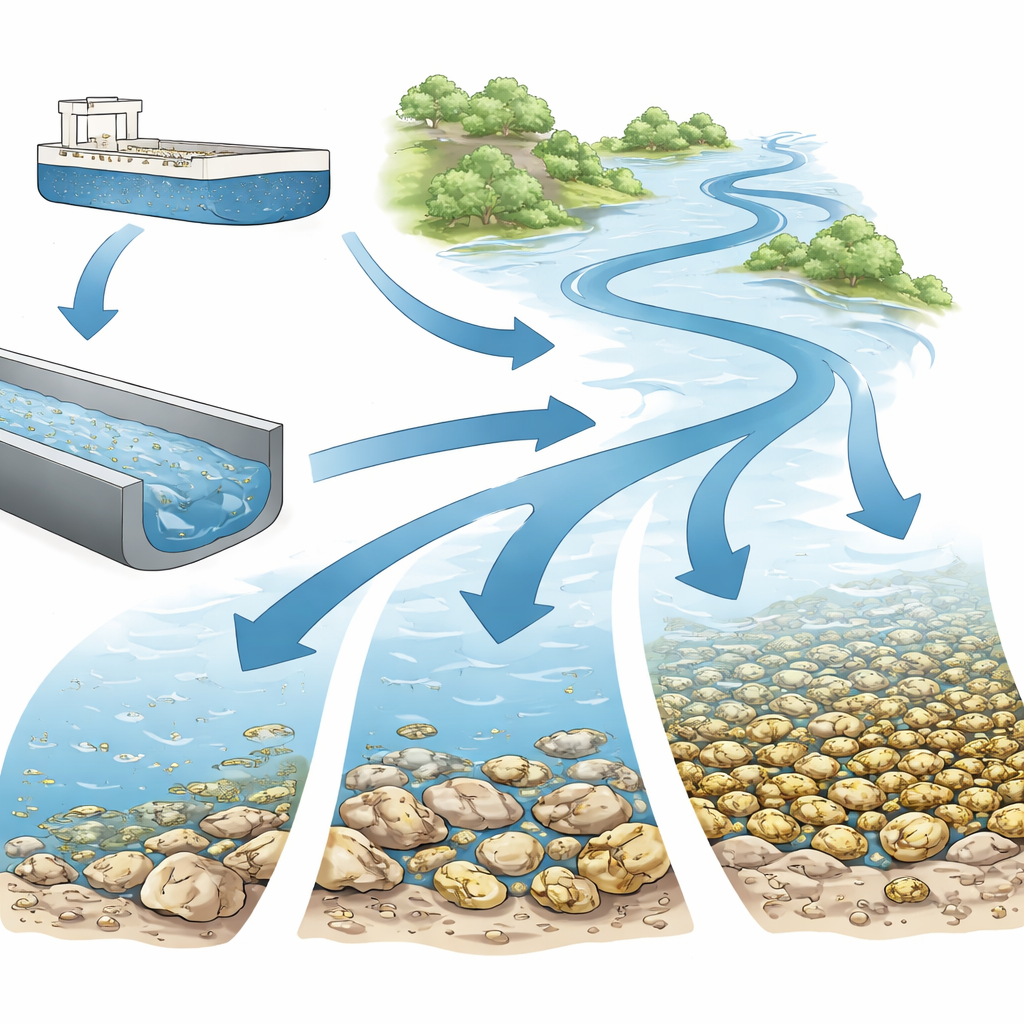
A clear pattern emerges from the results: coastal basins are the primary “bridgeheads” for invasion. Because they receive intense ship traffic and ballast water, coastal rivers consistently show higher invasion risk than inland basins, and this gap widens through time. Once golden mussels establish near a port, they can move inland via navigation channels and engineered transfers that connect once‑separate river systems. The team’s model reproduces the observed spread of golden mussels into Japan, South America, and northern China, including the delayed appearance of heavy infestations after an initial quiet period. In China’s South‑to‑North Water Transfer Project, for example, larvae carried from the donor reservoir gradually colonized the long concrete canal, building up dense populations years after water deliveries began.
Why Some Places Are Hit and Others Are Spared
One puzzle is why golden mussels have invaded South America but not North America, even though models suggest that many North American waters are suitable. The study points to two main reasons. First, strong ballast‑water regulations in the United States and Canada, developed in response to earlier invasions by zebra and quagga mussels, have reduced the number of viable stowaways arriving in ports. Second, those earlier invaders already occupy similar ecological niches and may outcompete any golden mussels that do arrive, adding a layer of biological resistance. In contrast, the extensive river‑navigation network of the Paraná–Paraguay–Uruguay system in South America has acted as an efficient conveyor belt for golden mussels from coastal ports deep into the interior.
Lessons for Safer Waterways
The findings carry direct messages for managing future invasions. The model highlights several yet‑uninvaded but highly suitable and increasingly connected regions—such as parts of North America, Europe, Australia, the Amazon basin, and the Indochina Peninsula—as priority areas for early warning and prevention. Effective measures include stricter treatment of ballast water to kill larvae before discharge, careful design and operation of water‑transfer canals to trap or eliminate larvae (for instance, by using sediment‑rich pulses or settling basins), and making use of natural predators and competitors where appropriate. To a lay observer, the main conclusion is straightforward: as we knit the world’s waters more tightly together through shipping and engineering, we also open invisible doors for damaging species. Thoughtful planning and rigorous safeguards can keep essential trade and water projects running while sharply reducing the chances that a thumbnail‑sized mussel becomes a billion‑dollar problem.
Citation: Zhang, J., Xu, M., Zhan, A. et al. Shipping and water diversion pathways expand the global area at risk from invasive freshwater bivalves. Commun Earth Environ 7, 224 (2026). https://doi.org/10.1038/s43247-026-03256-x
Keywords: invasive species, golden mussel, ballast water, water transfer projects, freshwater ecosystems