Clear Sky Science · en
Climate justice orientation is linked to preferences for decarbonisation policy design
Why fairness matters for climate action
As governments roll out climate policies, from carbon taxes to home heating rules, many proposals stumble not on science or technology, but on public pushback. People want climate action, yet they also ask: “Is this fair?” This study looks closely at what ordinary citizens in Switzerland see as fair when it comes to sharing the costs and benefits of cutting emissions—and how those views shape which climate policies they are willing to support.
Different gut feelings about what is fair
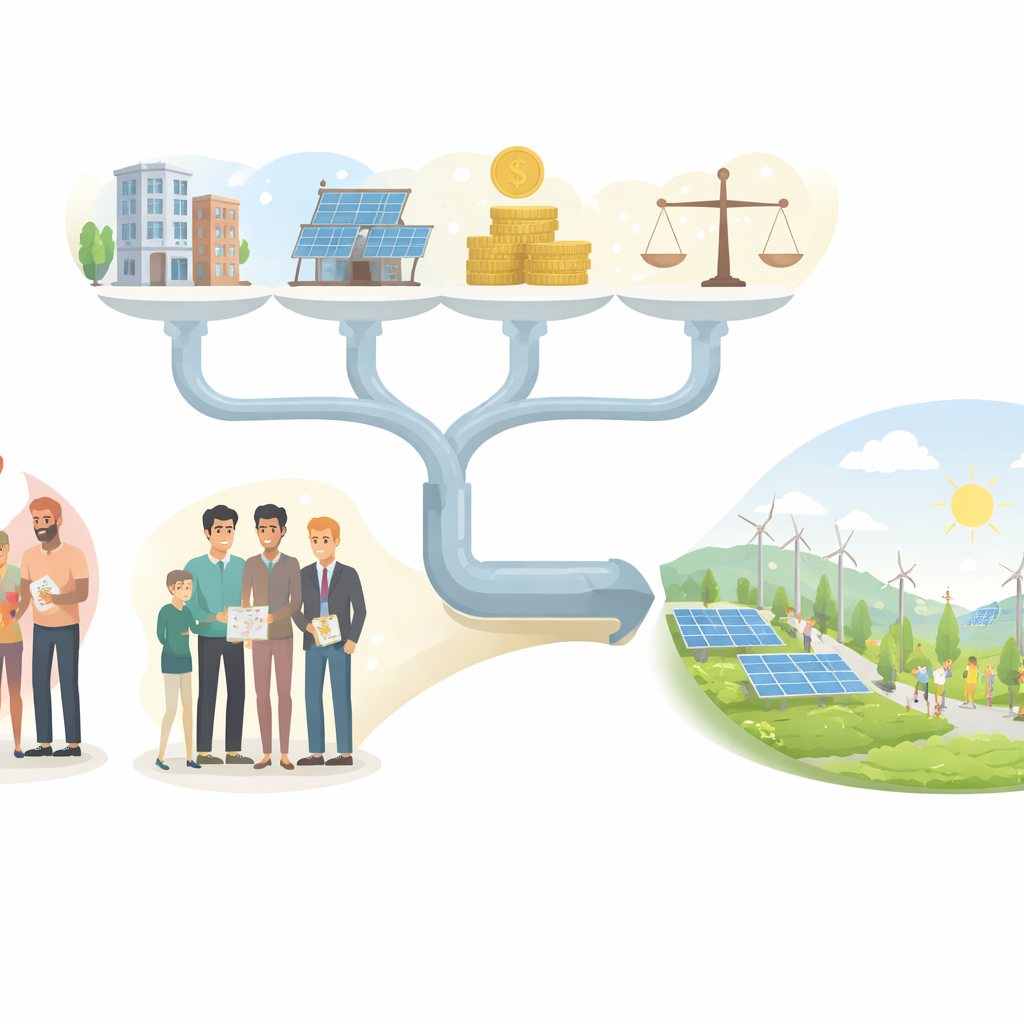
The researchers focus on four everyday ideas about fairness. One stresses that outcomes between rich and poor should not be too unequal. Another says everyone should at least have “enough” to live decently. A third insists that no one should have “too much,” especially when resources and pollution space are limited. The last view cares mostly about keeping overall costs low, without worrying much about who pays how much. Instead of asking people to choose just one, the team measured how strongly each person agreed with all four ideas, across several climate questions about taxes, subsidies, and the energy transition.
Three main public camps emerge
From an online survey of 2,230 Swiss voters, the study used statistical clustering to find patterns in how people combined these fairness ideas. Three broad camps stood out. One, called here the “egalitarian” group, strongly supports limiting both poverty and excess and wants more equal outcomes; these respondents care deeply about redistribution and social equity. A second, larger “universal” group moderately supports all four ideas, showing a general concern for both fairness and efficiency. The third, much smaller “utilitarian” group puts less weight on redistribution and focuses more on keeping total costs down. Together, the two fairness-sensitive groups make up about 90 percent of the sample, suggesting that most people do pay attention to who gains and who loses from climate measures.
How these views shape support for strict policies
The survey then presented participants with pairs of hypothetical climate policy “packages” in two areas: phasing fossil fuels out of home heating, and ramping up renewable power. Each package mixed and matched features such as bans, tax levels, subsidies, and rules about solar panels. Contrary to the idea that voters always dislike tough rules, people overall preferred at least moderately stringent packages to very weak ones. Bans and obligations were often more acceptable than relying only on price signals, especially when paired with measures that eased the burden on low-income households. Most respondents disliked large hikes in carbon taxes unless there were clear protections for those with lower incomes.
Why exemptions and policy bundles matter
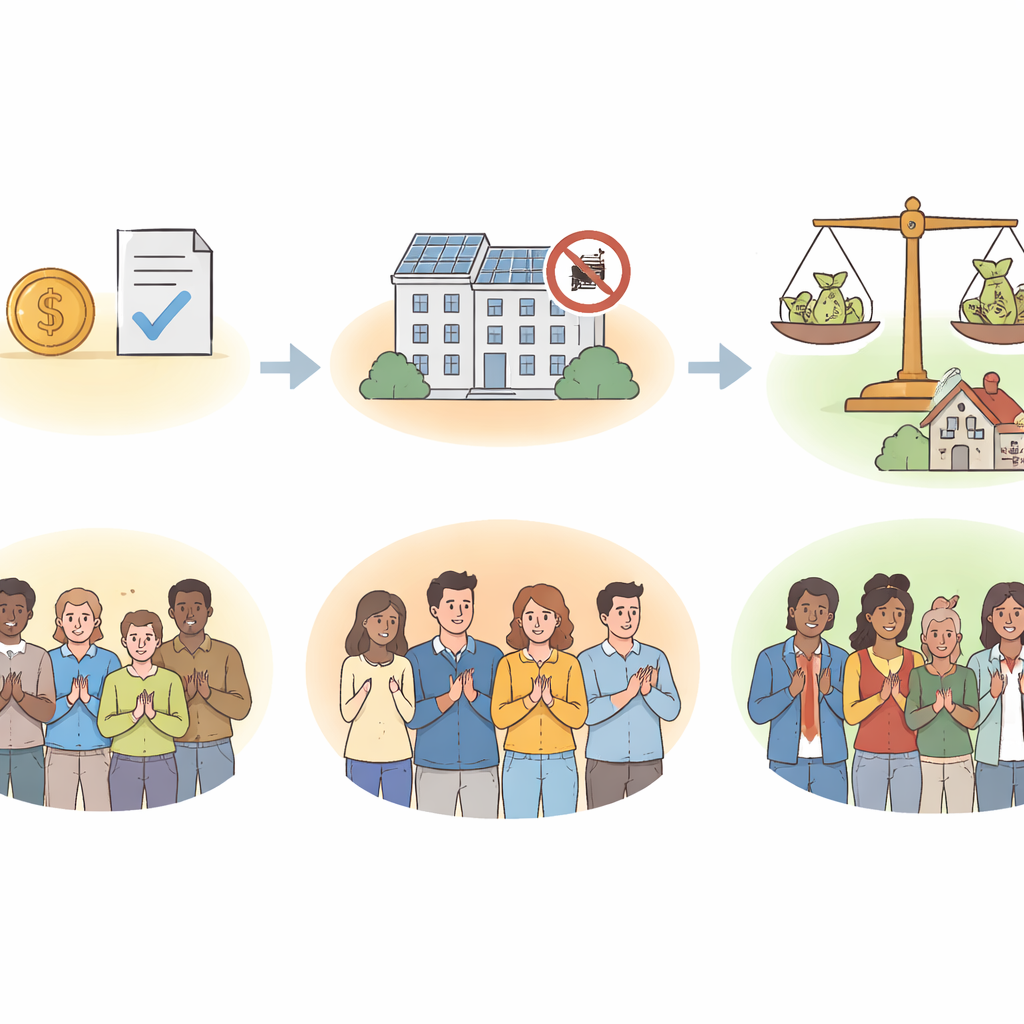
A key test was whether making exceptions for low- and middle-income households could change minds about strict measures. For the fairness-sensitive egalitarian and universal groups, adding such exemptions significantly increased support for policies like fossil boiler bans and fuel tax increases; without these safeguards, many in these groups opposed the same measures. By contrast, the utilitarian group generally did not reward exemptions, reflecting its lower concern with distribution. The study also tested “bundles” of tools: those centered on direct rules and redistributive elements drew broad support across all three camps, while packages focused purely on market mechanisms like taxes, without attention to inequality, were widely rejected.
What this means for real-world climate choices
To check whether these experimental results match behaviour at the ballot box, the authors compared their findings to a national vote on a law to expand renewable electricity, held shortly after the survey. Policy combinations in the experiment that closely resembled the actual law received similar levels of support, suggesting the patterns they found are realistic. The work also shows that people with different incomes, political leanings, and regional backgrounds tend to cluster into different fairness camps, helping explain why debates over climate policy can be so heated even among those who agree that warming is a problem.
Designing climate policies people will live with
For a general reader, the takeaway is reassuring: there appears to be latent majority backing for strong climate policies—provided they are seen as fair. Most people in this study were open to firm rules and ambitious targets, especially when those policies built in protections for households with fewer resources. Packages that combine strict standards with elements that reduce inequality can both cut emissions and win support across diverse fairness viewpoints. In contrast, climate measures that rely mainly on prices and ignore who bears the brunt of the costs are likely to face resistance. The authors argue that understanding these underlying justice orientations should become a routine part of crafting climate policy, to ensure that the low‑carbon transition is not only fast but also socially acceptable.
Citation: Joon, K., Celis, A.P., Seo, R. et al. Climate justice orientation is linked to preferences for decarbonisation policy design. Commun Earth Environ 7, 228 (2026). https://doi.org/10.1038/s43247-026-03255-y
Keywords: climate policy, climate justice, public acceptance, carbon taxes, energy transition