Clear Sky Science · en
Geological regulation of nitrous oxide emission risks in rivers globally
Why the Rocks Beneath Rivers Matter for Climate
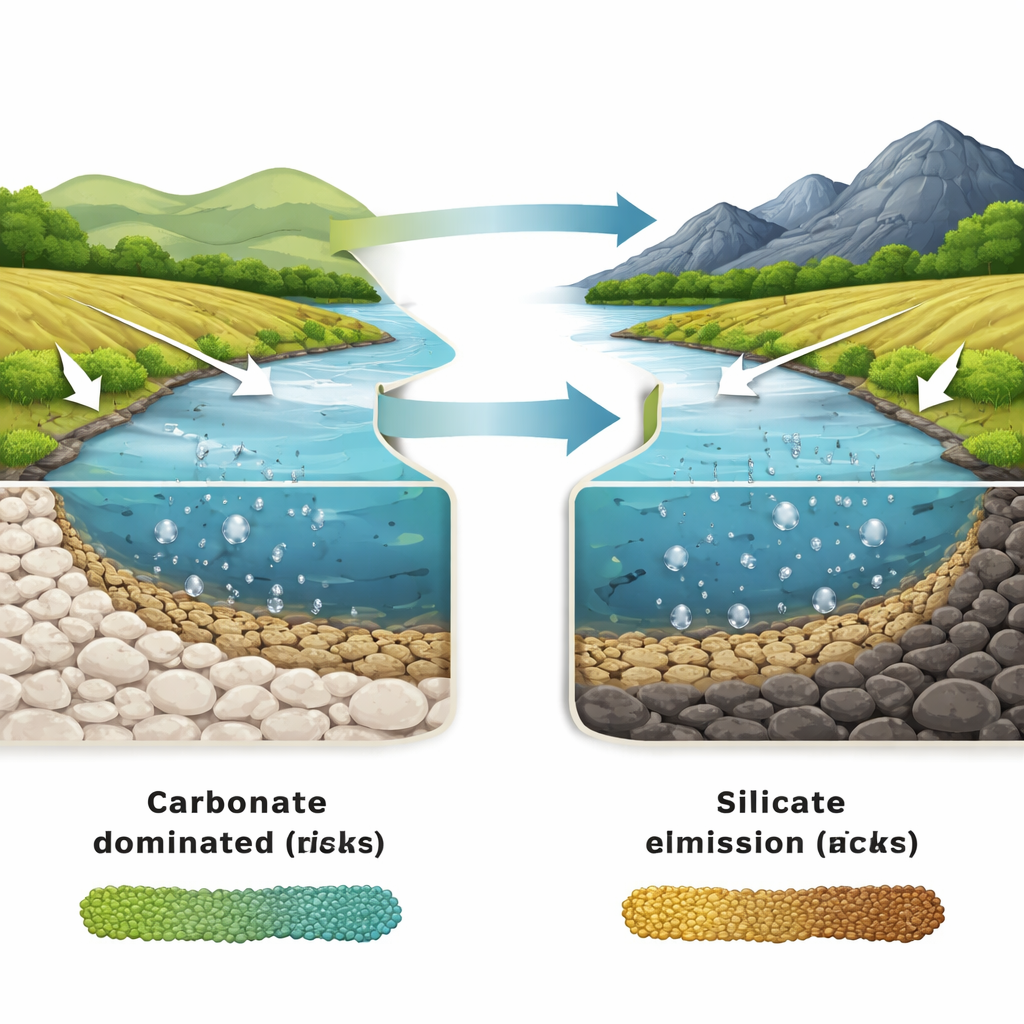
Rivers don’t just move water; they quietly reshape our climate. One of the ways they do this is by releasing nitrous oxide, a powerful greenhouse gas that traps hundreds of times more heat than carbon dioxide. This study shows that the type of rock underlying a river—simple differences between carbonate rocks like limestone and silicate rocks like granite—can strongly influence how much nitrous oxide rivers release, and thus how risky fertilizer use is for the climate in different parts of the world.
Rivers, Fertilizer, and a Hidden Greenhouse Gas
Nitrous oxide forms as microbes in soils and sediments process nitrogen from fertilizers and other sources. Rivers receive runoff from farms and cities and act as pipes linking land, ocean, and atmosphere. For years, most research and policy have treated river nitrous oxide emissions as mainly a consequence of how much fertilizer people apply. Yet, even when fertilizer use is similar, some rivers emit far more nitrous oxide than others. This work asks a basic question: could the geology that shapes a river’s bed and banks be a missing piece in explaining these differences?
Comparing "Soft" and "Hard" Landscapes
The authors studied China’s Pearl River Basin, a vast watershed that conveniently contains both carbonate-rich regions and silicate-rich regions. They measured how fast riverbed sediments removed nitrate—a form of nitrogen pollution—and how much nitrous oxide those same sediments produced. In areas underlain by carbonate rocks, sediments tended to remove a lot of nitrogen while producing relatively little nitrous oxide. In contrast, silicate-dominated stretches removed less nitrogen but generated much more nitrous oxide, with a much higher fraction of the process stopping at this harmful gas instead of completing the journey to harmless nitrogen gas.
How Sediment Texture and Chemistry Steer Microbes
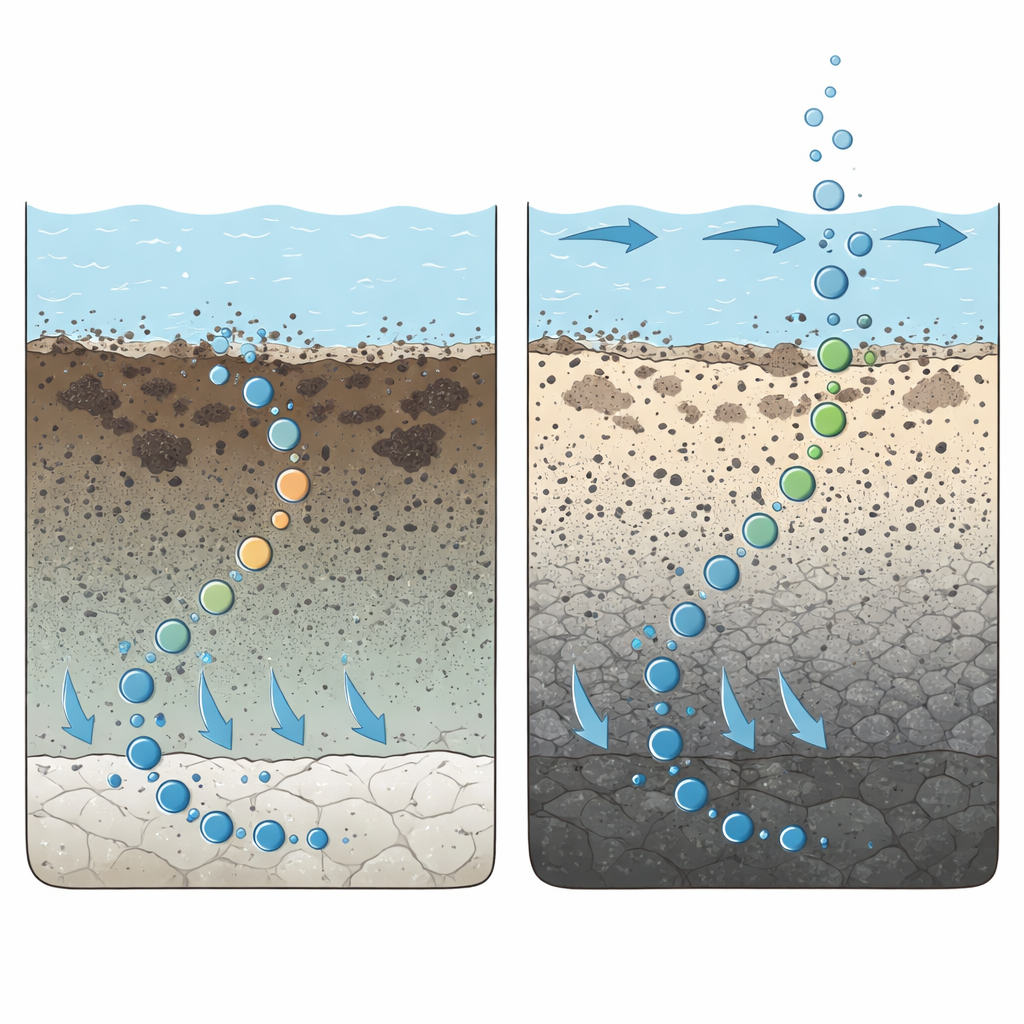
The key lies in how different rocks weather and what that means for riverbed sediments. Carbonate rocks break down quickly into fine particles, creating muddy, compact beds with smaller pores. Silicate rocks resist weathering and yield coarser, sandier beds with bigger spaces between grains. In fine carbonate sediments, water moves slowly and stays in contact with microbes longer, giving them enough time and the right conditions to fully convert nitrate all the way to nitrogen gas. These sediments also hold more organic carbon—the microbes’ food—and are bathed in water with a relatively high pH. Together, these traits favor microbial pathways that finish the job and keep nitrous oxide levels low.
Why Some Rivers Leak More Nitrous Oxide
In coarser silicate sediments, water flows through quickly, so the contact time between nitrate and microbes is short. Organic carbon is scarcer, and the water is less alkaline. Under these conditions, the microscopic assembly line tends to stall at nitrous oxide instead of completing the last step to nitrogen gas. The higher permeability of the sandy bed then makes it easier for this trapped gas to escape from pore spaces into the flowing water and, ultimately, the air above the river. The study found that these physical and chemical differences, set by the underlying bedrock, map directly onto higher nitrous oxide production and higher emission risk, even when fertilizer inputs are comparable.
Global Patterns and Uneven Responsibilities
To see if this pattern holds beyond one basin, the researchers combined worldwide datasets on rock types, sediment properties, river chemistry, fertilizer use, and nitrous oxide emissions. They discovered that rivers draining silicate-dominated watersheds, such as large parts of Africa and South America, tend to emit substantially more nitrous oxide per unit of nitrogen input than rivers draining carbonate-rich regions like much of Europe and parts of Asia. In other words, the same kilogram of fertilizer can carry a higher climate penalty in one country than another, purely because of what kind of rocks lie beneath its rivers.
What This Means for Climate and Farming
For non-specialists, the main message is straightforward: the geology under our feet can amplify or dampen the climate impact of fertilizer use. Silicate-dominated regions are intrinsically more prone to leaking nitrous oxide from their rivers, so they face a higher climate risk from each unit of nitrogen added to fields. By quantifying this effect into a simple geological factor, the authors show that river nitrous oxide emission risk is not uniform across the globe. This insight suggests that fertilizer management should be stricter and more carefully targeted in silicate-rich regions if we want to curb greenhouse gas emissions without sacrificing food production.
Citation: Qi, H., Liu, Y., Wang, H. et al. Geological regulation of nitrous oxide emission risks in rivers globally. Commun Earth Environ 7, 219 (2026). https://doi.org/10.1038/s43247-026-03250-3
Keywords: river nitrous oxide, bedrock geology, carbonate vs silicate, fertilizer runoff, greenhouse gas emissions