Clear Sky Science · en
Microbial communities and plasmids mediate biodegradation of polycyclic aromatic hydrocarbons (PAHs) in coastal sediments
Why hidden helpers in the seafloor matter
Coastal waters often look beautiful on the surface, but their muddy bottoms can quietly store a legacy of oil spills, ship traffic, and industrial runoff. Among the most worrying of these buried pollutants are polycyclic aromatic hydrocarbons (PAHs) – long‑lasting, cancer‑linked chemicals built from rings of carbon. This study explores how microscopic life in coastal sediments not only survives in the presence of PAHs, but actively helps clean them up. By uncovering how microbes organize themselves and share key genes, the research points toward smarter, nature‑inspired ways to restore polluted coasts.
Pollution in the mud
The researchers focused on the Pearl River Estuary in southern China, a heavily used waterway where river‑borne pollution meets the sea. They measured PAHs in seafloor sediments and found concentrations spanning roughly an order of magnitude, with clear hotspots near the river’s main channel and western shore. Most of the contaminants came from oil and related petroleum sources rather than from burning coal or biomass. Risk assessments suggested that many locations faced moderate ecological risk, with some sites edging into higher‑risk territory. These conditions offered a natural gradient of stress, ideal for asking how microbial communities change as pollution increases. 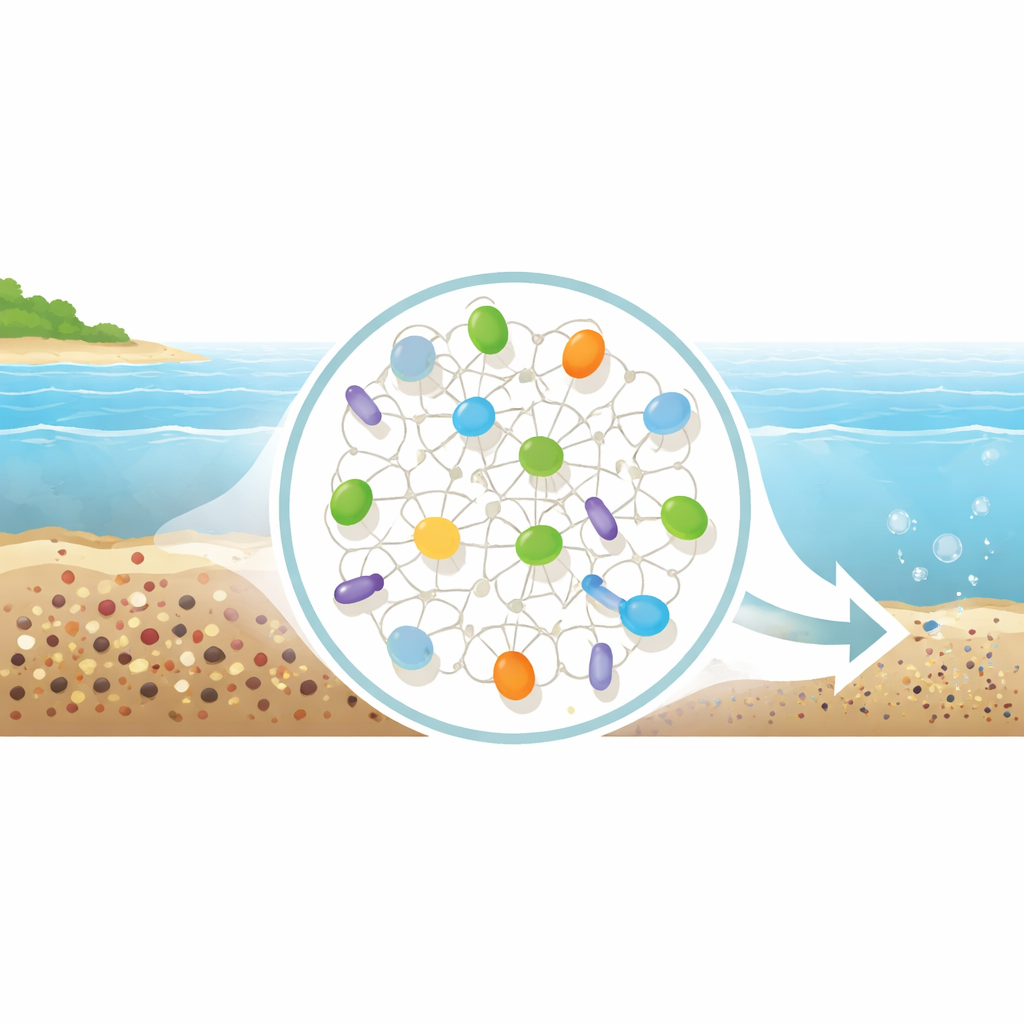
Microbial teamwork under stress
Using DNA sequencing, the team mapped which microbes were present and how they were connected to one another at low, medium, and high PAH levels. As pollution rose, the number of distinct microbial types shrank, but the surviving community formed denser, more tightly knit interaction networks. In other words, fewer players remained, yet they relied more heavily on each other. Key groups such as Pseudomonadota, Chloroflexota, and Bacteroidota, already known for roles in nutrient cycling and pollutant breakdown, became central hubs. This pattern fits the idea that under stress, ecosystems lean on cooperative consortia, where different microbes handle different steps of a complex task like dismantling PAHs.
A cleaner, more efficient chemical route
Breaking down PAHs is not a single reaction but a multi‑stage relay. The study cataloged 59 types of PAH‑related genes and tracked how their abundance shifted with pollution. While the overall number of degradation genes did not simply rise with PAH levels, specific genes did. Early “starter” genes that begin attacking the PAH rings, and many downstream genes that finish the job, became more common in heavily contaminated sediments. Crucially, the community favored one central route over another when processing a key intermediate called catechol. Genes for the so‑called “ortho‑cleavage” route increased with PAH levels, while those for the alternative “meta‑cleavage” route declined. The ortho pathway channels breakdown products directly into the cell’s main energy‑producing cycle and avoids some toxic dead‑ends, suggesting that under high stress, microbes collectively select the chemically safer, more energy‑efficient road.
Plug‑and‑play genes on mobile DNA
Beneath this ecological choreography lies a surprising genetic design. The scientists distinguished genes carried on chromosomes from those on plasmids—small, mobile DNA circles that bacteria can exchange. They found a consistent “division of labor.” The demanding early steps that recognize and open PAH rings were almost always coded on chromosomes, giving host cells stable, tightly regulated control. By contrast, many of the later “central processing” genes were bundled on plasmids in modular clusters, like detachable toolkits. Some plasmids carried multiple genes from the same enzyme complex or pathway step, and many of these modules sat next to mobility‑related elements that help them hop between DNA locations. Certain bacterial groups, especially Rhodobacterales, Woeseiales, and Desulfobacterales, stood out as major carriers and distributors of these mobile degradation modules.
Patterns repeated around the world
To see whether this design was unique to one estuary or part of a broader rule, the team reanalyzed nearly two thousand microbial genomes from coastal sediments spanning Antarctica, the Arctic, Europe, Australia, China, and North America. Despite strong regional differences in which species were most common, the same basic pattern reappeared. Local specialists from a few major groups handled the early, ring‑opening steps, while a more diverse cast of microbes shared the central processing tasks. Again, many of those downstream functions were packaged on plasmids. Interestingly, how heavily communities relied on plasmids depended on environmental stability. Dynamic, human‑impacted estuaries had higher fractions of plasmid‑encoded degradation genes, consistent with a “plug‑and‑play” strategy for rapid adjustment, whereas stable, nutrient‑poor Antarctic lake sediments stored almost all such genes on chromosomes. 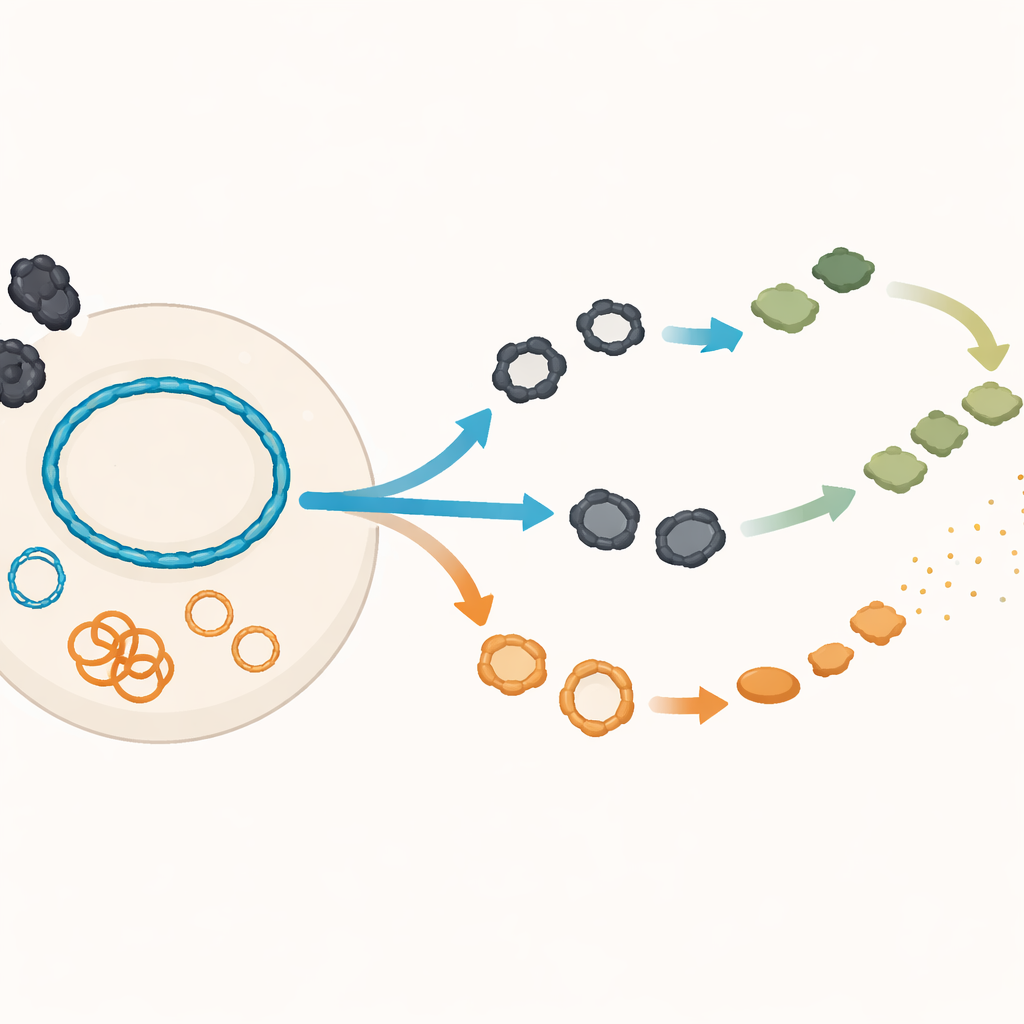
What this means for cleaning up coasts
For non‑specialists, the takeaway is that seafloor microbes act as both a self‑organizing cleanup crew and a genetic lending library. Under PAH stress, they tighten their social networks, favor safer chemical routes, and rely on mobile DNA to quickly spread useful detoxification tools. Over longer times or in very stable settings, some of those tools become permanently built into chromosomes. Understanding this flexible “division of labor” suggests new bioremediation strategies: instead of banking on a single super‑bug, engineers can assemble consortia of complementary local microbes and, where appropriate, encourage the spread of beneficial plasmids. In essence, the study shows how nature already runs a plug‑and‑play pollution control system in coastal sediments—and how we might work with it rather than against it.
Citation: Peng, Z., Wang, P., Ahmad, M. et al. Microbial communities and plasmids mediate biodegradation of polycyclic aromatic hydrocarbons (PAHs) in coastal sediments. Commun Earth Environ 7, 239 (2026). https://doi.org/10.1038/s43247-026-03241-4
Keywords: polycyclic aromatic hydrocarbons, coastal sediments, microbial degradation, plasmids, bioremediation