Clear Sky Science · en
Amazonian fog harbors viable microbes
Invisible life in the morning mist
Early-morning fog over the Amazon rainforest may look serene, but this study reveals it as a bustling airborne habitat. Scientists climbed above the jungle canopy at the Amazon Tall Tower Observatory to find out whether the pale white plumes carry living microbes. Their discovery—that fog droplets contain thriving bacteria and fungi—adds a surprising new piece to the puzzle of how life and nutrients move through one of Earth’s most important ecosystems. 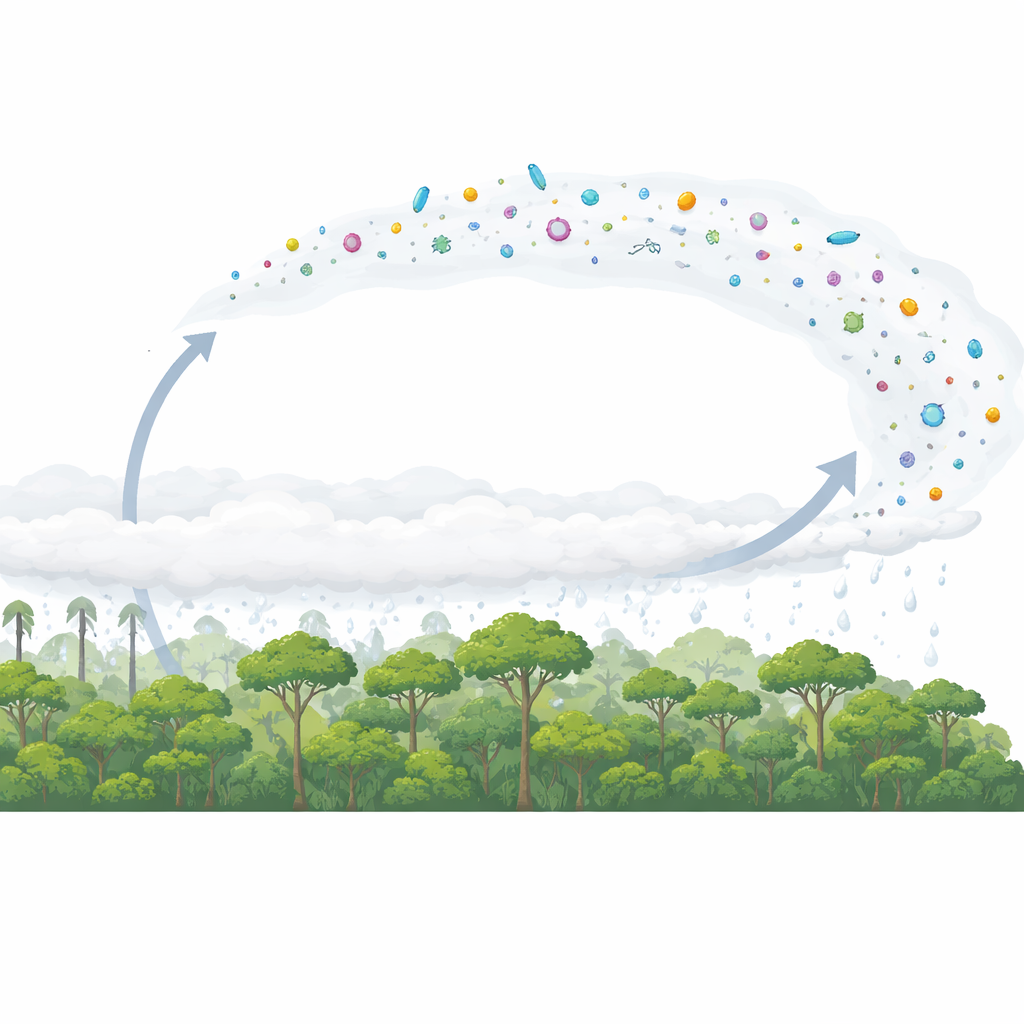
Why fog matters for a rainforest giant
The Amazon acts like a giant natural air conditioner and sprinkler system, recycling water through towering trees that pump moisture into the air. While rain has been studied for decades, low clouds and fog drifting just above the treetops have received far less attention. Yet fog forms frequently at night when humid air cools, especially in the wet season. The authors suspected that these shallow clouds might be more than scenery: they could be vehicles that pick up microscopic life from leaves and soil, carry it through the air, and drop it back elsewhere in the forest, influencing how species spread and how dead plant material is broken down.
Collecting the breath of the forest
To test this idea, the team installed a specialized fog collector 43 meters above the ground, roughly at canopy height, in a remote reserve northeast of Manaus, Brazil. Over three seasonal campaigns—late wet season, late dry season, and early wet season—they sampled 13 distinct fog events, carefully avoiding heavy rain that could wash out or dilute the signal. Each night, high-speed air streams were drawn through taut wires, where fog droplets splashed and drained into sterile bottles. Back in the lab, the researchers counted cells using flow cytometry, a laser-based method that can distinguish live, metabolically active cells from background material, and grew microbes on nutrient gels to identify culturable species. 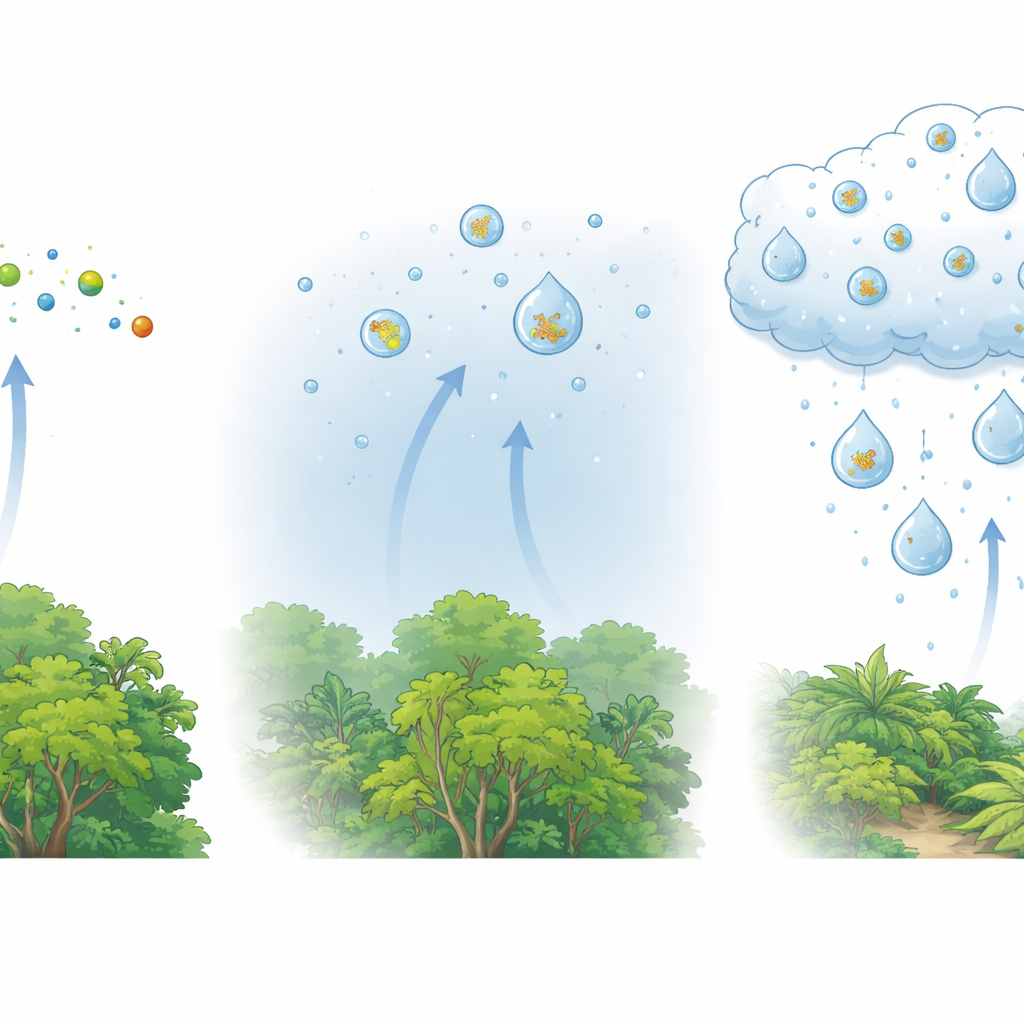
Hidden communities riding on droplets
The fog water turned out to be unexpectedly crowded. Cell counts typically ranged from tens of thousands to nearly one hundred thousand microbial cells in every milliliter of fog water, comparable to values reported for cloud water over other regions of the world. Concentrations swung by an order of magnitude from one event to the next, changes the authors link to shifting aerosol levels, prior rain that scrubs particles from the air, and subtle differences in humidity and temperature before fog formed. Measurements of electric charge suggested that microbe-laden particles are easily drawn into droplets, helping them become tiny seeds for fog formation as well as passengers inside the droplets they help create.
Who lives in the fog and what are they doing?
Culturing and mass-spectrometry-based identification revealed eight bacterial species and seven fungal groups able to grow from fog samples. Among the most frequent were the bacteria Serratia marcescens and Ralstonia pickettii, which tolerate low nutrient conditions and moist surfaces, and Sphingomonas paucimobilis, better suited to drier times. On the fungal side, common decomposers such as Aspergillus niger and Penicillium species appeared often, along with yeasts and other saprophytes typically found on leaves and in soil. Many of these organisms are known elsewhere for breaking down organic matter or helping release nutrients like phosphorus, hinting that their aerial journeys may influence how nutrients are recycled when they eventually settle back onto plants and ground. Because only a small fraction of environmental microbes can be grown in the lab, the true diversity of life in the fog is likely far richer than this first inventory shows.
Fog, climate change, and the future of airborne life
The study also raises concerns about how a warming, drying Amazon might alter this delicate airborne traffic. Climate change, deforestation, and smoke from fires are expected to reduce fog formation by warming the boundary layer and changing the amount and type of particles that seed droplets. Fewer foggy mornings could mean fewer chances for microbes to ride between canopy and atmosphere, potentially shifting patterns of colonization, decomposition, and nutrient delivery—especially near forest edges and savanna frontiers. The authors conclude that Amazonian fog is not just a pretty veil but an active, living bridge between the forest and the sky. Understanding this hidden conveyor belt of microbes will be crucial for predicting how the rainforest’s biology and climate services respond as environmental pressures intensify.
Citation: Godoi, R.H.M., Hara, E.L.Y., Sebben, B.G. et al. Amazonian fog harbors viable microbes. Commun Earth Environ 7, 223 (2026). https://doi.org/10.1038/s43247-026-03233-4
Keywords: Amazon rainforest, fog microbes, bioaerosols, microbial dispersal, ecosystem cycling