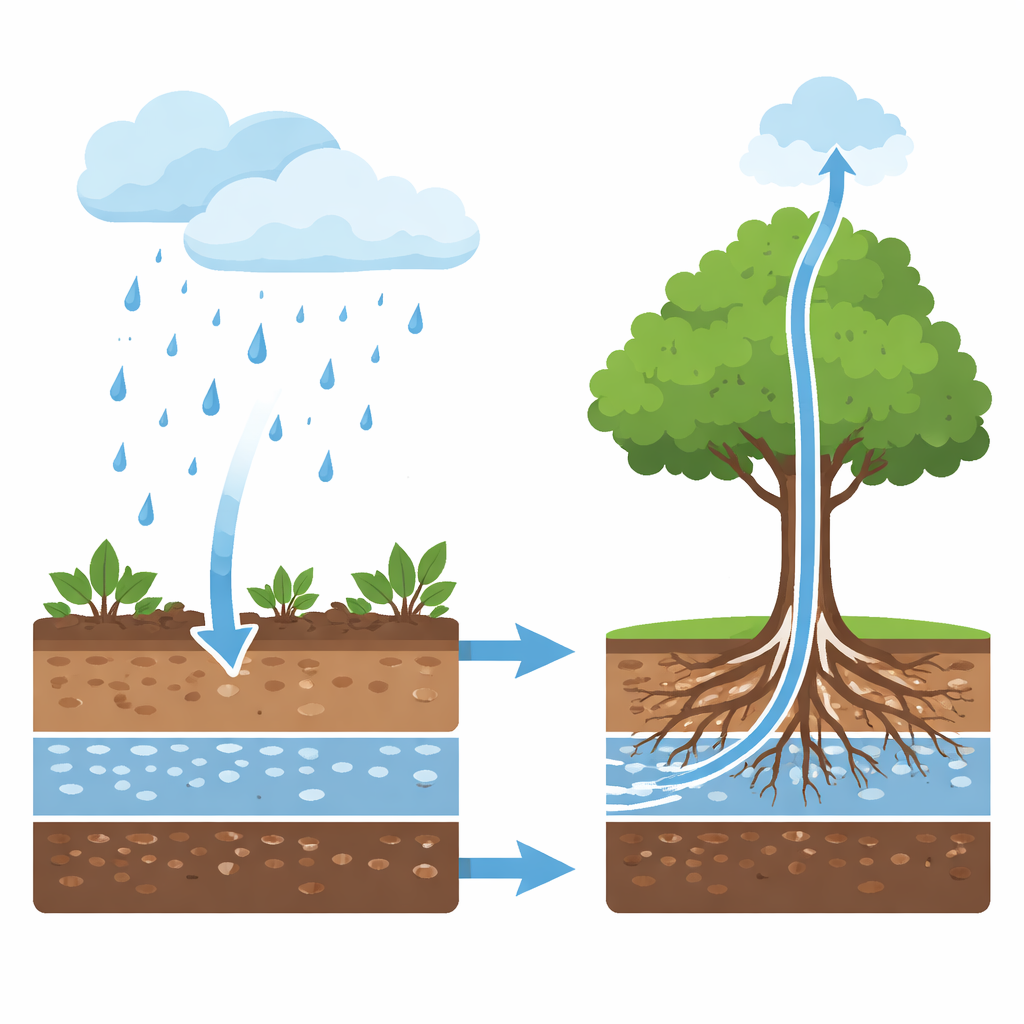
Every glass of water you drink and every breath of oxygen you take is quietly linked to a vast, hidden plumbing system inside plants. As water moves from soil, through roots and trunks, and back to the air, it helps control climate, sustain rivers, and keep crops alive. Scientists often track this movement using tiny natural "tags" in water called stable isotopes. But for years, puzzling mismatches between plant water and surrounding water sources have cast doubt on how well we really understand this flow. This study sets out to solve that mystery.
Following tiny fingerprints in water
Water molecules can contain different forms of hydrogen, including a heavier version called deuterium. By measuring the ratio of heavy to light hydrogen, researchers can follow where water comes from and where it goes. Traditionally, it was assumed that plants take up water from the soil and move it to their leaves without changing these isotopic fingerprints. Yet many recent studies reported consistent differences between the isotope values in plant water and in nearby soil, rain, or groundwater. These so-called "offsets" raised worries that our main tool for tracing plant water sources might be misleading.
Looking closer at hidden water worlds Figure 1.
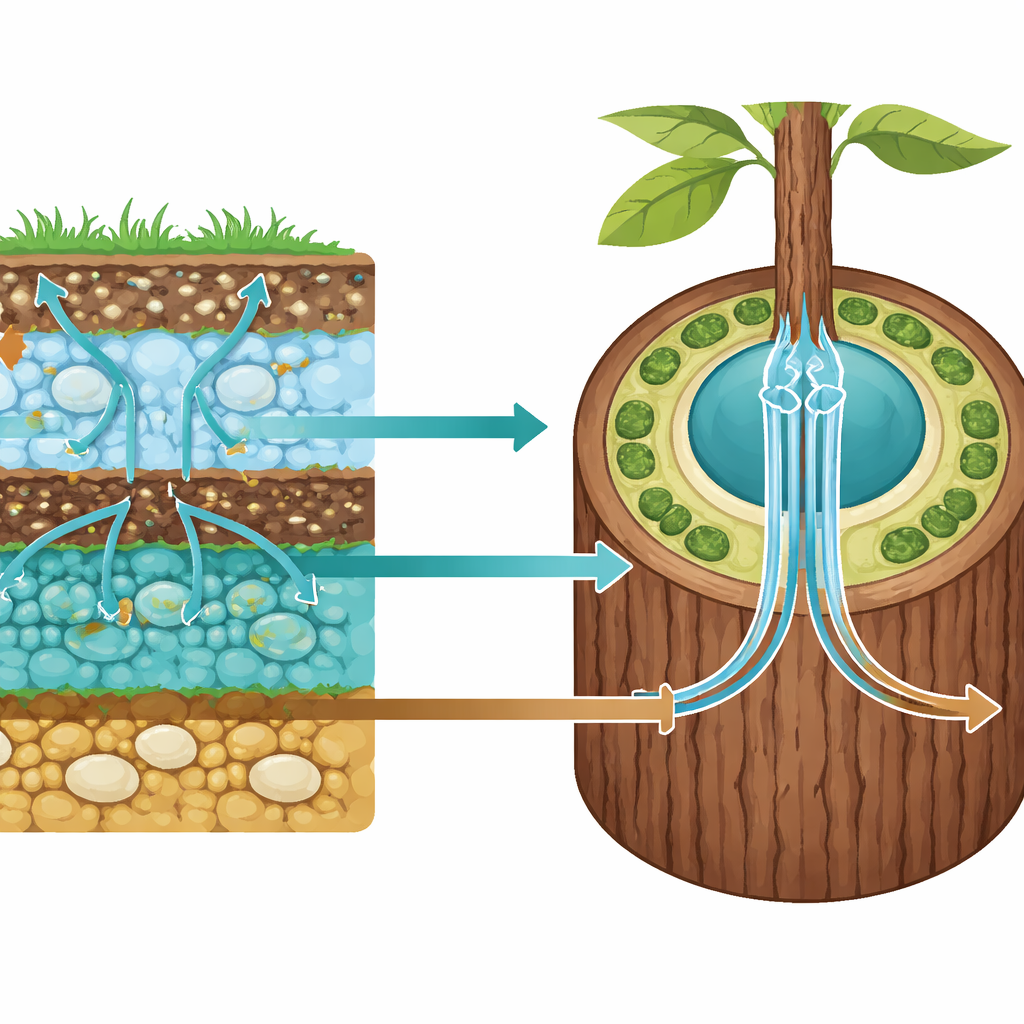
The authors argue that the mystery arises because we have been sampling the wrong parts of the plant–soil system and often mixing different kinds of water together. They introduce a simple but powerful idea: in both soils and plants, not all water is equal. In soils, they distinguish three pools. One is freely draining water that quickly moves downward after rain. Another is plant-available water held in medium-sized pores, where roots can easily drink. The third is tightly bound water clinging to soil particles that roots cannot access. In plants, they likewise divide water into two pools: fast-moving sap inside the main conduits that feeds transpiration, and surrounding tissue water that is more stagnant and can become isotopically different over time.
Re-reading decades of global data
Armed with this framework, the team reanalyzed data from 110 previous studies at 212 sites worldwide, covering forests, drylands, and agricultural systems. Instead of comparing plant water to a single, loosely defined "soil water" value, they built a "possible source" line for each site using all realistic water sources: various soil depths, groundwater, and even fog or dew when plants were known to use them. They then grouped the existing measurements into five scenarios, depending on which soil and plant water pools had actually been sampled—such as bulk soil versus bulk stem water, or plant-available soil water versus flowing sap.
When the right pools are matched, the mystery fades Figure 2.
The results were striking. When bulk soil water was compared with bulk stem water, the isotopic offsets were large and highly variable, confirming the confusion seen in earlier work. Offsets were especially strong when fast-draining soil water—which plants seldom use—was treated as a key source. But in the few cases where plant-available soil water was properly isolated and compared with sap flow or transpired vapor, the average offset essentially disappeared. The difference in deuterium values was so small that it was not statistically different from zero. This means that, once deceptive effects from sampling methods and mixed water pools are removed, plants really do pass source water through their plumbing system without significantly changing its isotopic fingerprint.
What this means for water, climate, and future studies
This work concludes that most of the puzzling isotope mismatches are artifacts of how and where water has been collected, not signs of exotic plant behavior. Getting the right answer depends on carefully separating the specific water that roots actually use and the sap that feeds transpiration from the surrounding bulk water in soil and wood. The authors call for standardized sampling approaches that focus on these physiologically meaningful pools. With better methods, isotope studies can more reliably reveal where plants find water, how they share it with rivers and groundwater, and how ecosystems will respond as climate change reshapes global water cycles.
Citation: Li, Y., Good, S.P. & Wang, L. Demystifying stable hydrogen isotope offsets between plants and source waters.
Commun Earth Environ7, 213 (2026). https://doi.org/10.1038/s43247-026-03230-7
Keywords: plant water uptake, stable isotopes, soil water pools, ecohydrology, transpiration