Clear Sky Science · en
Green mining policies reduce carbon emissions in Chinese coal production bases
Why coal still matters for the climate
Coal is often seen as yesterday’s fuel, yet it still powers much of the world’s electricity and industry. China alone produces more than half of global coal, so what happens in its coal mines has a huge impact on climate change. This study asks a pressing question: if we cannot quit coal overnight, can smarter rules and cleaner mining practices at least cut the carbon pollution that comes from digging it up?
Turning old mines into cleaner operations
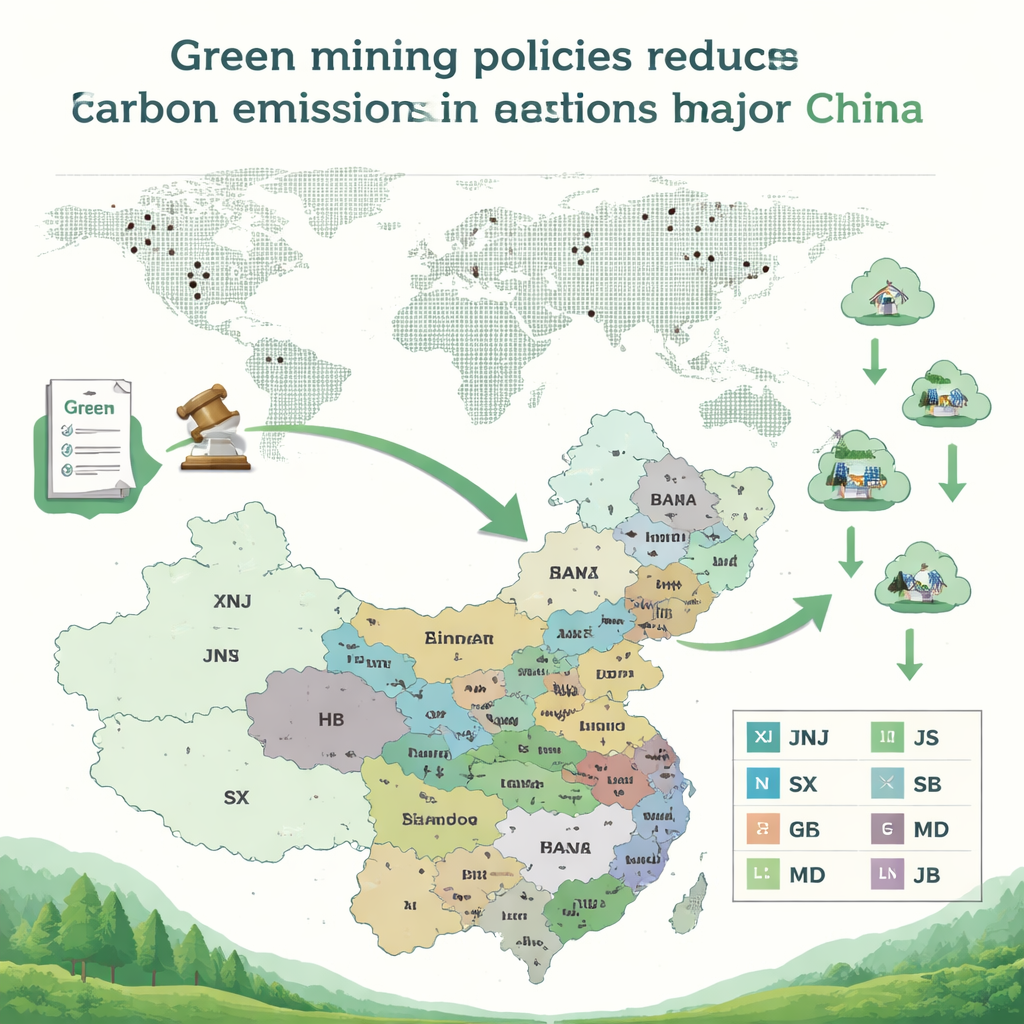
Over the past two decades, China has tried to transform its coal sector with “green mining” policies. These rules aim to make mines safer, more efficient and less damaging to land, air and water. They encourage better technology, stricter environmental oversight and consolidation of many small, dirty mines into fewer, larger operations. The authors focus on 14 massive coal production bases that together produce almost all of China’s coal. By tracking how these policies spread across regions and over time, they explore whether greener mining on paper translated into real climate gains underground.
Measuring the carbon footprint of digging coal
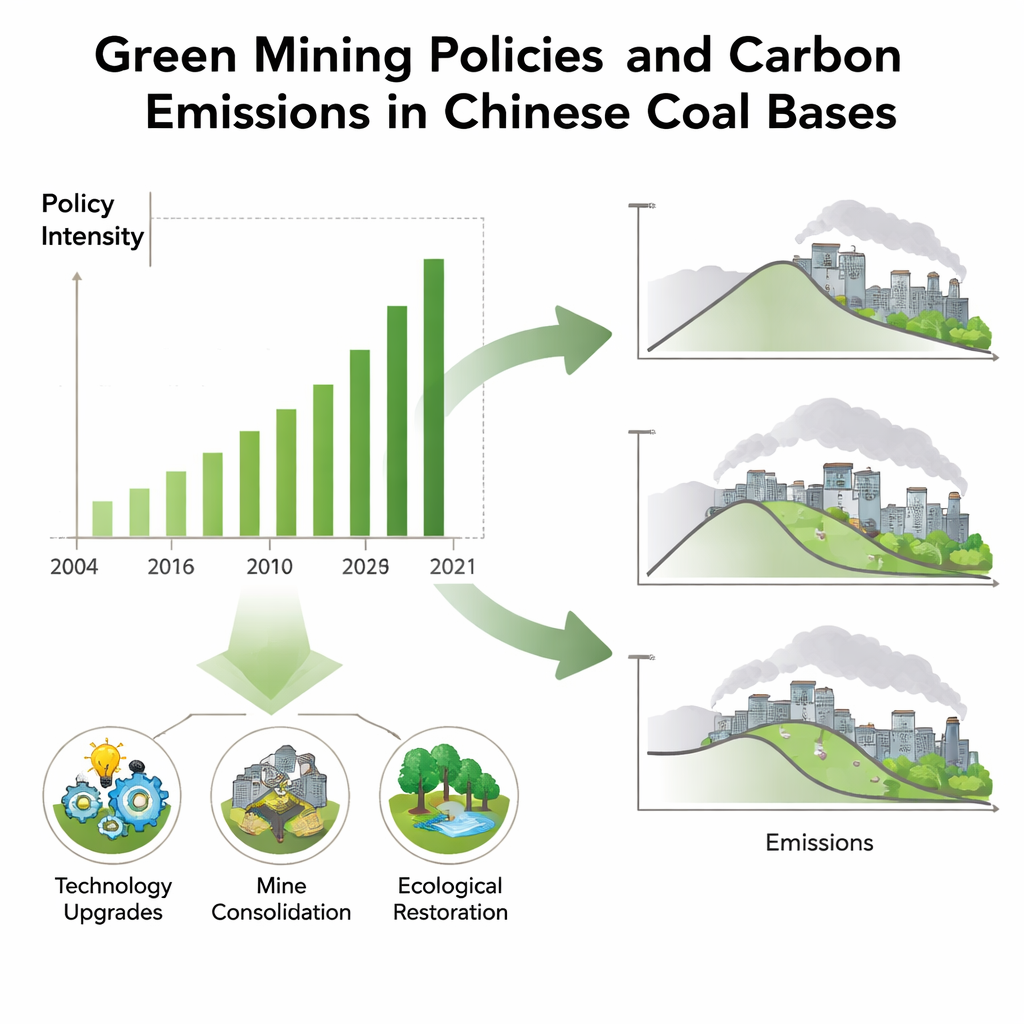
To get at this problem, the researchers assembled detailed data from 81 cities inside the 14 coal bases between 2004 and 2021. They estimated the greenhouse gases released during coal extraction itself, including fuel burned by machines, energy used to power equipment and some fugitive gases from the mines. Using established international methods, they built emission factors for different kinds of mines and scaled them up using city-level coal output. In parallel, they combed through national, provincial and city policy documents mentioning green mining, scored how strong and detailed each rule was and then built a yearly “policy intensity” index for every coal base.
What happened after green rules took hold
The team then used an interrupted time‑series approach, a statistical method that looks for changes in trends before and after a major policy shift. Before national green mining guidelines arrived around 2010–2011, carbon emissions from coal production were climbing across almost all coal bases, driven by the country’s booming energy demand. After the policies took effect, the picture changed. In most regions, emissions either began to fall or rose much more slowly, even as coal remained central to China’s energy mix. The study estimates that, on average, green mining policies cut emissions from these coal bases by about 43.6 million tons of CO₂ each year compared with what would have happened without them.
Why some coal regions cleaned up faster than others
The impact of policy was far from uniform. Eastern coal bases, which tend to have stronger local governments and more advanced technology, saw some of the quickest and most stable reductions. Several western bases also reacted strongly, helped by earlier moves to shut down outdated mines and build larger, more efficient operations. In contrast, parts of central and northeastern China showed delayed or weaker responses, especially where energy security and production targets kept coal output high. The analysis also reveals that simply having more rules is not enough: the strength of enforcement, local industrial conditions and whether policies come with clear goals and tools all shape how much emissions actually fall.
How rules turn into real carbon cuts
Looking under the hood, the study finds that green mining policies work through two main channels. First, they push the closure of small, inefficient and unsafe mines, shifting production to fewer, larger sites that can use modern equipment and pollution controls. This structural shift can quickly cut emissions per ton of coal. Second, they encourage gradual upgrades in mining technology, energy use and environmental management, including better gas capture and land restoration, which lower carbon intensity over time. However, most policies still rely heavily on government commands and lack precise, measurable targets, and market‑based incentives such as carbon pricing or green finance remain limited.
What this means for a coal‑dependent world
For non‑specialists, the bottom line is that smarter rules have already made a measurable dent in the climate impact of China’s coal production, even though coal itself has not disappeared. The study shows that well‑designed, consistently enforced policies can bend the emissions curve in one of the hardest‑to‑clean sectors. At the same time, it underscores that policy design matters: places with clearer goals, better governance and modern technology gained the most. As other coal‑heavy countries look for ways to balance energy needs with climate action, China’s experience suggests that tightening how coal is produced can buy valuable time on the path toward cleaner energy systems.
Citation: Mu, J., Liu, B., Zheng, H. et al. Green mining policies reduce carbon emissions in Chinese coal production bases. Commun Earth Environ 7, 187 (2026). https://doi.org/10.1038/s43247-026-03223-6
Keywords: green mining, coal emissions, climate policy, China energy, carbon reduction