Clear Sky Science · en
Triple-isotopic analyses pinpoint microbial methane release from subsea permafrost in the inner Laptev Sea
Hidden Gas Beneath the Arctic Sea
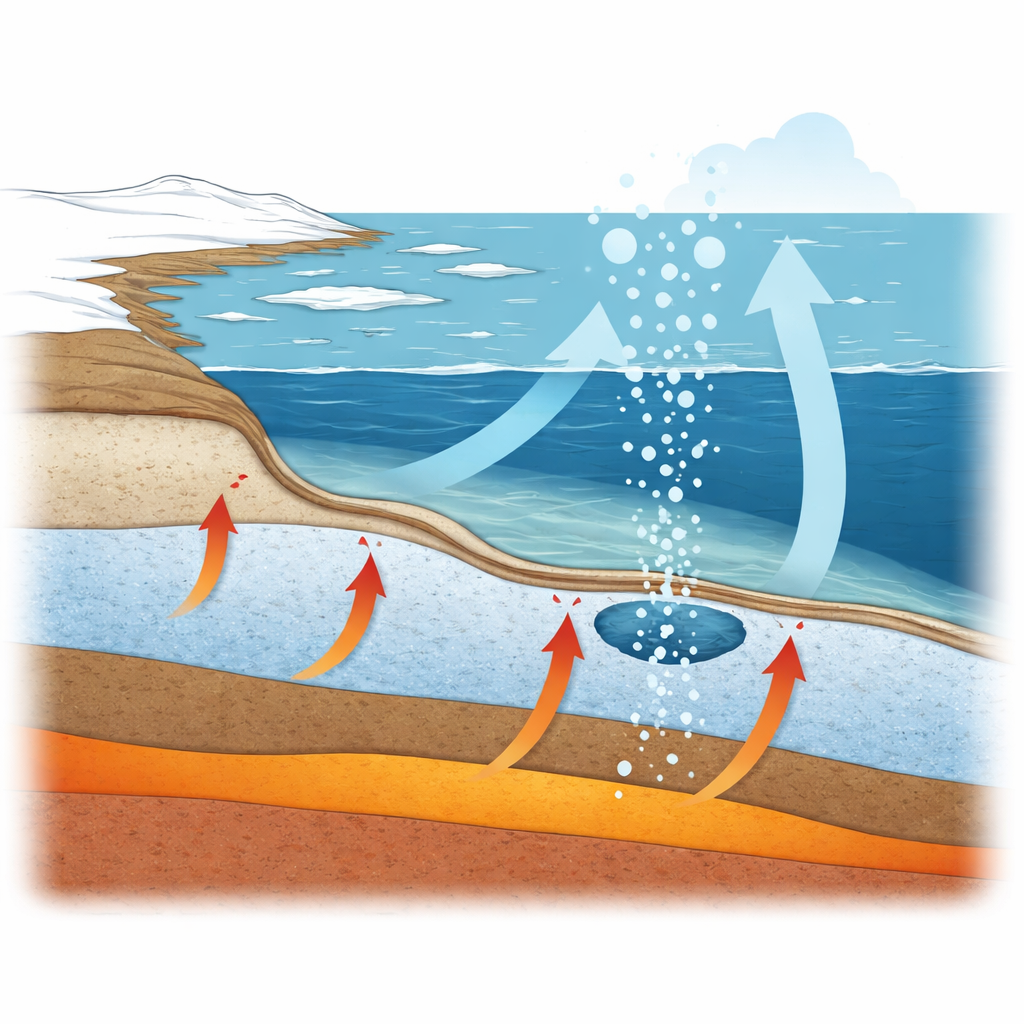
Far off the Siberian coast, a shallow Arctic sea hides a frozen layer of seafloor called subsea permafrost. As the Arctic warms faster than the rest of the planet, this once-stable ground is beginning to thaw. Locked inside it is a huge store of methane, a powerful greenhouse gas. This study asks a pressing question: what kind of methane is leaking out, how old is it, and how likely is it to reach the atmosphere and influence future climate warming?
Methane Hotspots in Shallow Arctic Waters
Researchers carried out four ship expeditions between 2016 and 2020 to the inner Laptev Sea, part of the vast East Siberian Arctic Shelf. Using sonar to spot rising bubble plumes and sensors to measure dissolved methane, they mapped a major hotspot where methane levels in bottom waters reached up to 6000 times what would be expected if the sea were simply in balance with the air above. These hotspots shifted somewhat from year to year, but the region consistently showed intense bubbling from the seabed, especially below a shallow density layer about 10–15 meters down, signaling strong and persistent gas release from below.
Tracing the Age and Origin of the Gas
To work out where this methane comes from, the team treated each gas sample like a chemical fingerprint. They measured three different isotope signals in the methane: carbon-13, carbon-14, and deuterium (a heavy form of hydrogen). The carbon-14 signal shows the gas is extraordinarily old—more than 48,000 years—far older than modern plant material. At the same time, the stable carbon and hydrogen patterns match methane made by microbes, not by the high-temperature processes that create conventional natural gas and oil. Together, these clues point to ancient microbial methane that has long been stored in frozen sediments, rather than younger methane recently produced in surface muds or flowing in from rivers.
Leaks from a Long-Frozen Storehouse
By combining these isotope fingerprints with a statistical mixing model, the scientists separated the contributions of different deep sources. They find that the dominant share—around 60 to 80 percent—comes from what they call subsea permafrost-associated methane: microbial gas produced from old organic matter and then trapped as free gas or ice-like methane hydrate inside the frozen seafloor. Smaller fractions appear to come from deeper fossil gas reservoirs. The pattern of vigorous bubbling, together with earlier drilling and modeling work, suggests that the main releases occur along thawed corridors in the permafrost, known as taliks, which act as vertical pathways for gas to move upward from these buried pools.
From Seafloor Bubbles to the Air Above
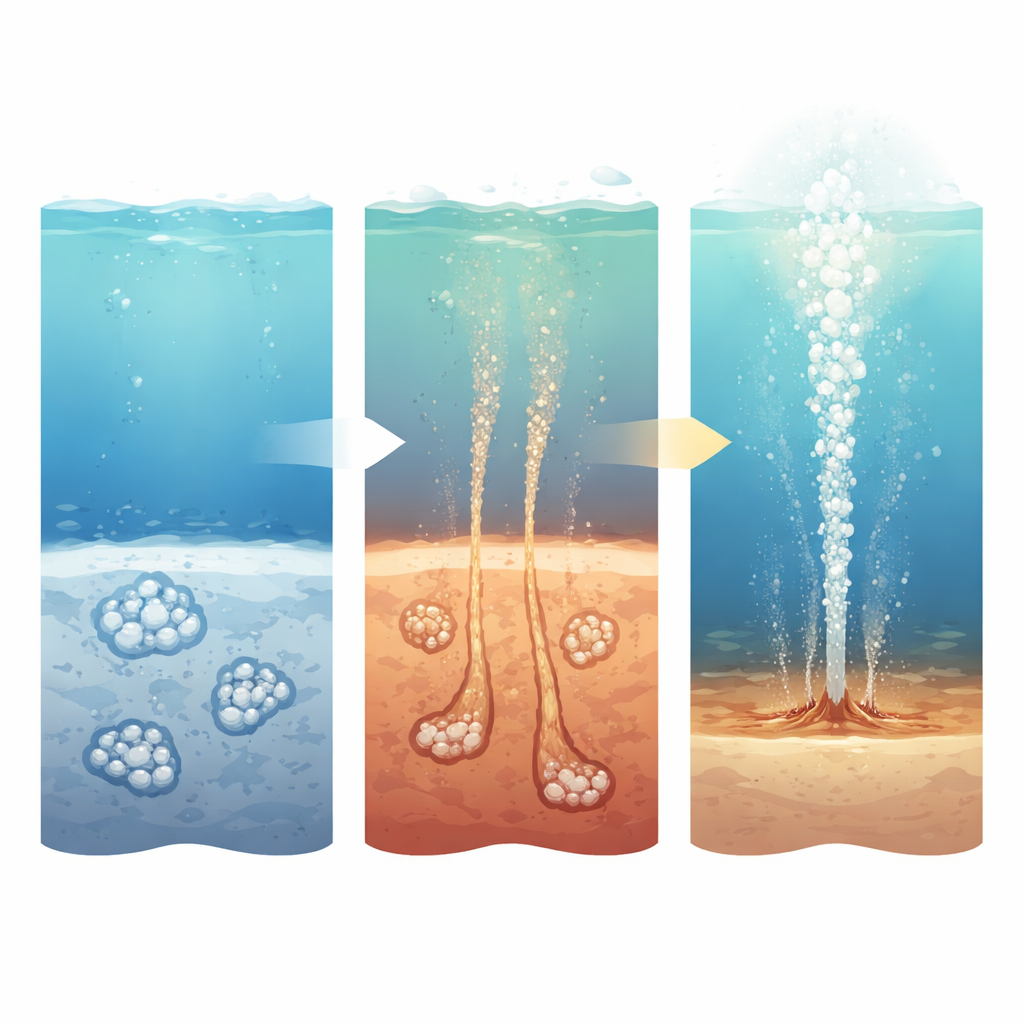
Tracking the methane’s journey after it leaves the seabed, the team found that the same isotope fingerprint appears from bottom waters right up to the surface, with only modest changes. If bacteria in the water were destroying much of the methane, the isotope signals would shift strongly in a recognizable way. Instead, the data indicate that oxidation is limited and that the main driver of changing concentrations is simple mixing and dilution as bubbles rise and partially dissolve. In this very shallow sea, much of the gas is likely to reach the surface quickly, especially during storms that vigorously stir the water, and then continue into the atmosphere.
What This Means for Future Warming
The study reveals that a large, long-frozen store of microbial methane beneath the inner Laptev Sea is already leaking, and that the gas can efficiently escape to the air. This behavior differs from deeper offshore areas of the Laptev Sea, where earlier work pointed to mainly thermogenic, petroleum-like methane. The message is that the Arctic shelf does not have a single type of methane source but a patchwork of ancient stores and release routes. Because the subsea permafrost and any methane hydrates it contains are vulnerable to continued warming, these emissions could grow in the future, adding an extra push to global climate change that current monitoring systems might struggle to detect in time.
Citation: Brussee, M., Holmstrand, H., Wild, B. et al. Triple-isotopic analyses pinpoint microbial methane release from subsea permafrost in the inner Laptev Sea. Commun Earth Environ 7, 211 (2026). https://doi.org/10.1038/s43247-026-03222-7
Keywords: subsea permafrost, Arctic methane, Laptev Sea, climate feedback, methane hydrates