Clear Sky Science · en
AI-powered open-source infrastructure for accelerating materials discovery and advanced manufacturing
Why Smarter Materials Matter to Everyday Life
From longer‑lasting phone batteries to compostable food packaging and cleaner power, many of tomorrow’s breakthroughs depend on inventing better materials. This article explains how artificial intelligence (AI), open‑source software, and automated labs are reshaping the way we discover and manufacture these materials. Instead of relying on slow trial‑and‑error in the lab, researchers are building shared, AI‑driven infrastructures that can search huge design spaces, cut waste, and keep environmental impacts in check.
From Trial and Error to Learning Machines
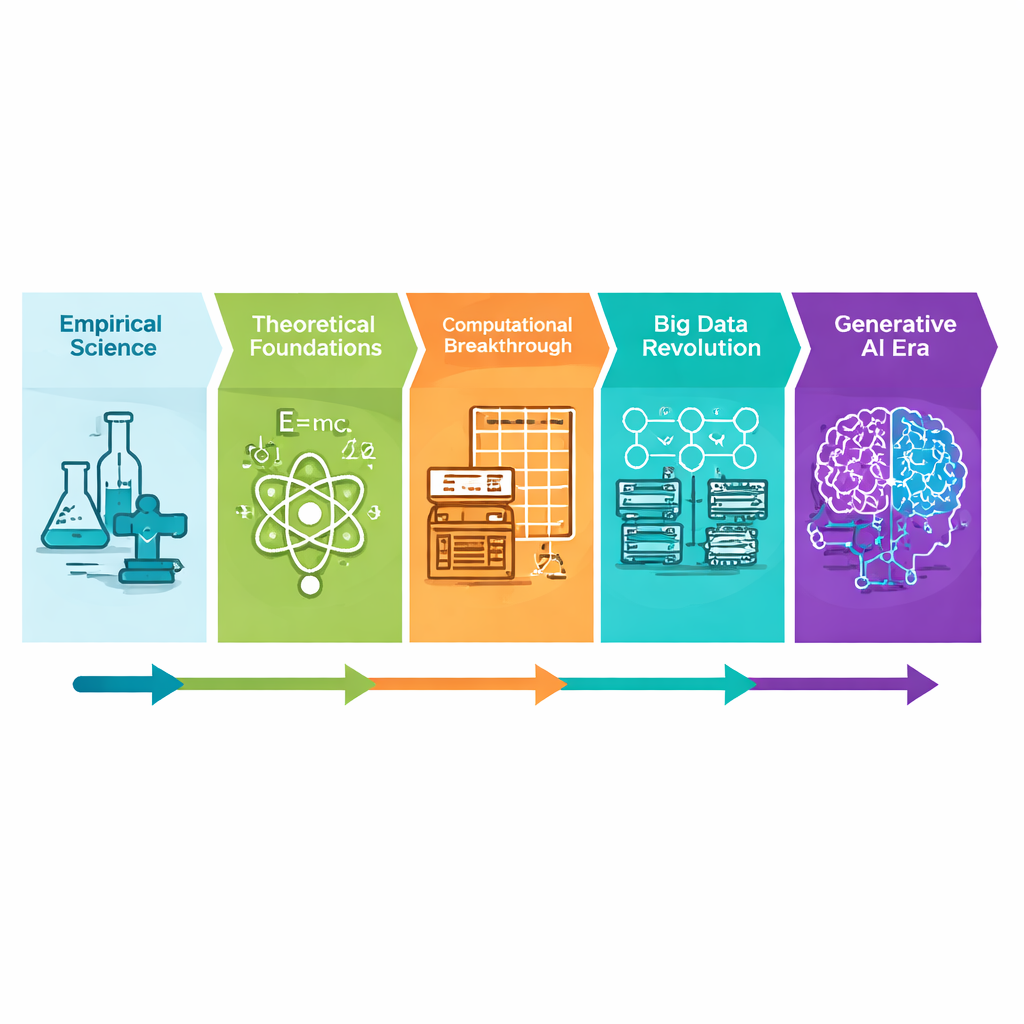
For most of history, new materials emerged through patient tinkering: mix ingredients, heat or cool them, and see what happens. In the twentieth century, physics and chemistry gave scientists equations to predict behavior, and later, powerful computers let them simulate materials atom by atom. In the last two decades, masses of experimental and simulation data have enabled machine‑learning models to spot patterns and predict properties faster than any person could. Today, a new wave of “generative” AI does not just predict how known materials behave; it proposes entirely new recipes that could be stronger, lighter, cheaper, or greener than anything yet made.
Why Open Tools and Shared Data Are Game Changers
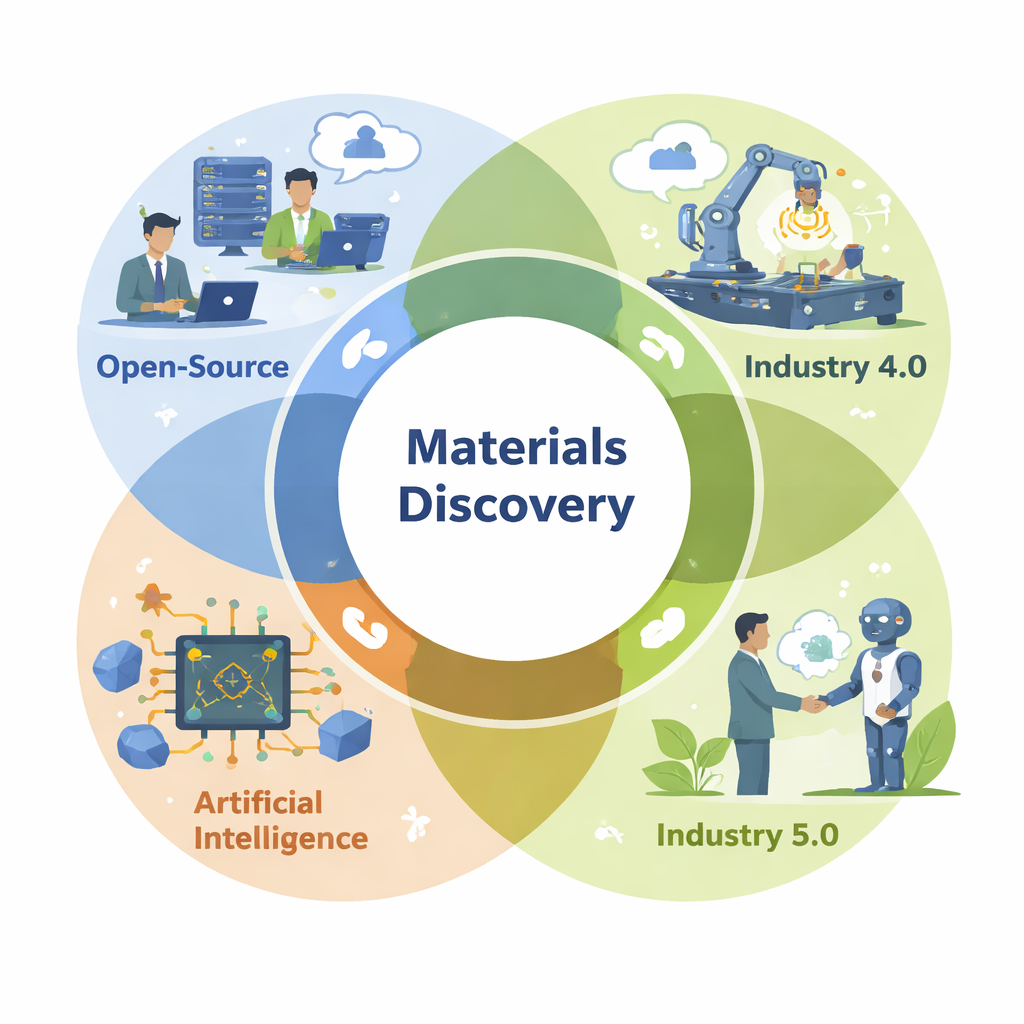
The review argues that open‑source platforms are as important as the AI itself. Public databases such as the Materials Project and NOMAD store millions of computed and measured properties for metals, polymers, batteries, and more. Anyone can download these data to train models or check results, which speeds progress and improves trust. Open software libraries help researchers clean and combine messy data, build simulations, and run machine‑learning models on common code bases. This shared infrastructure lowers the barrier for smaller labs and companies, reduces duplicated effort, and makes it easier to reproduce results—key ingredients for reliable science.
Self‑Driving Labs, Smart Factories, and Trustworthy Data
A central theme of the paper is the rise of “self‑driving” laboratories and smart factories. In these setups, robots mix and test samples around the clock while AI chooses the next experiment based on previous results. Digital twins—virtual copies of equipment and processes—let researchers explore “what if?” questions before changing real hardware. To keep predictions physically sensible, new methods blend data‑driven models with basic laws of nature. At industrial scale, cloud and edge computing work together: large data sets are processed in remote data centers, while quick decisions are made near the machines themselves. Blockchain and similar tools can track where data came from, who changed it, and how materials move through supply chains, helping to secure intellectual property and verify sustainability claims.
Balancing Speed with Planet and People
The authors also stress that faster is not automatically better if it comes at the planet’s expense. Training giant AI models and running massive simulations can consume substantial electricity and emit significant greenhouse gases. The paper reviews tools that estimate the energy use and carbon footprint of AI workloads and encourages life‑cycle assessments that include both computing hardware and data centers. It highlights emerging practices such as using more efficient chips, choosing cleaner power sources, reusing hardware longer, and designing models that are “right‑sized” rather than simply larger. Ethical guidelines and explainable AI are presented as essential safeguards so that automated systems remain transparent, fair, and under human oversight.
Looking Ahead: A Shared Roadmap for Better Materials
In closing, the article outlines a roadmap for building end‑to‑end, AI‑powered infrastructures that serve both innovation and sustainability. It calls for data that are easy to find and reuse, models that explain their reasoning, and federated learning schemes that let institutions collaborate without exposing sensitive data. It also points to future opportunities, from quantum computers that could simulate tricky materials more accurately to quantum‑inspired machine learning that tackles complex design problems. For a lay reader, the message is clear: by combining open data, smart algorithms, and responsible design, we can greatly accelerate the discovery of safer, more sustainable materials that will quietly improve everyday products and help address global challenges such as climate change and resource scarcity.
Citation: Salas, M., Singh, A., Pignataro, C. et al. AI-powered open-source infrastructure for accelerating materials discovery and advanced manufacturing. Commun Mater 7, 65 (2026). https://doi.org/10.1038/s43246-026-01105-0
Keywords: materials discovery, artificial intelligence, open-source platforms, self-driving laboratories, sustainable manufacturing