Clear Sky Science · en
Sustainable rare earth extraction from phytomining by rapid electrothermal calcination
Turning Plants into High-Tech Treasure
From smartphones and wind turbines to electric cars, many of today’s essential technologies depend on rare earth elements, a family of metals that are surprisingly hard to obtain cleanly. Traditional mining can scar landscapes, consume vast amounts of energy and water, and leave behind toxic waste. This study explores a different path: using common ferns to “farm” rare earths from poor soils, then unlocking those metals with a fast, electricity-driven heat treatment that aims to cut pollution, costs, and carbon emissions.
Why Rare Metals Matter
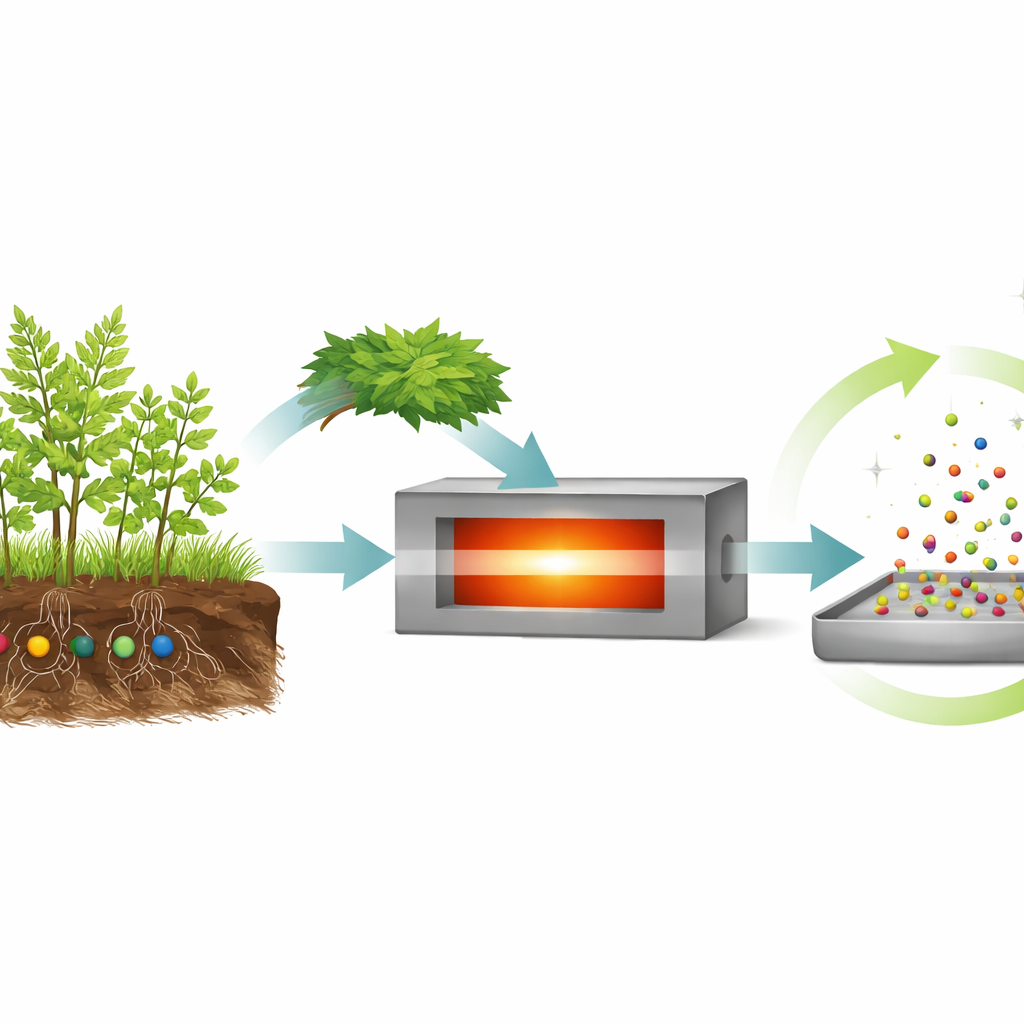
Rare earth elements are critical ingredients in magnets, batteries, and advanced electronics that underpin the global shift to cleaner energy. Yet most of the world’s supply comes from a handful of mines that generate high greenhouse gas emissions and huge streams of acidic wastewater. At the same time, certain plants growing on former rare-earth deposits naturally soak up these metals from the soil, packing them into their leaves and stems. This idea, known as phytomining, turns vegetation into a living sponge for valuable elements. The challenge has been how to efficiently extract the metals from that plant matter without simply swapping one polluting process for another.
From Fern Fields to Metal-Rich Ash
The researchers focused on two fern species that naturally accumulate large amounts of rare earths: Blechnum orientale and Dicranopteris linearis. After harvesting and drying the plants, they ground the biomass into powder and subjected it to a new treatment they call rapid electrothermal calcination. Instead of slowly baking the material in a conventional furnace for hours, they passed an electric current through a carbon heater supporting the plant powder. This approach heated the sample to around 1000 degrees Celsius in seconds and held it there for only about 20 seconds. The burst of heat burned away most organics while preserving the metals, yielding an “activated” solid that could be processed with relatively mild sulfuric acid to pull the rare earths into solution.
How a Quick Blast of Heat Frees Hidden Metals
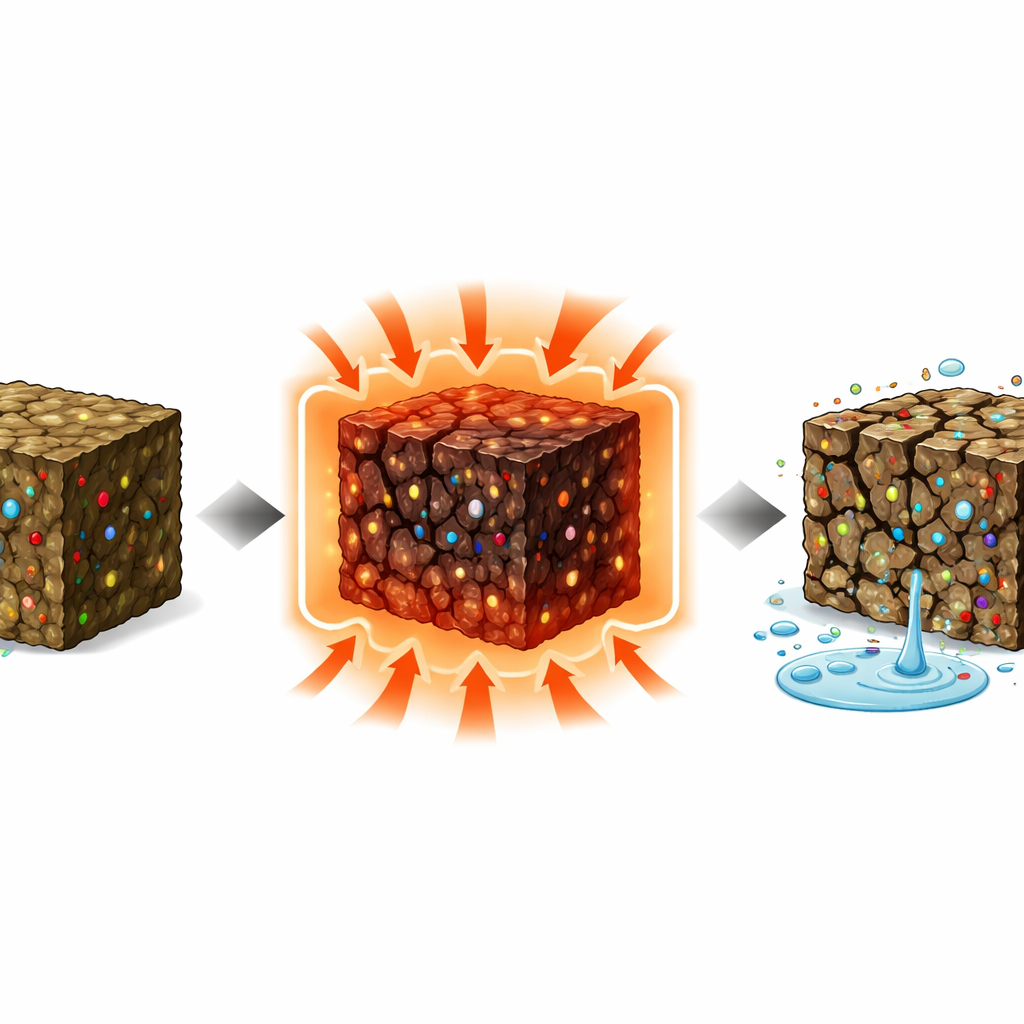
Detailed measurements showed why the fast-heated material gave better results than slow furnace burning. Microscopy revealed that the electrothermal treatment roughened the surface and created a network of pores, as gases blasted through the plant structure while it decomposed. Other tests showed changes in how the metals were bound: tightly held, complex organic forms were largely broken down, while more accessible forms increased. Because the heating lasted only seconds, little of the valuable metal had time to evaporate, unlike in long furnace runs where some rare earths were lost with the ash. As a result, more than 97% of the rare earth content could be recovered from the activated material using dilute acid, compared with about 90% after conventional calcination and even less from untreated plants.
Cleaner, Cheaper Recovery at Scale
The team went beyond lab chemistry to ask how this method would perform in the real world. Using life-cycle assessment, they compared four processing routes for the plant biomass: their rapid electrothermal system, traditional furnace heating, a chemical leaching method based on EDTA, and a hot-pressure treatment known as hydrothermal carbonization. Because the new method is both energy-efficient and highly effective at freeing metals, it needed less electricity and less acid per kilogram of rare earth produced. The analysis suggested that it could cut climate-warming emissions by about three-quarters compared with furnace calcination, and reduce several other environmental impacts as well. A technoeconomic study further indicated that operating costs for the rapid electrothermal route are only around one quarter of the furnace-based option, and that combined capital and operating costs remain competitive with conventional ore-based mining.
A Modest but Meaningful Piece of the Supply Puzzle
Although the approach shows promise, the authors stress that it is not a silver bullet. To supply even modest amounts of rare earths would require large areas of land planted with metal-accumulating vegetation, along with careful management of harvesting, residues, and local ecosystems. Rather than replacing big mines, the researchers envision plant-based recovery as a regional supplement that could help restore degraded land, diversify supply, and reduce pressure on heavily mined areas. Their rapid electrothermal treatment provides a more sustainable way to turn that harvested biomass into usable metals, linking plant biology, materials science, and clean energy in a single streamlined process that could make the hidden wealth in certain plants more accessible with far less environmental cost.
Citation: Xu, M., Deng, B., Feng, E. et al. Sustainable rare earth extraction from phytomining by rapid electrothermal calcination. Commun Mater 7, 77 (2026). https://doi.org/10.1038/s43246-026-01089-x
Keywords: rare earth elements, phytomining, electrothermal calcination, sustainable mining, critical materials