Clear Sky Science · en
A systematic review of sustainable food systems identifies socio-economic pathways driving food systems transformations
Why Our Food Future Depends on People, Not Just Technology
When we think about fixing the world’s food problems—hunger, obesity, climate impacts, and vanishing wildlife—we often picture new seeds, smart tractors, or high-tech greenhouses. This paper argues that such tools are only half the story. The real drivers of change are people’s incomes, values, education, laws, and everyday habits. By sifting through hundreds of studies from around the globe, the authors show how these social and economic forces can either block or unlock a shift toward food systems that are healthy for both people and the planet. 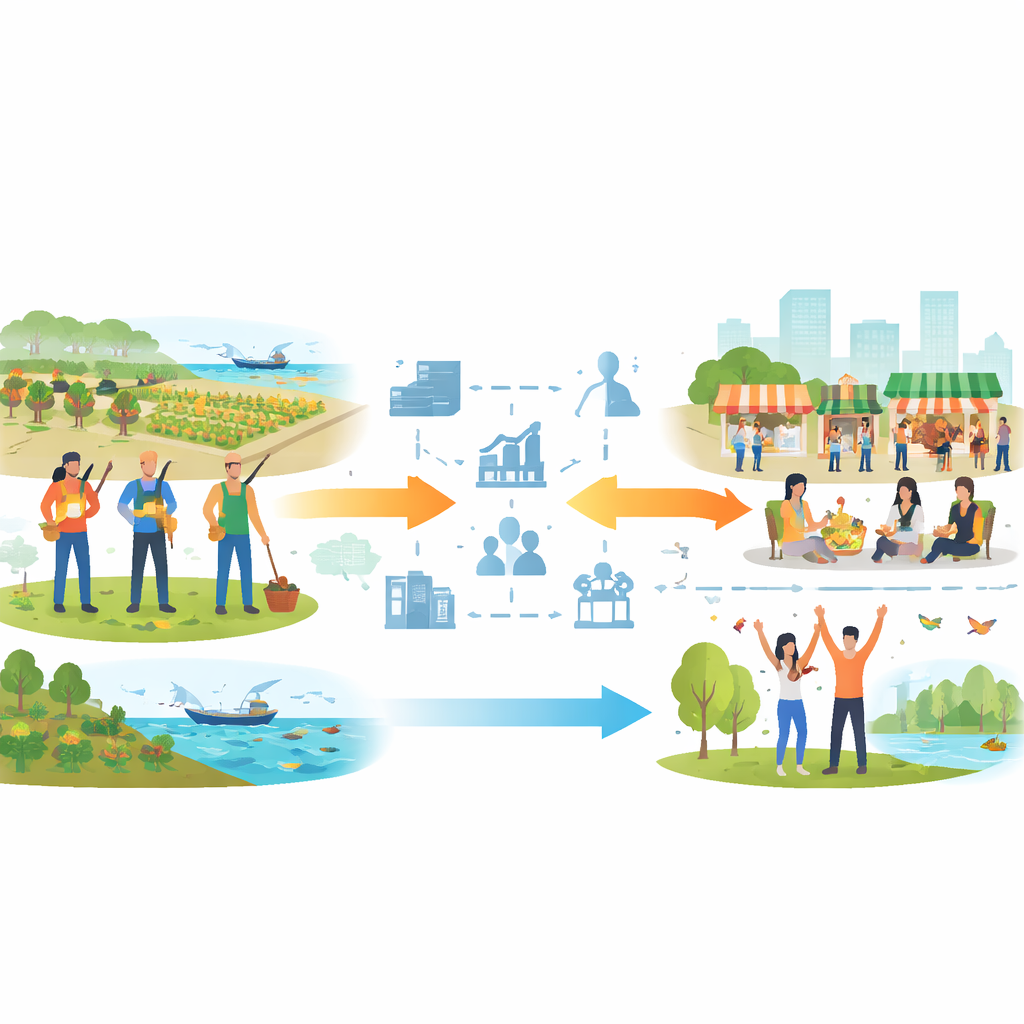
Looking at the Food Chain as One Connected System
The authors treat the food system as everything from “farm to fork”: how food is grown on land and in water, how it is processed and sold, and how it is finally cooked and eaten. They screened more than 1,700 scientific papers and closely reviewed 349 published between 2015 and 2022. From this vast literature, they grouped the main directions of change into seven types of transformation. On the farm side, they highlight better care for land and soils and the use of precision tools to apply water and fertilizer more efficiently. On the consumer side, they focus on shifting diets toward healthier and more plant-based foods, and improving nutrition overall. Cutting across the entire chain are efforts to reduce food loss and waste, protect rivers, lakes and oceans, and limit climate damage while saving biodiversity.
The Hidden Forces Shaping Food Choices
Across all these topics, a recurring theme emerges: social and economic conditions largely determine which solutions actually take root. The review identifies six broad driver groups. People’s networks and values—families, friends, and online communities—strongly influence what farmers are willing to try and what consumers are willing to eat. Gender and age matter too: women and younger people are generally more open to sustainable diets, while men and older adults tend to cling more tightly to meat-heavy habits. Education and access to information, from school to social media, shape how well both farmers and shoppers understand the benefits of new practices and products. Income and prices often tip the balance: farmers adopt conservation methods when they can still make a living, and consumers buy alternative foods when they feel they are affordable. Finally, rules, public institutions, and basic infrastructure—roads, storage facilities, land rights—can either smooth the way or create costly hurdles.
Different Regions, Different Food Futures
The studies reveal that priorities differ sharply between world regions. In richer countries in Europe, North America, Australia and New Zealand, most research centers on changing diets, experimenting with plant-based or novel foods, and linking eating patterns with health. These places already enjoy stable food supplies, so debates often revolve around reducing meat consumption, cutting waste, and improving quality. In parts of Asia and North Africa, the focus shifts to precision agriculture, helped by growing access to electricity and technology but held back by limited resources and support. In sub-Saharan Africa and Latin America, researchers concentrate on land and soil, where low crop yields and disputes over land ownership threaten rural livelihoods. Despite these differences, the same kinds of drivers—money, knowledge, infrastructure, and fair rules—keep reappearing as either barriers or enablers.
Pathways for Farmers, Shoppers, and Everyone in Between
Drawing these strands together, the authors outline “pathways” that connect specific drivers with concrete actions for different actors in the food system. For farmers, strong community ties, training, and access to credit can make conservation farming and smart technologies worthwhile. For consumers, clear information, supportive social norms, and pricing that favors healthy, lower-impact options can nudge everyday meals in a better direction. Retailers can design stores to make sustainable choices easy and attractive, while processors can back farmers who use responsible methods and offer appealing plant-based products. Governments are urged to align their policies so that farm supports, food safety rules, and trade measures do not unintentionally harm nature or undercut healthy diets. 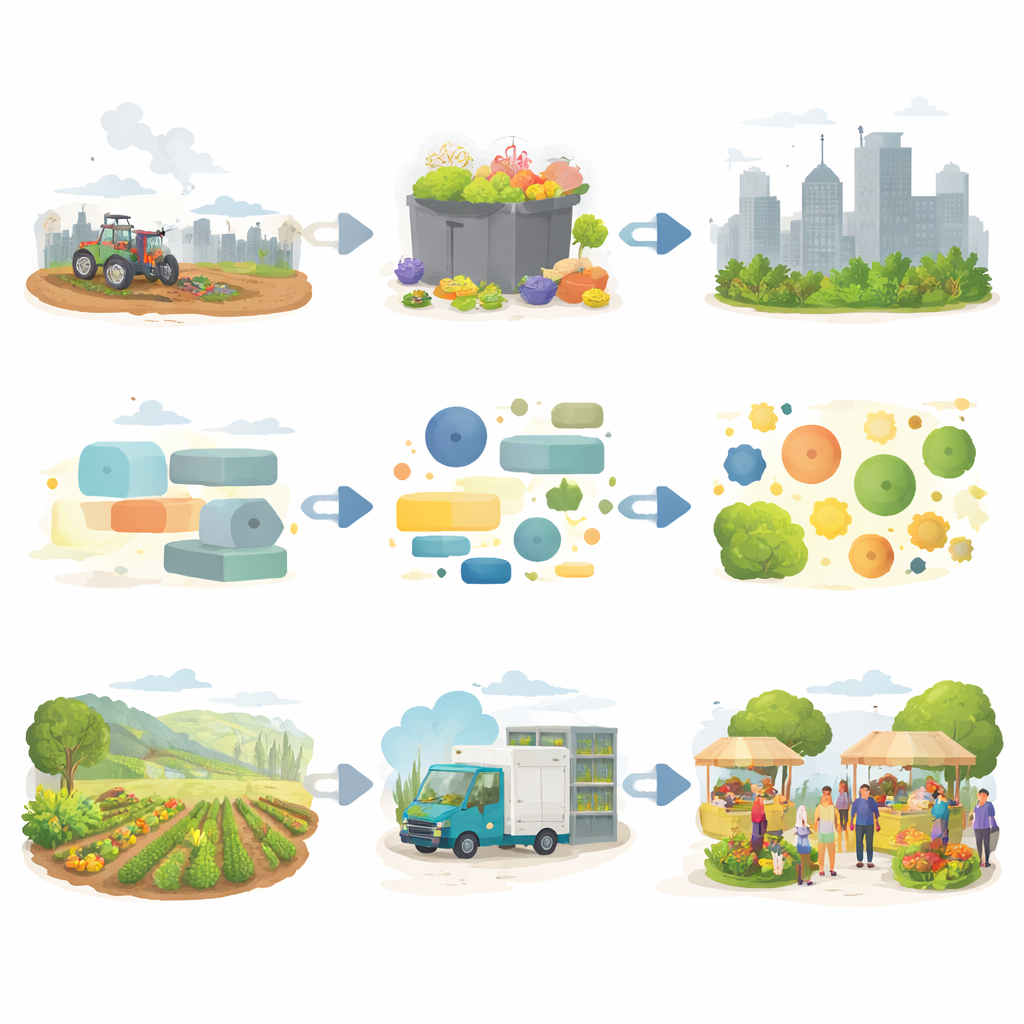
What This Means for the Way We Eat
In plain terms, this study shows that we already know many technical ways to grow and eat food more sustainably, but these ideas will only work if the social and economic pieces fall into place. Successful change depends on who has money and land, who gets training and infrastructure, whose voices count in policy debates, and which food habits are celebrated or mocked. The authors conclude that transforming food systems is not just a matter of better gadgets or new products; it is a shared societal project. By designing policies, markets, and community efforts that respect local realities and by carefully measuring what truly works, societies can move toward food systems that provide enough nutritious food for everyone while keeping soils fertile, waters clean, and ecosystems alive.
Citation: Chrisendo, D., Heikonen, S., Piipponen, J. et al. A systematic review of sustainable food systems identifies socio-economic pathways driving food systems transformations. Nat Food 7, 234–246 (2026). https://doi.org/10.1038/s43016-026-01317-0
Keywords: sustainable food systems, diet change, precision agriculture, food waste, socio-economic drivers