Clear Sky Science · en
The challenges, methods, and opportunities of understanding informal urbanism: a case study in Lomas del Centinela, Mexico
Why this story about a hillside neighborhood matters
In cities across the Global South, millions of people build homes in places that governments rarely map or serve. These informal neighborhoods are often portrayed only as problems—unsafe, illegal, or invisible in official statistics. This article looks at Lomas del Centinela, an informal settlement on the edge of Guadalajara, Mexico, to show how listening carefully to residents, combining many kinds of data, and co-designing solutions with the community can improve daily life while guiding fairer urban policies.
Living on the city’s blind spot
Lomas del Centinela is home to nearly 9,000 people squeezed between a wealthy area and another struggling district. Most residents work in construction or domestic service, yet only a tiny share of households have legal access to water and electricity because the land is not formally recognized. Families tap into power lines, buy water from trucks at high prices, and navigate unpaved streets that turn risky in the rain. Crime, gender-based violence, and scarce public spaces make everyday movement—especially for women and children—stressful and sometimes dangerous. Despite this, the community is young, active, and closely tied to the wider metropolis. It offers a revealing window into how informal urban growth really works.
Many ways of seeing one place
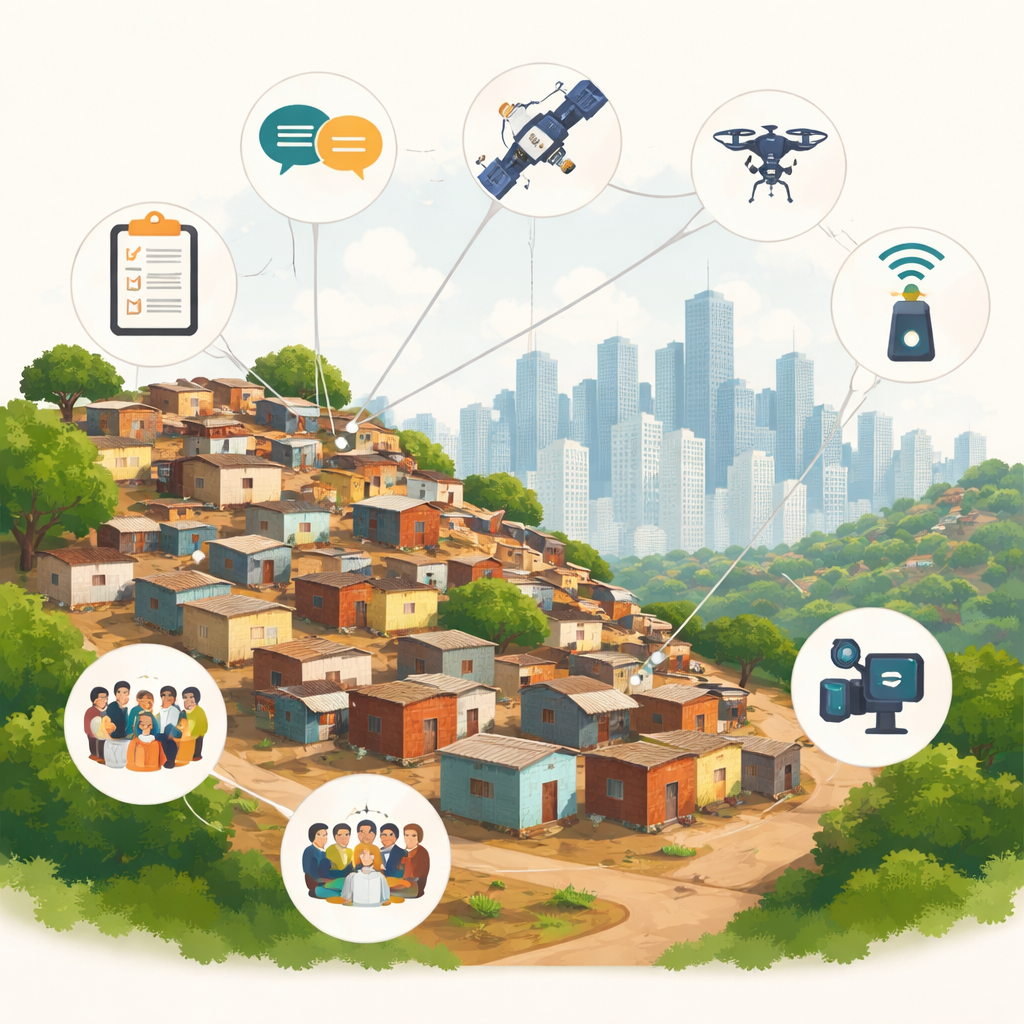
For generations, researchers have tried to understand poor urban districts using tools like censuses, poverty maps, and surveys. These methods gave broad overviews but often missed the texture of daily life and usually treated residents as passive subjects rather than partners. In Lomas del Centinela, the authors instead blend old and new approaches: classic interviews and questionnaires, on-the-ground observation, drone flights, wearable GPS trackers, and low-cost sensors in homes. They also treat “informality” not just as an issue of housing or jobs, but as a data problem—these places barely appear in official records. By inviting residents to help design the questions, gather information, and interpret findings, the project turns data collection into a shared activity rather than an outside inspection.
Energy, food, water, and safety under one roof
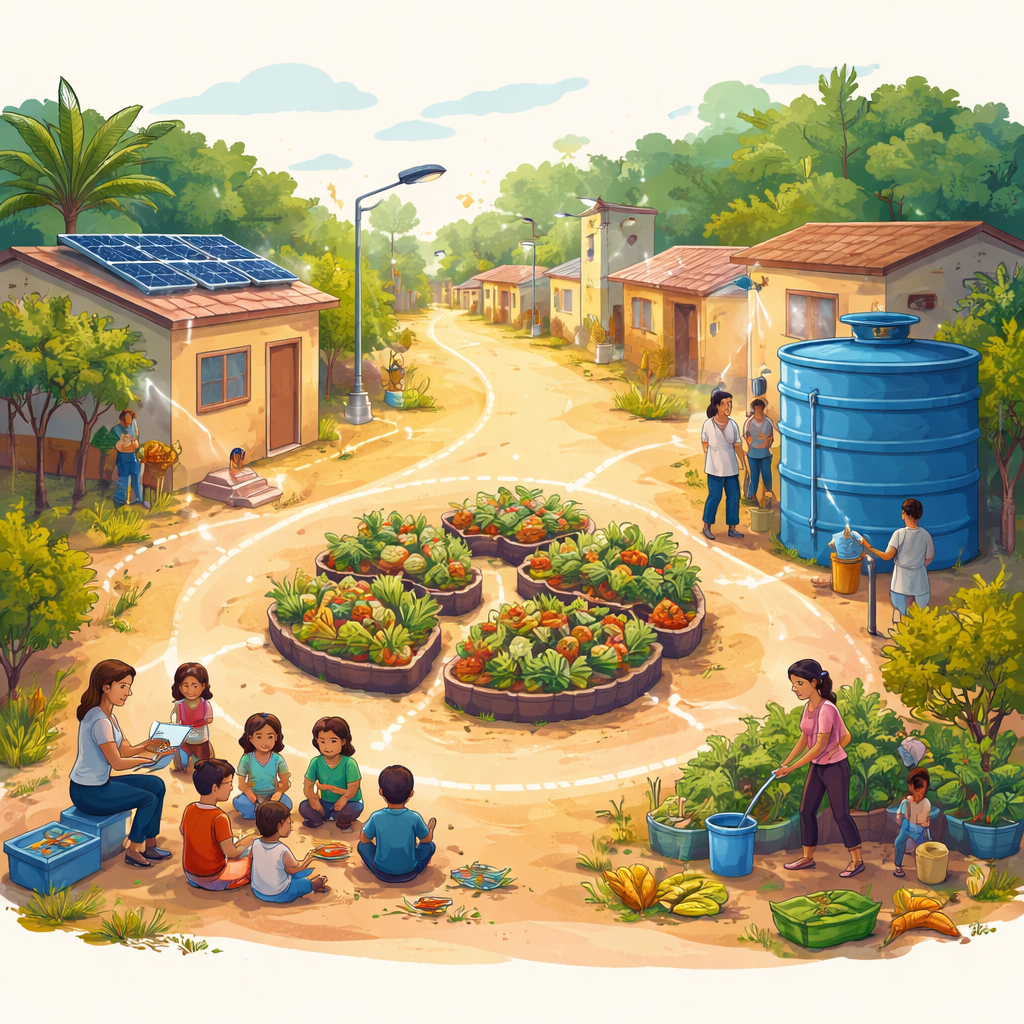
The research centers on four everyday systems: how people get power, food, water, and safe ways to move around. Community-trained survey teams discovered that most households reach electricity through improvised connections, leaving them with unstable service and high bills. That insight led to ideas for small-scale solar systems and workshops where children learned about renewable energy. To understand food, the team filmed daily routines, spoke at length with women who manage cooking, and mapped their trips to markets. Findings showed that poor transport, weak refrigeration, and frequent outages push families toward cheap, processed foods. In response, the group worked with residents to build a “keyhole” community garden, test solar cookers and dehydrators, and hold classes on preserving and preparing healthier ingredients.
Following every drop and every step
Water turned out to be a constant worry. Only a minority of homes have formal connections; most juggle rain barrels, wells, trucks, and hoses of varying quality. Through detailed household surveys, the researchers charted how much water people stored, what they used it for, and how much it cost. They then created simple sensors to sit inside tanks and buckets, tracking levels and basic quality measures. These devices help residents decide how to stretch scarce supplies and give local officials a clearer picture of hidden shortages. To tackle safety, especially for women, the team combined interviews, online mapping sessions using street imagery, GPS necklaces worn during daily trips, and drone-based maps of steep, broken streets. The resulting “safety map” highlighted dangerous paths and gathering spots, guiding community cleanups and the placement of solar-powered lights.
From data to dignity
Taken together, these efforts show that numbers alone cannot fix neglected neighborhoods—but numbers created and used with residents can. By weaving surveys, stories, sensors, and satellite images into one picture, the Lomas del Centinela project identified practical steps that match what people say they need most: safer routes, more reliable light and water, fresher food, and spaces to meet. At the same time, it offers a blueprint for planners and governments who usually lack trustworthy information about informal areas. The article argues that informal settlements are not temporary mistakes at the city’s edge. They are central to its future, and treating their residents as partners in gathering and governing data is a powerful way to make cities fairer, healthier, and more sustainable for everyone.
Citation: Rico, A., Izquierdo, L., Delgado, E. et al. The challenges, methods, and opportunities of understanding informal urbanism: a case study in Lomas del Centinela, Mexico. npj Urban Sustain 6, 35 (2026). https://doi.org/10.1038/s42949-026-00360-x
Keywords: informal settlements, urban data, community participation, water and energy access, urban sustainability