Clear Sky Science · en
People drive or stop transitions: Lessons learned on co-creating Edible Cities
Growing Food in the City
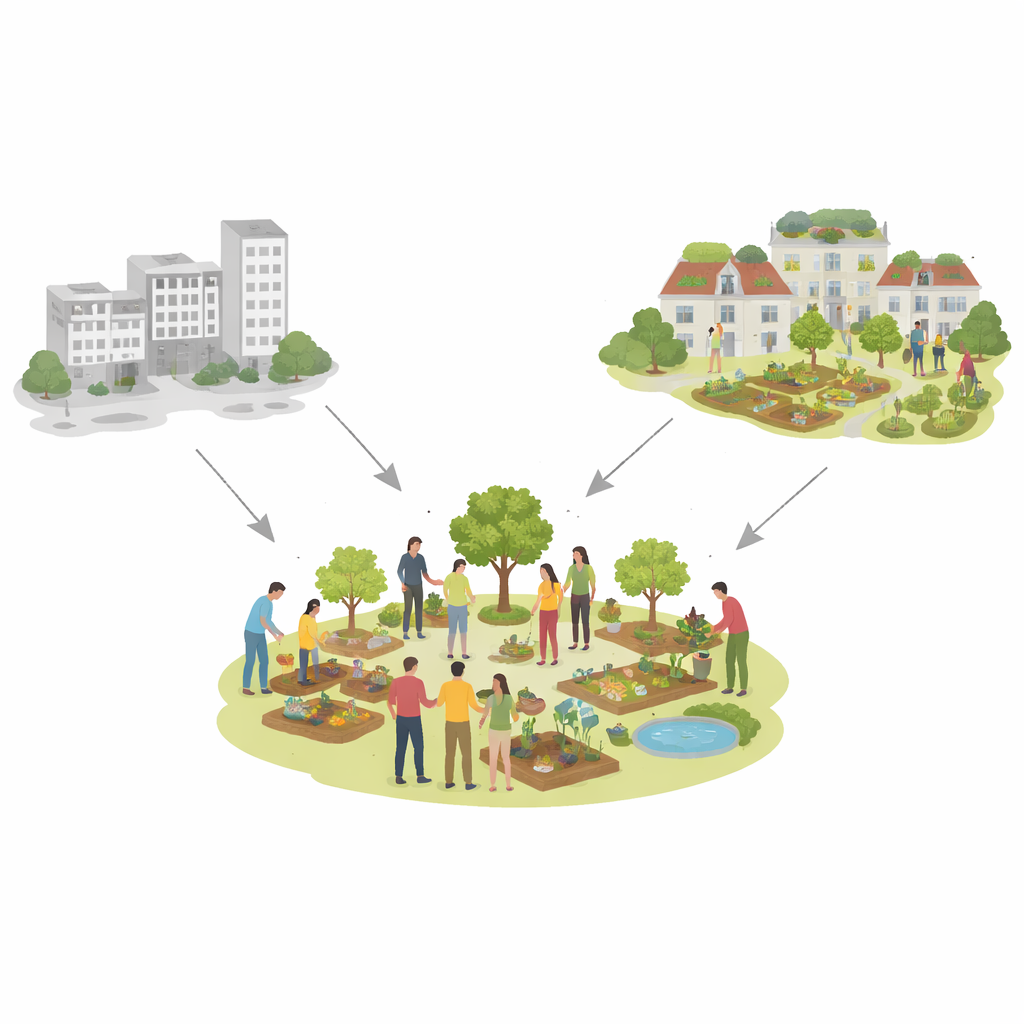
Imagine walking through your neighborhood and picking fresh herbs, berries, or salad greens from shared gardens, planters, and even old cemeteries turned into peaceful parks. This article explores the idea of the “edible city” — places where growing, sharing, and enjoying food becomes part of everyday urban life. It shows how ordinary people, local groups, and city officials work together in experimental "Living Labs" to turn unused spaces into productive, social, and greener corners of the city, and what helps or hinders these efforts.
Why Edible Cities Matter
For most of history, cities and nearby areas grew much of their own food. Industrial farming and global supply chains pushed that local connection out of sight. Edible cities seek to bring it back, turning courtyards, rooftops, and empty lots into places where food is grown, neighbors meet, and people reconnect with the seasons. These projects are more than just gardens: they can strengthen communities, support local democracy, and make life in dense cities healthier and more resilient in the face of crises.
Testing Ideas in Real Neighborhoods
The researchers followed six Living Labs in very different places: from a small German town and two contrasting districts in Berlin, to a disadvantaged neighborhood in Oslo, a network of food initiatives in Rotterdam, and a farming district in Havana. In each site, local teams brought together city officials, activists, social entrepreneurs, scientists, and residents to design and run “Edible City Solutions,” such as community gardens, edible public parks, urban aquaculture, and shared cooking spaces. Instead of working only on paper, these teams tried things out directly in streets and parks, learning by doing over nearly five years.
People, Power, and Everyday Friction
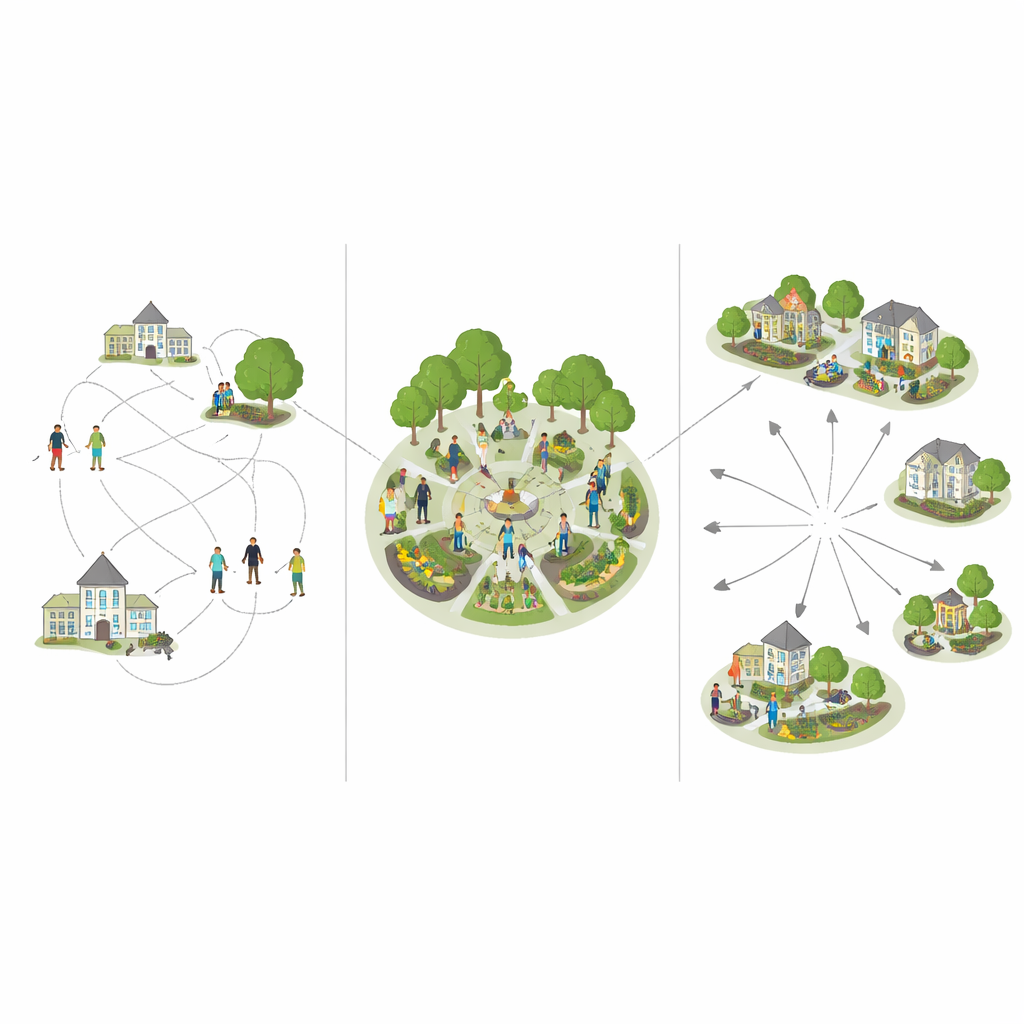
The study found that success depended less on clever technical ideas and more on how people worked together. Teams often started with great energy, but membership shifted over time as volunteers’ schedules changed, staff moved jobs, politics shifted, and the COVID-19 pandemic interrupted in-person work. Finding a shared way of working was hard. Some city coordinators saw themselves as gentle facilitators but were experienced by others as managers. Volunteers and smaller groups sometimes felt decisions were made elsewhere or that their time was not fully used. Differences in power and resources also mattered: paid professionals could attend daytime meetings and navigate bureaucracy, while ordinary citizens often struggled to participate on top of jobs and family responsibilities.
What Helps Co-Creation Work
Despite these tensions, over 90 percent of interviewees valued the process and said they would join again. Mixed teams that included residents, local initiatives, and city staff helped people understand each other’s constraints — for example, why municipal decisions can be slow, or what small groups need to survive financially. Working in smaller themed groups made tasks more concrete and less overwhelming. Conflicts, while uncomfortable, often sparked deeper conversations and led to fairer solutions. The authors highlight the importance of clear documentation, open discussion of disagreements, neutral moderators, and simple tools like shared “log books” so that newcomers can follow what has been decided and why.
From Short-Lived Projects to Lasting Change
One major obstacle was the “project” nature of many efforts: they relied on temporary funding and had to produce deliverables on a fixed timeline, which could clash with slower community-building. Municipal departments, often organized in separate “silos,” struggled to adapt rules and routines to support these cross-cutting food initiatives. At the same time, the presence of city officials in the Living Labs was crucial for unlocking land, money, and long-term support. Social entrepreneurs and experienced community groups played a key role in keeping momentum, building networks, and pushing back when participation risked becoming a mere formality.
What This Means for Our Cities
In plain terms, the study shows that turning cities into places where food is a shared resource is less about planting techniques and more about how we share power, time, and responsibility. Co-creating edible city projects can build trust, create new friendships, and give people a stronger sense of belonging, but it is demanding and politically sensitive. The authors argue that future efforts should ensure broad and fair participation, support volunteers with time and resources, and anchor Living Labs in stable local institutions. If these conditions are met, edible cities can become powerful stepping stones toward more democratic, livable, and sustainable urban futures.
Citation: Säumel, I., Pettit, M., Reichborn-Kjennerud, K. et al. People drive or stop transitions: Lessons learned on co-creating Edible Cities. npj Urban Sustain 6, 46 (2026). https://doi.org/10.1038/s42949-026-00359-4
Keywords: edible cities, urban gardening, living labs, community participation, sustainable urban food systems