Clear Sky Science · en
Deciphering exterior: building energy efficiency prediction with emerging urban big data
Why this matters for everyday life
Heating and powering our homes quietly accounts for a big slice of both energy use and climate-warming emissions. Yet figuring out how leaky or efficient each building is usually requires specialists to visit, measure and inspect—an expensive, slow process that leaves many homes untested. This study explores whether we can estimate how well buildings keep in heat simply by looking from the outside using modern imagery and artificial intelligence, opening the door to faster, cheaper ways to spot homes that most need upgrades.
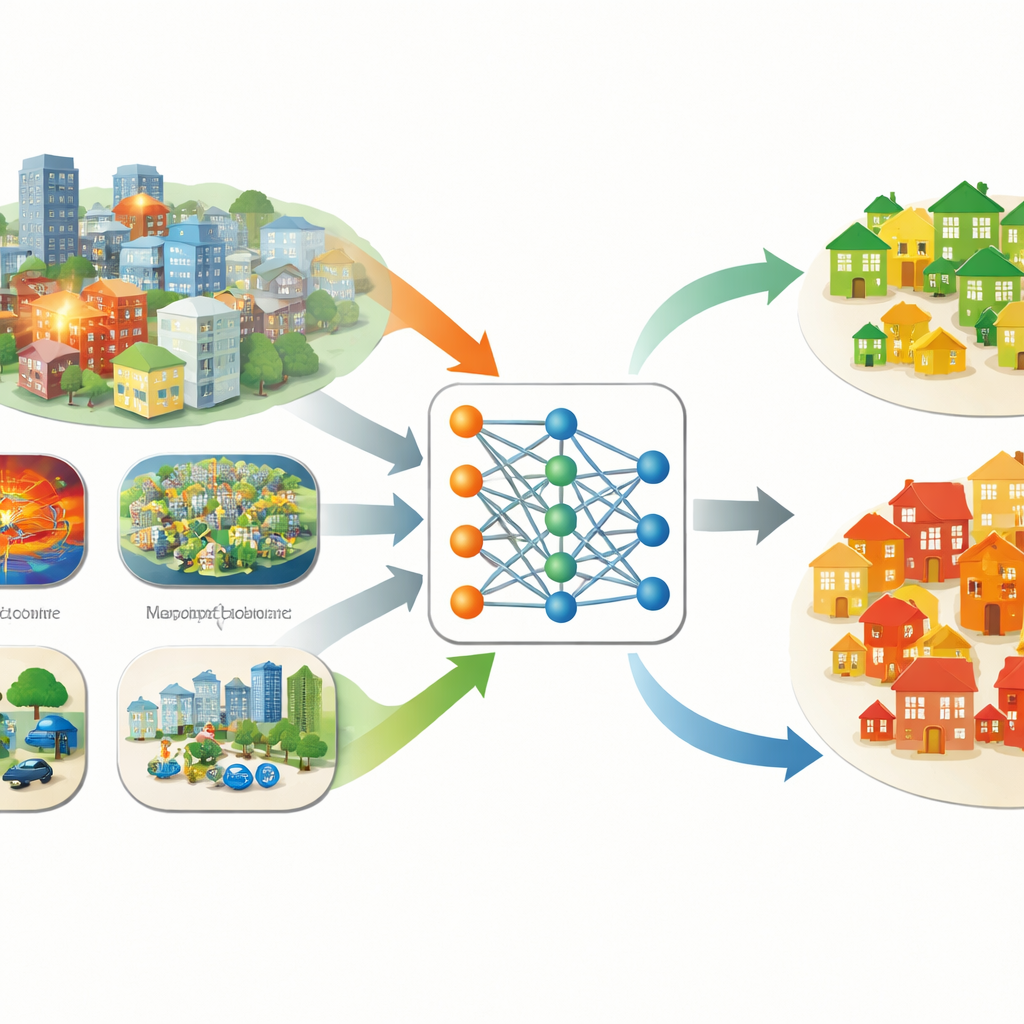
Reading buildings from the outside in
The researchers focused on two Scottish cities, Glasgow and Edinburgh, where many homes still lack an official Energy Performance Certificate (EPC)—the report that grades buildings from best to worst in terms of energy use. Instead of sending inspectors door to door, the team assembled a rich picture of each building using only information that can be observed from outside: aerial photos, thermal images taken from aircraft at night, street-level views similar to what you might see in an online map service, and simple details about building shape and neighborhood conditions. By combining these sources, they hoped to infer whether a home belongs to the “high-efficiency” group (roughly EPC A–C) or “low-efficiency” group (D–G).
Teaching an AI to recognize energy-smart homes
To translate images and basic data into an energy-efficiency verdict, the authors built a multi-channel deep learning system—a kind of AI that excels at pattern recognition across different types of data. One part of the model looked at the aerial thermal images, which show hotter roofs and walls glowing more brightly where heat is escaping. Another examined ordinary aerial photos that reveal roof shapes and surroundings. A third took in street-level images of facades, picking up clues like window sizes, wall materials or added insulation. A final channel processed numerical information, such as building size and neighborhood socio-economic indicators. The AI was trained using tens of thousands of buildings that already had EPC ratings, learning to associate combinations of visual and contextual cues with better or worse efficiency.
How well it worked and what drives the predictions
When tested on unseen buildings, the model correctly distinguished high- from low-efficiency homes with F1 scores—a balanced measure of accuracy—of 0.64 in Glasgow and 0.69 in Edinburgh, comparable across the two cities. The researchers then ran “ablation” experiments, switching off or combining different data sources to see which mattered most. No single input told the whole story, but each helped: street-view images alone did surprisingly well, especially in Edinburgh, while thermal and aerial images also carried strong signals. Adding more data sources generally improved performance, suggesting that how a building looks from above and from the street, and where it sits in the city, together reveal a great deal about how it uses energy.
A surprising link between poverty and efficient homes
Armed with a trained model, the team predicted energy performance for over 136,000 additional buildings in the two cities that lacked EPCs. They then compared neighborhood-level patterns of predicted efficiency with Scotland’s official deprivation index, which ranks areas from most to least disadvantaged. Contrary to common assumptions that poorer households tend to live in leakier homes, the analysis found the opposite in these cities: more deprived areas were, on average, associated with better-rated buildings, while some affluent neighborhoods appeared less efficient. Follow-up checks against the limited ground-truth data suggested this pattern was not a fluke.
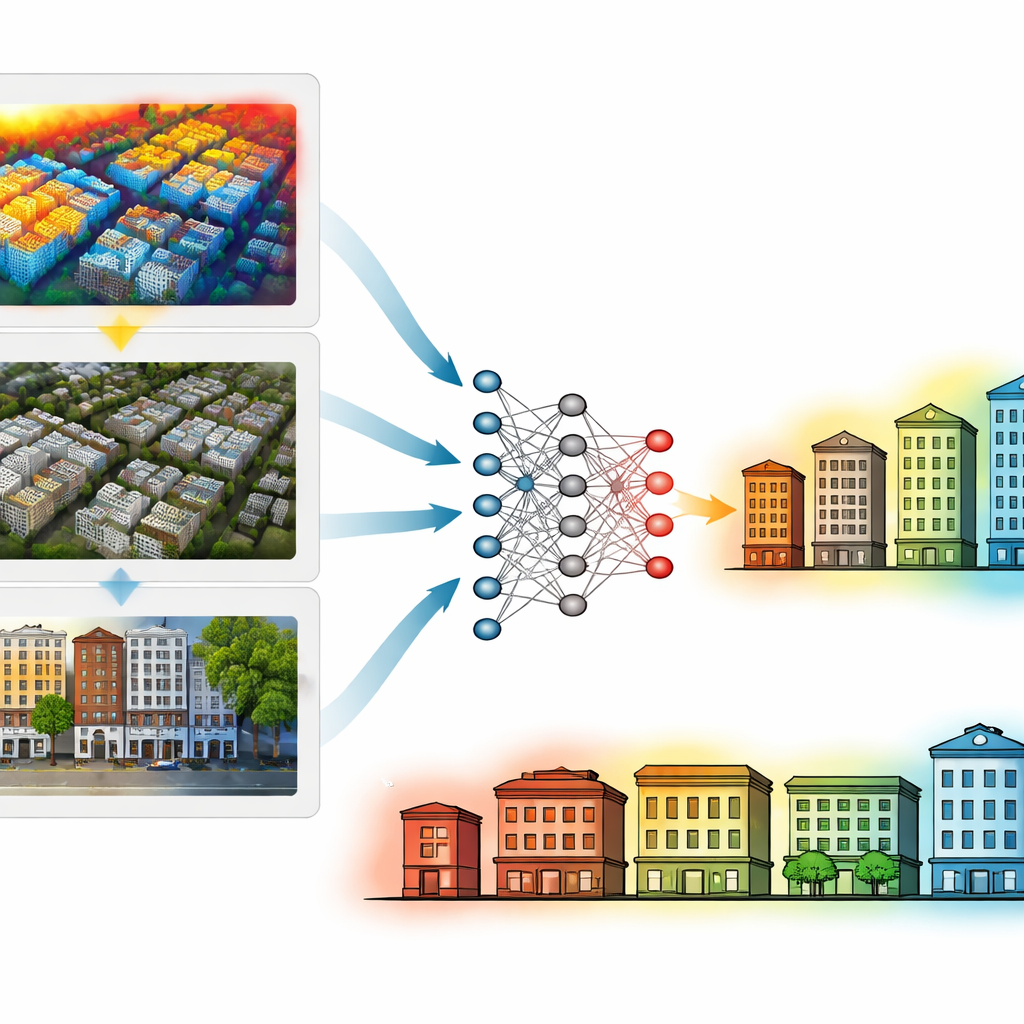
What this means for climate action and policy
The unexpected match between deprivation and better energy performance may reflect years of targeted upgrade schemes in poorer districts, as well as wealthier households choosing to preserve traditional building styles even if that means higher energy use. Whatever the cause, the study shows that widely available images and data, combined with AI, can rapidly map where efficient and inefficient homes are—without stepping inside a single building. For a general reader, the key takeaway is that the outside appearance and setting of a home hold powerful clues to how much energy it wastes, and that city planners and governments could use tools like this to prioritize retrofits, check the impact of past programs and move more quickly toward warmer homes, lower bills and lower emissions.
Citation: Sun, M., Hou, C., Li, Q. et al. Deciphering exterior: building energy efficiency prediction with emerging urban big data. npj Urban Sustain 6, 38 (2026). https://doi.org/10.1038/s42949-026-00348-7
Keywords: building energy efficiency, urban sustainability, thermal imaging, deep learning, housing retrofit