Clear Sky Science · en
Blind spots and actionable insights for urban governance of the climate–biodiversity–health nexus
Why City Life, Nature, and Health Belong Together
Most of us experience climate change, loss of nature, and health problems not in distant rainforests or melting ice sheets, but right outside our front doors—in traffic jams, heatwaves, and shrinking parks. This paper asks a simple but powerful question: when European cities make plans for the future, do they treat climate, biodiversity, and public health as one connected challenge, or as three separate problems? By digging through real policy documents from four European urban areas, the authors reveal where city leaders are making progress, where they are stuck, and what needs to change so that greener, healthier, low‑carbon cities become the everyday norm rather than the exception.
Three Big Challenges, One Shared Story
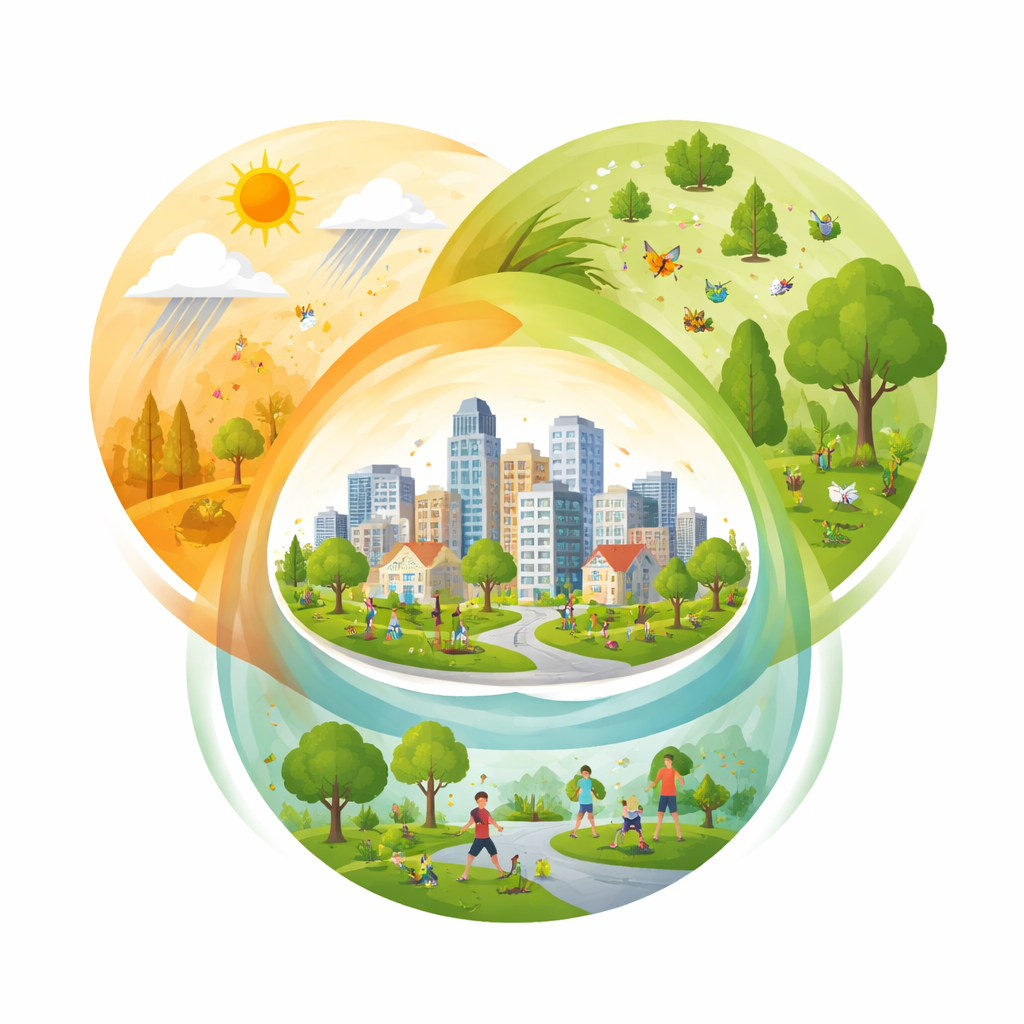
The study focuses on what the authors call the climate–biodiversity–health nexus—the tight web of connections between a warming planet, the living nature in and around cities, and people’s physical and mental well‑being. For example, trees and wetlands can cool overheated neighborhoods, soak up floodwaters, store carbon, shelter wildlife, and give residents places to relax and exercise. But if the wrong trees are planted, they can worsen allergies; if forests are burned for energy, they may harm both climate and nature. To make sense of these links, the researchers draw on the “planetary health” idea, which treats human health and the health of the Earth’s life‑support systems as inseparable, and they translate it into practical city‑level goals: cutting emissions, adapting to climate risks, protecting biodiversity, and improving health and well‑being.
How the Researchers Read City Plans
The team closely analyzed 32 strategies and plans from four European case areas—Cork (Ireland), Klagenfurt (Austria), Päijät‑Häme including Lahti (Finland), and the island state of Malta. They pulled out 362 concrete policy plans and sorted them into 23 types of actions available to local governments, such as cleaner energy, efficient buildings, sustainable transport, nature protection, urban greenery, flood protection, and promoting active lifestyles. Each plan was then judged on how far it pushed change: small, technical tweaks (incremental), deeper but still system‑friendly reforms (reformistic), or genuinely transformative shifts that could restructure how the city works. The authors also checked whether actions served just one goal or generated “double” or “triple” benefits across climate, nature, and health.
What Cities Are Doing Well—and Where They Fall Short
Across all four cities, climate and biodiversity plans are abundant, and many strategies recognize multiple benefits—green corridors that cool streets, support wildlife, and invite walking, for example. Some goals are bold on paper, such as carbon neutrality or stopping biodiversity loss by 2030, and there are promising moves like major shifts to public transport or wide‑scale nature restoration. Yet most activity still clusters around relatively safe steps, such as promoting green infrastructure or encouraging climate‑friendly behavior, rather than reshaping the rules that drive car dependence, fossil energy, or land‑hungry development. Each city shows transformative strengths in only part of the puzzle: Cork in climate adaptation and health, Klagenfurt and Päijät‑Häme in climate and biodiversity, and Malta in biodiversity and adaptation.
Hidden Gaps That Undermine Big Promises
Beneath the ambitious language, the authors identify several “blind spots” that weaken the overall strategy. Many plans proclaim headline goals but lack specific, realistic mid‑way targets, clear funding, or detailed steps to get there. City departments often still work in silos, so a transport expansion can clash with biodiversity aims, or health concerns get bolted on late in the process. Most policies focus on emissions produced within city borders while ignoring the much larger impacts of imported food, energy, and materials. There is a heavy reliance on soft tools—awareness campaigns, voluntary pledges, and encouragement—rather than binding rules or redesigned economic incentives. And despite all the talk about synergies, a relatively narrow set of solutions dominates, mostly greenery projects and active transport, leaving many untapped options for actions that would simultaneously cut emissions, boost nature, and improve health.
A Practical Roadmap for Better Urban Futures
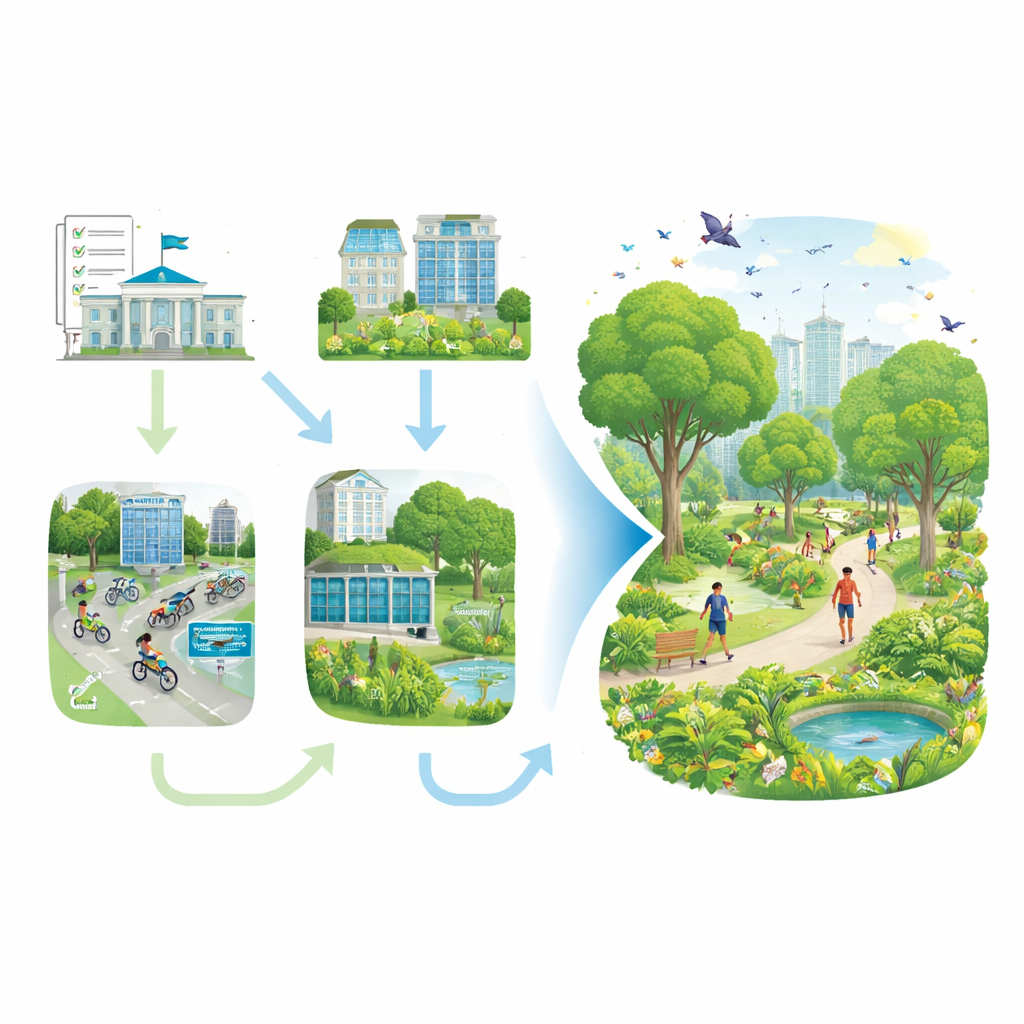
From these findings, the authors offer a set of straightforward, actionable lessons for city leaders. First, broad visions like “carbon neutral” or “nature positive” must be backed by measurable, time‑bound targets and indicators that track not just emissions, but also ecosystem quality and people’s access to healthy environments. Second, city halls need new kinds of institutions—cross‑department teams, shared budgets, and “bridging” roles—that make it normal for climate, transport, planning, and health officials to plan together. Third, policy toolkits should be expanded beyond parks and bike lanes to include rules and incentives that address hidden impacts in energy, food, and supply chains. Fourth, nurturing a culture of experimentation, learning, and visible leadership can help turn small pilot projects into lasting change. Finally, nature‑based solutions should be designed as multi‑benefit systems, not scattered greening, so that a single investment in green‑blue infrastructure cools the city, supports wildlife, and keeps residents healthier and happier. In short, the paper concludes that cities already hold many of the keys to safer climates, richer urban nature, and better health—but only if they learn to turn overlapping ambitions into integrated, well‑governed action.
Citation: Stojanovic, M., Wübbelmann, T., Juhola, S. et al. Blind spots and actionable insights for urban governance of the climate–biodiversity–health nexus. npj Urban Sustain 6, 42 (2026). https://doi.org/10.1038/s42949-026-00345-w
Keywords: urban governance, climate change, biodiversity, public health, nature-based solutions