Clear Sky Science · en
Building and using the evidence base for urban climate action: the UCCRN City Solutions Case Study Atlas
Why Cities Need a Shared Playbook
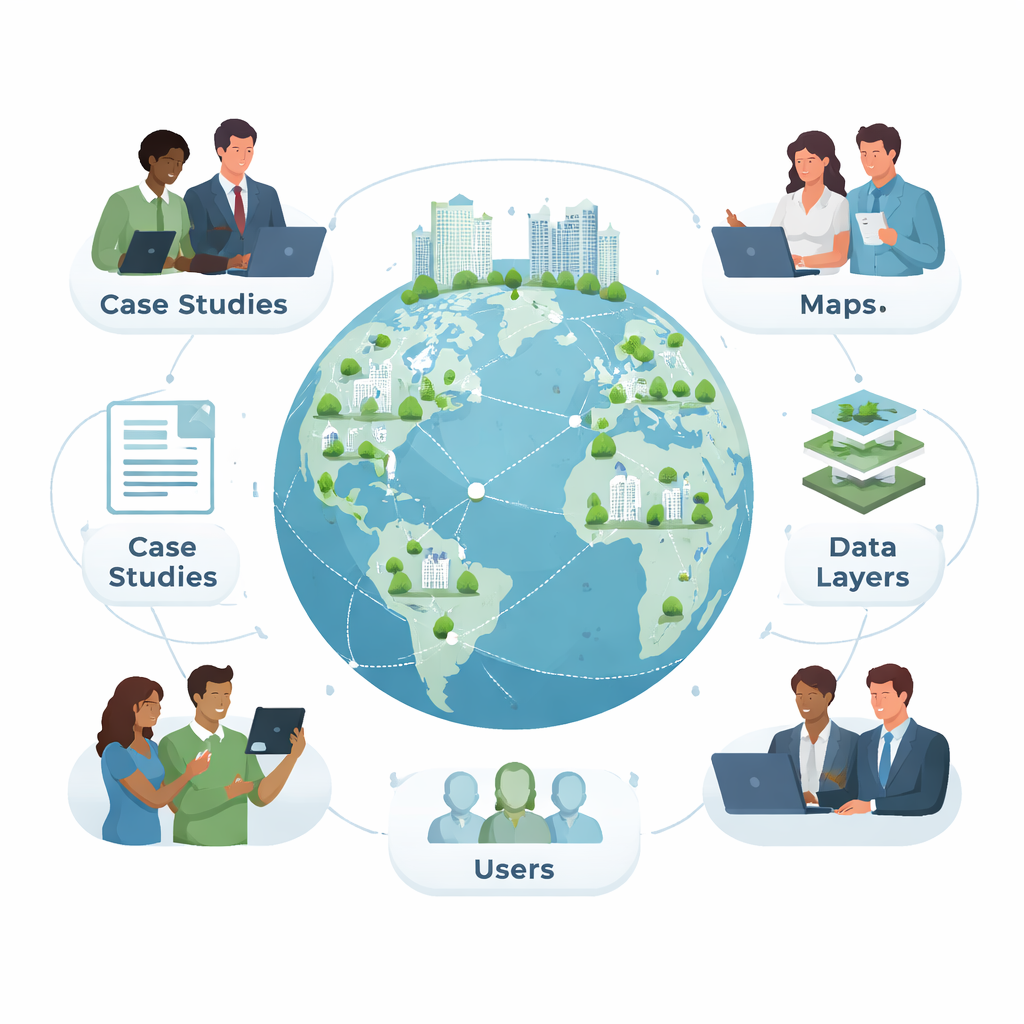
As climate change brings hotter days, heavier rains, and rising seas, cities are on the front lines. More than half of the world’s people live in urban areas, and cities produce most of our planet’s carbon pollution. Mayors, planners, and community groups are already testing ways to cut emissions and protect residents—but their experiences are scattered across reports, websites, and languages. This article introduces a new global “atlas” that gathers these stories of success and struggle into one place, helping city leaders everywhere learn quickly from one another rather than starting from scratch.
A Global Library of Real-World City Stories
The Urban Climate Change Research Network (UCCRN) is building the City Solutions Case Study Atlas, an online hub that collects detailed accounts of how cities are tackling climate risks. Instead of focusing only on big, wealthy cities or English-language reports, the Atlas aims to include towns, rapidly growing cities, and communities in the Global South that are often missing from the record. Each case covers concrete actions—such as flood protection, cooling neighborhoods, or cleaning up transit systems—and describes what worked, what failed, and why. By centralizing this information, the Atlas offers a powerful evidence base for researchers, local officials, community groups, and funders who need examples grounded in real conditions.
More Than Pins on a Map
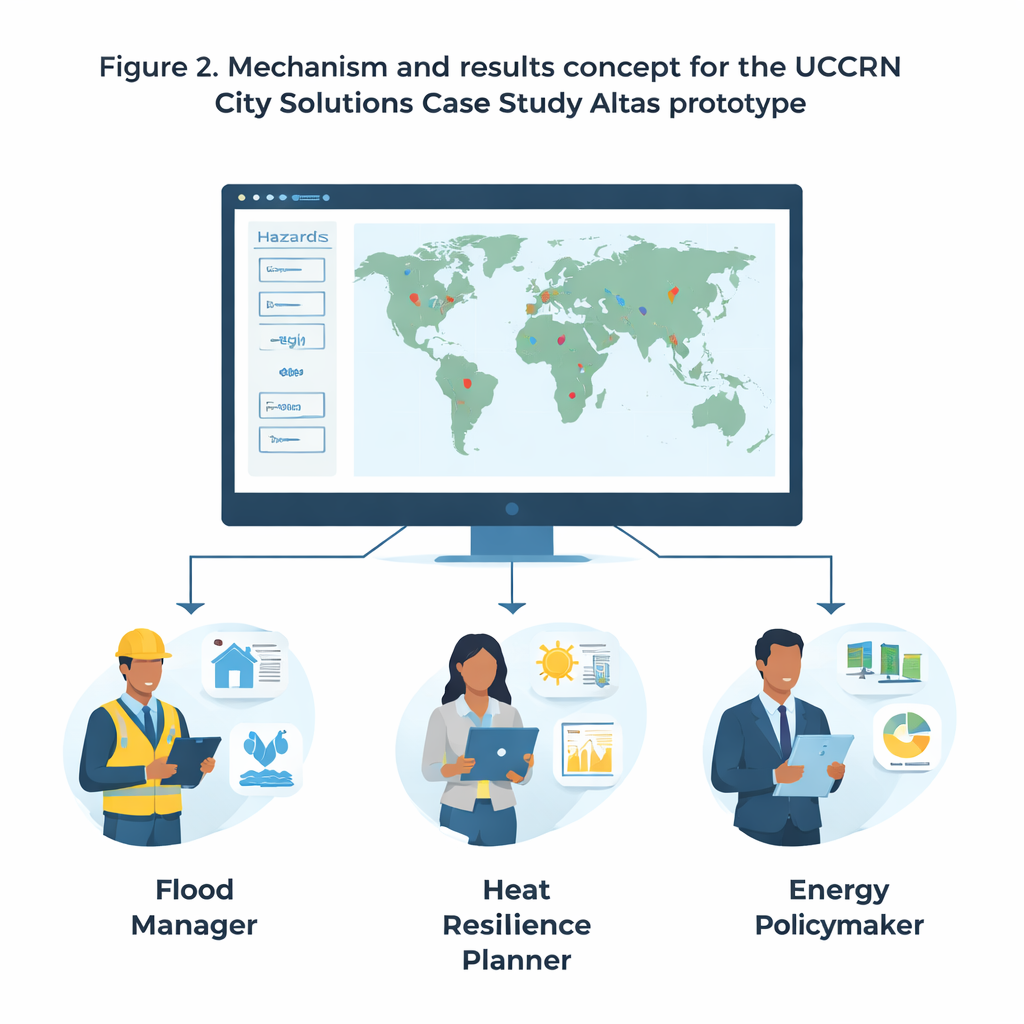
The City Solutions Atlas is designed as far more than a static list of projects. Users explore an interactive global map where each city icon links to one or more case studies, plus data about local climate trends. Behind the scenes, a common metadata template—essentially a structured set of tags—captures key details: the type of climate hazard (such as flooding or heat), city size, income level, affected populations, funding sources, and whether results were equitable and long-lasting. Additional map layers show projected temperature and rainfall changes, population density, land cover, and climate zones. This mix of stories and numbers lets a city official see not just what another city did, but also the environmental and social setting in which that decision made sense.
Centering Equity, Local Voices, and Many Languages
A core goal of the Atlas is to correct long-standing blind spots in climate knowledge. UCCRN’s regional hubs—from Kano to Melbourne and Rio de Janeiro—actively seek out case studies from underrepresented places, including informal settlements and smaller cities where climate risks are high and resources are limited. The project also highlights initiatives led by Indigenous peoples and migrant communities, treating their knowledge as central rather than peripheral. To make sharing easier, the team is building regional sub-platforms in major languages such as Spanish, Portuguese, and Scandinavian languages, with plans for broader language coverage. Every case study is expert-reviewed to ensure that it clearly describes the problem, the proposed solution, and how it was implemented on the ground.
Smarter Ways to Search and Learn
The article compares two complementary ways of using the Atlas. First, users can filter case studies directly through the metadata: for example, a flood manager in a low-income coastal city can search for flood-related projects in similar regions, with specific types of funding or community involvement. Second, the team tests a more experimental method that uses large language models—the same type of technology behind modern chatbots—to scan many case studies at once and pull out recurring themes. For instance, this automated reading can reveal patterns in how communities organize around buyout programs in flood-prone neighborhoods, or how different cities link extreme heat to social inequality. Researchers then manually check and refine these patterns to avoid misreadings and keep human judgment at the center.
From Isolated Efforts to Shared Urban Futures
In plain terms, the UCCRN City Solutions Case Study Atlas is building a common, trustworthy playbook for city climate action. By gathering hundreds of carefully vetted stories, tagging them in a consistent way, and pairing them with easy-to-use maps and search tools, the Atlas helps a planner in one city quickly find relevant, science-informed ideas from another. The comparison of simple filters and AI-assisted reading shows that both targeted lookups and deeper pattern-finding are useful for turning scattered reports into practical guidance. As new tools, data services, and regional partners are added, the Atlas is poised to become a living, global resource that speeds up learning, supports fairer and more resilient planning, and helps cities of all sizes act faster and smarter on climate change.
Citation: Rosenzweig, C., Solecki, W., Friedman, E. et al. Building and using the evidence base for urban climate action: the UCCRN City Solutions Case Study Atlas. npj Urban Sustain 6, 34 (2026). https://doi.org/10.1038/s42949-026-00342-z
Keywords: urban climate solutions, city case studies, climate resilience, Global South cities, climate data atlas