Clear Sky Science · en
Governance of urban green spaces as nature-based solutions in Korea and Germany
Why city parks and trees matter for everyday life
From shady street trees that cool summer heat to neighborhood parks that lift our mood, urban green spaces quietly support our daily well‑being. This study looks at how two advanced countries, Korea and Germany, actually govern and care for those green places. By comparing their very different political systems, the authors show what helps and what hinders cities in turning parks, urban forests, and other green areas into powerful tools for health, climate resilience, and quality of life.
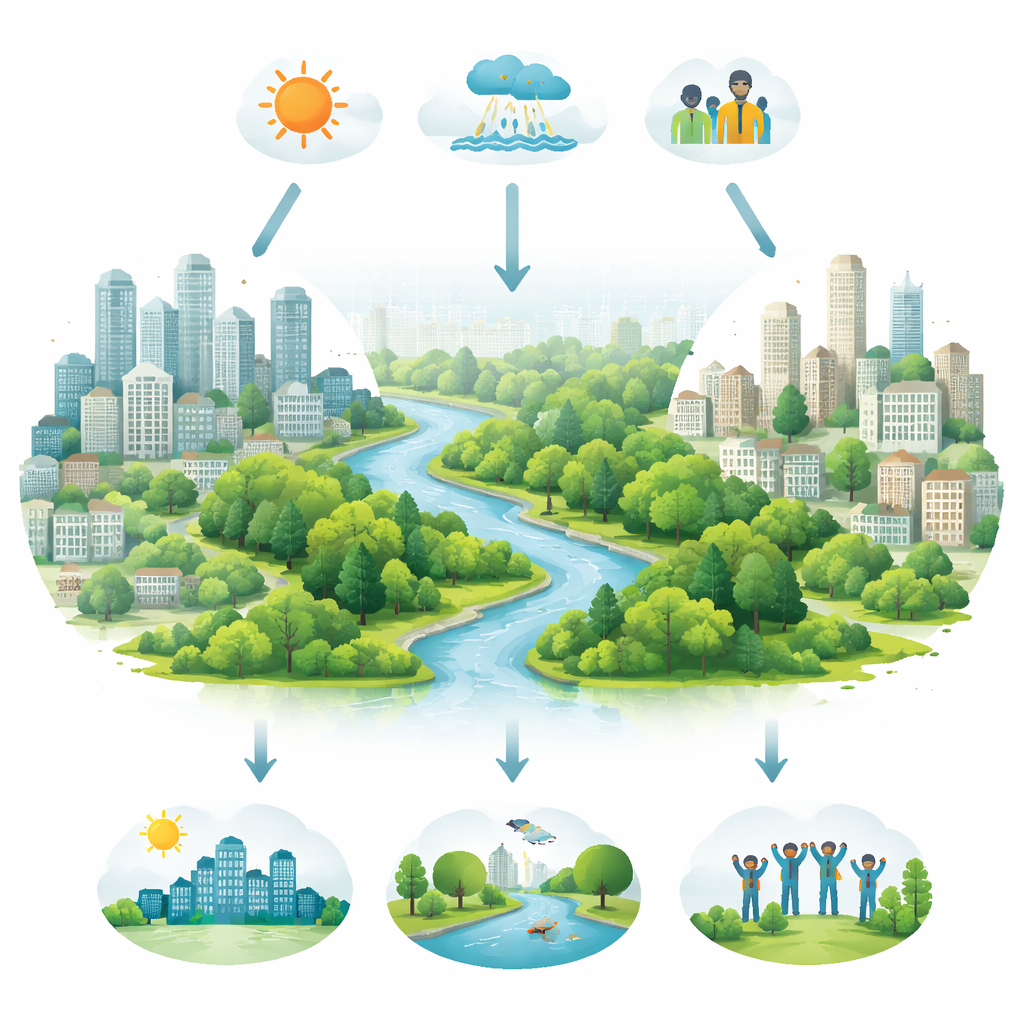
Two countries, two ways of running green spaces
The researchers interviewed 32 experts—from city officials and planners to scientists and environmental advocates—in 11 cities across Korea and Germany. Korea organizes its urban green spaces through a strongly centralized system: national ministries and agencies set detailed rules and programs, and local governments follow them. Germany, by contrast, spreads authority across many levels, from the European Union down to cities and even neighborhood votes. This means German cities enjoy more freedom to shape local parks, but decisions often take longer and involve complex negotiations.
How rules and players shape city nature
In both countries, many different actors share responsibility for green spaces. Government departments, advocacy groups, professional planners, and researchers all play roles—but not the same ones everywhere. In Korea, a national forest agency and central ministries drive most decisions, with strong ties to global agendas such as the United Nations’ Sustainable Development Goals. In Germany, city departments, state laws, and European rules on forests and biodiversity strongly influence what happens on the ground. The study finds that these legal frameworks can either smooth the way—by clearly supporting parks and trees—or slow things down when rules are vague, overlapping, or hard to interpret across jurisdictions.
What gets in the way of greener cities
Across both countries, experts agreed that the biggest obstacle is not a lack of ideas or planting techniques, but the difficulty of involving people fairly and effectively. Conflicts arise between different users of parks, such as dog owners and families, or between professionals with different visions of what green spaces should look like. Limited budgets and staff add pressure, especially when residents want more and better parks than cities can easily afford. In Germany, fragmented land ownership makes it hard to connect green areas or convert farmland near cities into public spaces. In Korea, frequent job rotations among officials and narrow project timelines make it hard to build long‑term expertise or monitor whether new parks truly deliver promised benefits.
What helps city nature thrive
The study also highlights hopeful trends. In Germany, detailed laws for forests and nature protection—often shaped at the state and EU levels—give cities a solid basis to prioritize recreation and biodiversity over short‑term profit. Citizen assemblies, public consultations, and local referendums can push green issues onto the agenda, even if they sometimes slow decisions. In Korea, strong national strategies aligned with global climate and biodiversity goals allow rapid rollout of new green projects and pilot programs. Communication campaigns, cross‑department collaborations, and partnerships among cities, researchers, and NGOs are emerging in both countries as ways to bridge institutional silos, share knowledge, and build trust across groups.
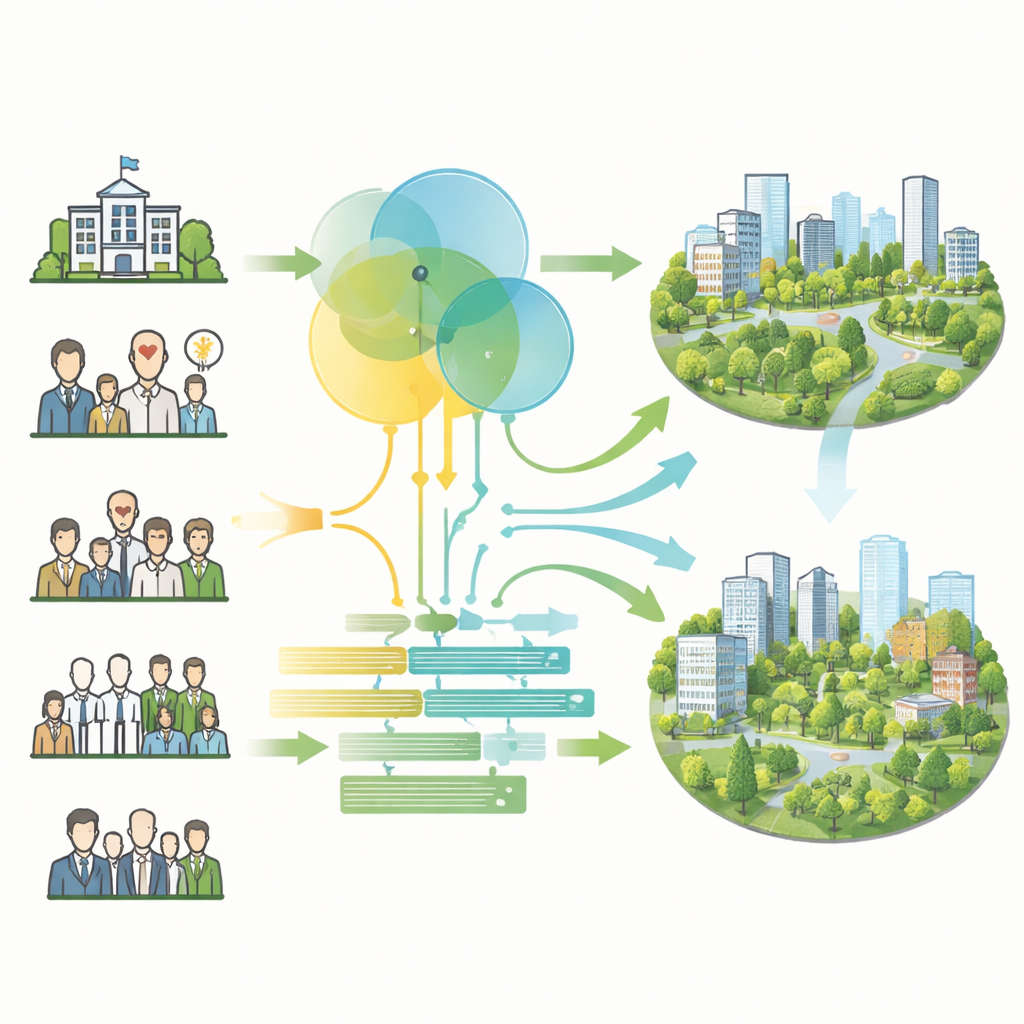
Different sectors, different priorities
Government staff, activists, scientists, and private consultants do not see the challenges in exactly the same way. Officials tend to focus on what is administratively possible—budgets, legal obligations, and institutional rules. NGOs put more weight on fairness, public participation, and giving voice to marginalized communities. Researchers stress the need for evidence, careful evaluation, and long‑term thinking. The authors argue that good urban green governance must harness all of these perspectives: practical capacity from government, social insight from civil society, and analytical depth from science. Mechanisms such as joint planning committees, pilot projects, intermediary organizations, and targeted training can help these groups work together rather than at cross‑purposes.
What this means for people who live in cities
For city residents, the study’s message is simple: greener, healthier neighborhoods depend as much on how we make decisions as on how many trees we plant. Korea shows that centralized systems can move fast, but risk overlooking local voices and long‑term learning. Germany shows that decentralized, participatory approaches can produce context‑sensitive solutions, but may struggle with speed and coherence. By combining the strengths of both—clear supportive rules, stable funding, inclusive engagement, and room for experimentation—cities can turn parks, street trees, and urban forests into reliable allies against heat, flooding, and stress. Ultimately, the way we govern urban green spaces helps determine whether future cities will be more livable, fair, and resilient for everyone.
Citation: Son, J., Martin, J., Linnerooth-Bayer, J. et al. Governance of urban green spaces as nature-based solutions in Korea and Germany. npj Urban Sustain 6, 43 (2026). https://doi.org/10.1038/s42949-026-00340-1
Keywords: urban green space, nature-based solutions, city governance, climate-resilient cities, public participation