Clear Sky Science · en
Physical and social disorder, and not tree cover, reduce perceived safety in urban green spaces
Why park safety feelings matter
City parks and neighborhood squares are supposed to be places where people relax, exercise, and meet friends. Yet many urban residents hesitate to use nearby green spaces because they feel unsafe, even when actual crime levels are modest. This study from Paraguay asks a simple but important question: what really makes people feel unsafe in parks—trees and tall plants that might hide wrongdoers, or the visible signs that a place is uncared for and socially troubled?
Looking closely at everyday parks
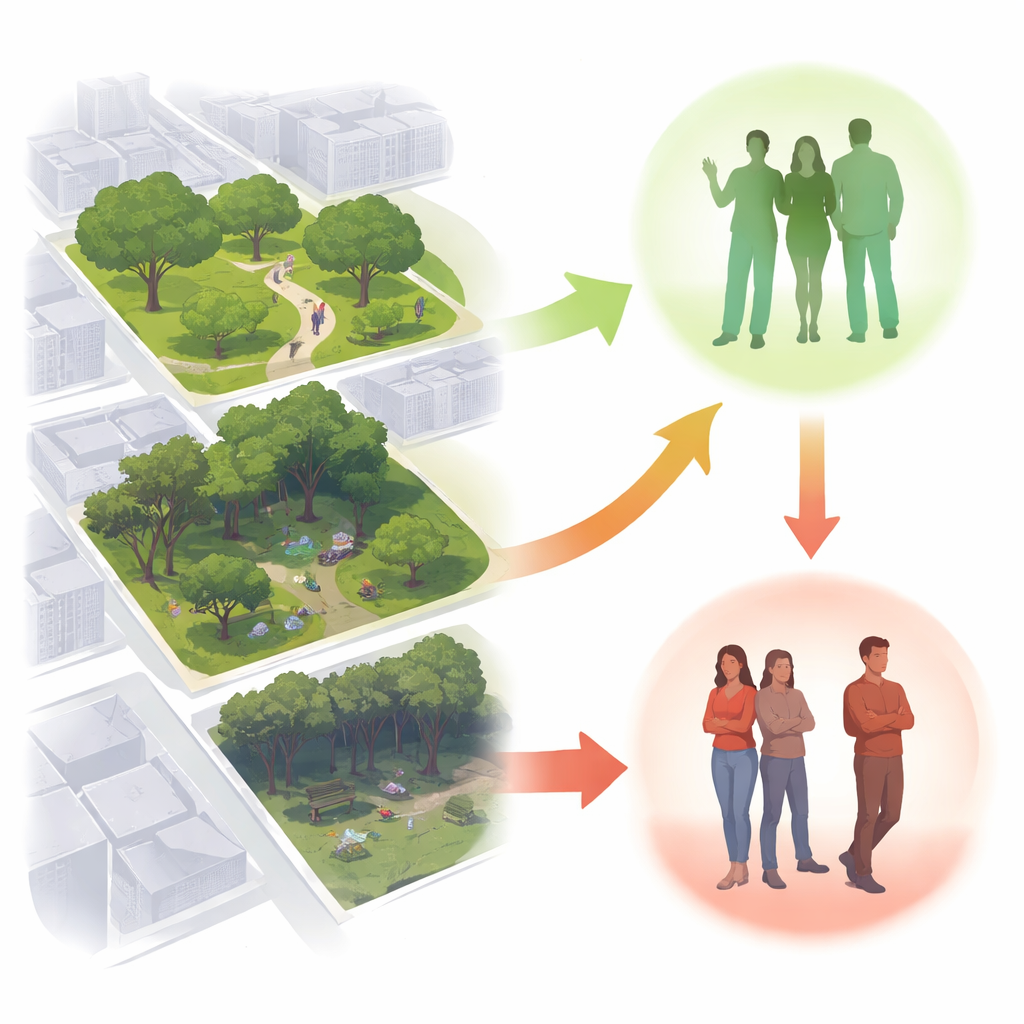
Researchers surveyed 356 adults living in three cities in the metropolitan area of Asunción, Paraguay. Participants answered questions about how often they visited local green spaces, how safe they felt getting to and using them, and what sorts of problems they noticed there. These problems ranged from litter, broken benches, and poor lighting to public drinking, drug use, and people living in makeshift shelters. At the same time, the team used satellite images to measure the actual amount of tree cover, grass cover, and the size of each park, allowing them to compare people’s feelings with objective features of the places they visited.
Disorder sends a strong warning signal
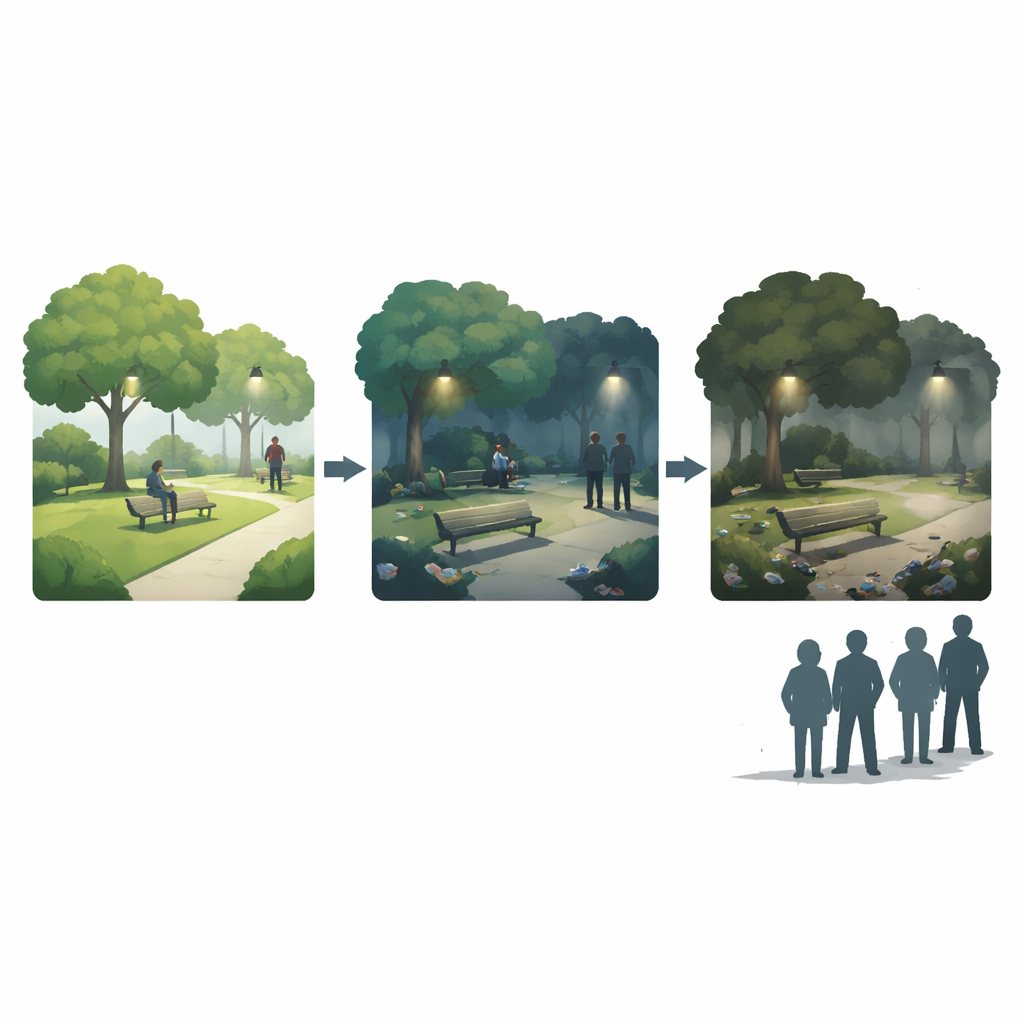
The analysis revealed that what most undermines feelings of safety is not how leafy a park is, but how neglected and socially troubled it appears. Signs of physical disorder—such as vandalism, broken furniture and paths, overgrown areas, and poor lighting—were strongly linked to lower perceived safety. These constant, visible cues also fed into perceptions of social disorder, like public arguments or substance use, which in turn made people think crime in the park was more likely. In other words, when a place looks uncared for, people tend to expect more troublesome behavior there and feel less at ease spending time in it.
Grass, trees, and the role of upkeep
The story for vegetation was more nuanced. Parks with more grass cover tended to feel safer to visitors, suggesting that open, grassy areas can give a sense of comfort and openness. However, this benefit depended on good maintenance: where grass was perceived as overgrown or poorly kept, additional grass was actually associated with feeling less safe. Tree cover and park size, by contrast, showed no clear direct link to safety feelings in this study. Although dense trees did relate to lower visibility, their effect on safety seemed to run mainly through how they changed lighting and sightlines, rather than through the sheer amount of tree cover itself. In Asunción’s hot, subtropical climate, people may value trees more for shade and relief from heat than see them as a threat.
Who feels unsafe and why
The researchers also found that people with higher incomes tended to feel less safe in public green spaces, even though crime reports did not differ within the same park. One possible explanation is that wealthier residents may live in tidier neighborhoods and expect similar standards in public spaces, making them more sensitive to signs of neglect or disruptive behavior. Surprisingly, how often people visited parks was not strongly tied to how safe they felt, suggesting that safety is only one of several factors—along with distance, free time, and personal habits—that shape park use.
What this means for better city parks
Overall, the study challenges the widespread assumption that thick vegetation automatically makes parks feel dangerous. Instead, it points to physical and social disorder as the main culprits behind feelings of insecurity. For city planners, this means that simply cutting back trees or simplifying plantings in the name of crime prevention may do more harm than good for urban nature and biodiversity. A more promising approach is to combine rich, varied vegetation with reliable maintenance, good lighting, and visible care for park facilities. By tackling neglect and social troubles rather than blaming trees, cities—especially in the global south—can create greener, more welcoming spaces where people feel safe enough to enjoy nature close to home.
Citation: Berdejo-Espinola, V., Fuller, R.A. & Zahnow, R. Physical and social disorder, and not tree cover, reduce perceived safety in urban green spaces. npj Urban Sustain 6, 48 (2026). https://doi.org/10.1038/s42949-026-00337-w
Keywords: urban green spaces, perceived safety, park maintenance, social disorder, urban biodiversity