Clear Sky Science · en
Gut microbiome community structure correlates with different behavioral phenotypes in the Belyaev Farm-Fox Experiment
Why Friendly Foxes and Gut Bacteria Matter
For decades, scientists in Siberia have been selectively breeding foxes that either eagerly approach humans or fiercely avoid them. This legendary domestication experiment has revealed how behavior can evolve under human influence. The new study summarized here adds an unexpected player to the story: the community of microbes living in the fox gut. By comparing the gut bacteria of tame and aggressive foxes, the researchers show that microscopic partners may help shape whether an animal is bold and friendly or wary and hostile toward people.
A Tale of Two Fox Personalities
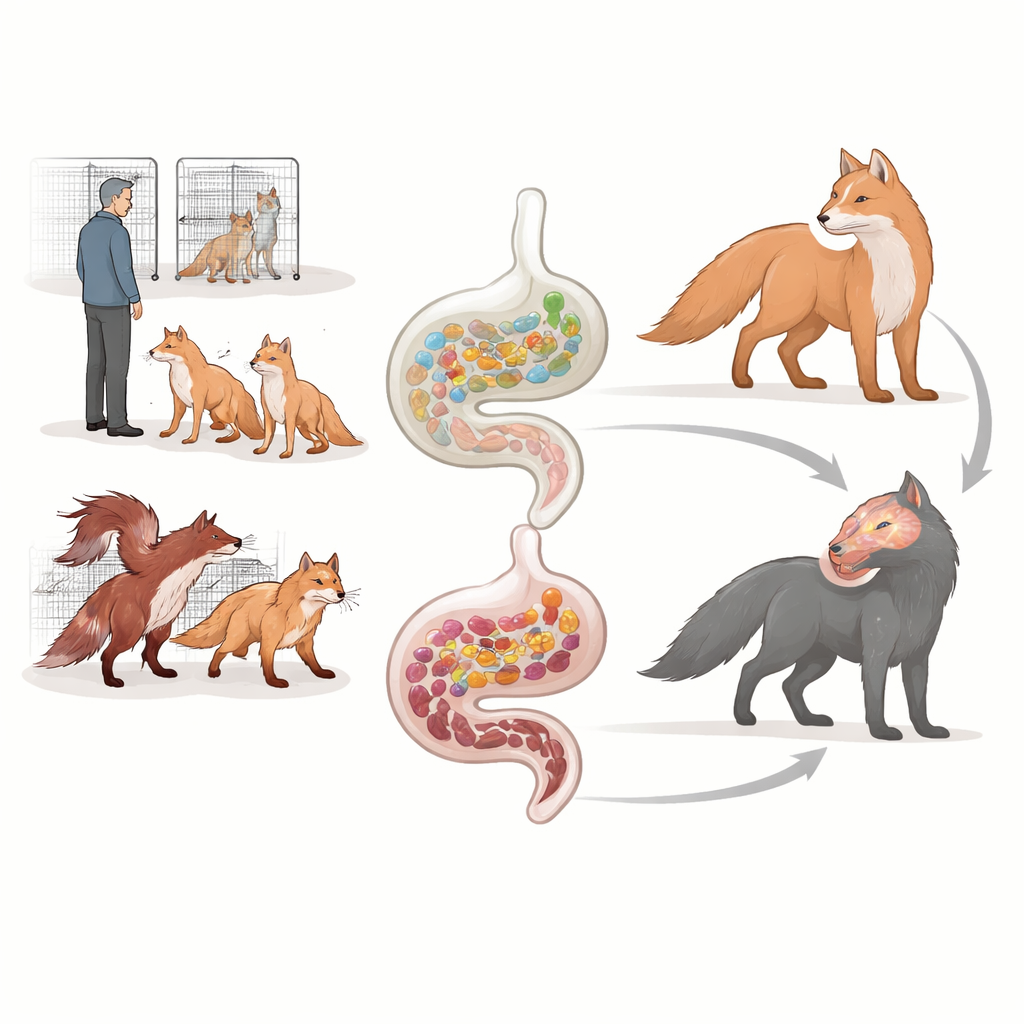
Since the 1950s, the Belyaev Farm-Fox Experiment has bred silver foxes into two distinct behavioral strains. One line is remarkably tame, seeking human contact much like dogs do. The other line has been selected to remain aggressive, growling and lunging at people. Both sets of foxes are kept in the same type of cages, on the same farm, and fed the same food. This controlled setting allows scientists to ask a precise question: if the living conditions are shared, do differences in gut bacteria track the differences in behavior?
Missing Microbes in Gentle Foxes
The team analyzed fecal samples from over one hundred foxes as a window into their gut communities. They found that tame foxes had slightly lower overall microbial diversity compared with aggressive foxes. More striking, the tame animals were depleted in several groups of bacteria that, in other mammals, have been linked to fearfulness and aggression. These included families and genera previously associated with bolder, more anxious, or more aggressive behaviors in mice, hamsters, dogs, and even humans. Many of the missing bacteria are also more common in wild or less domesticated relatives, suggesting that the shift toward friendliness may coincide with a quiet reshaping of the gut ecosystem.
Microbial Chemistry That Talks to the Brain
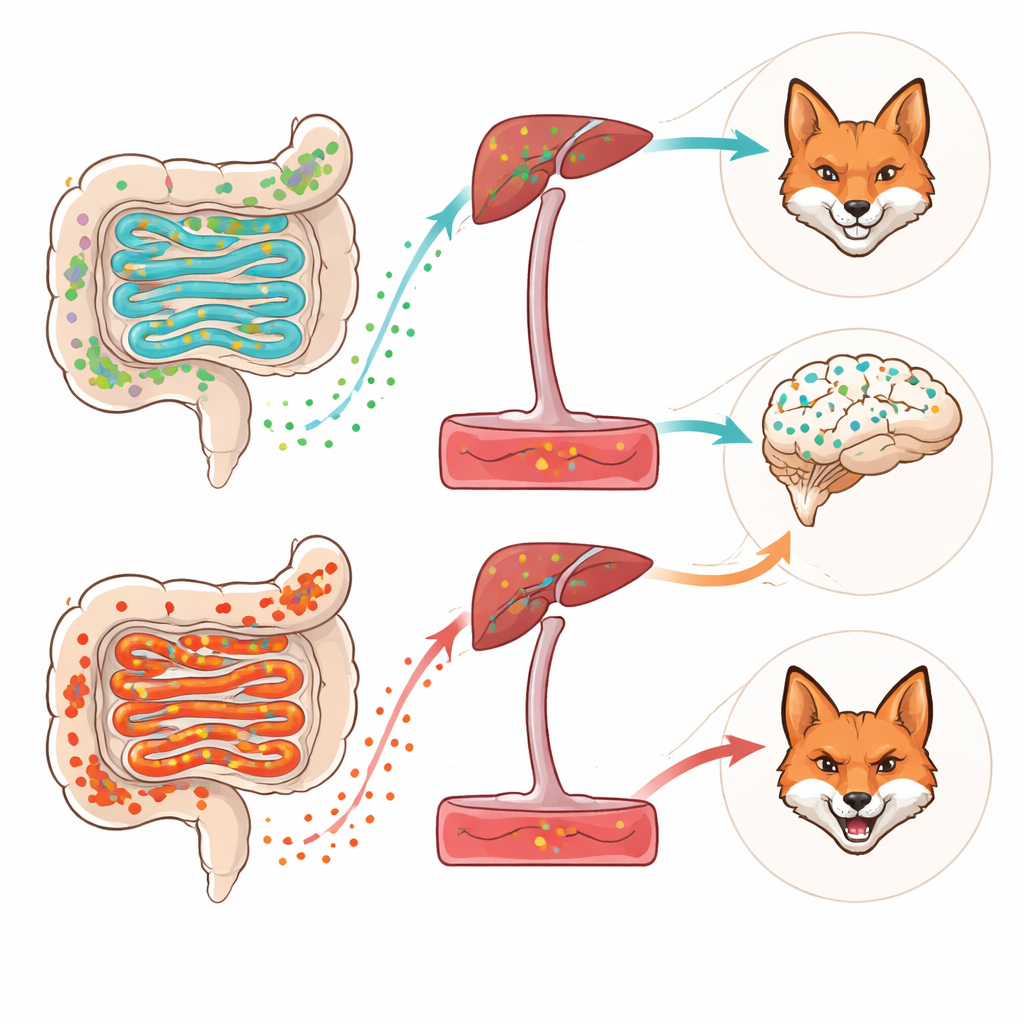
Beyond which microbes were present, the scientists asked what these bacteria might be doing. Using metagenomic sequencing, they reconstructed hundreds of microbial genomes from the fox guts and searched for metabolic pathways that produce or break down brain-active chemicals. Tame foxes harbored more bacterial pathways linked to breaking down glutamate and producing calming messengers such as GABA, as well as making certain short-chain fatty acids like butyrate. These small molecules can influence brain circuits involved in learning, memory, and fear extinction, even when they cannot cross directly into the brain. In contrast, aggressive foxes showed more microbial potential to produce acetate and other compounds that, in experiments, have been tied to higher stress and more rigid coping behaviors.
Aligning Microbes with Fox Genes and Hormones
Intriguingly, the microbial changes line up with earlier genetic and physiological findings from the same fox populations. Prior work showed that genes involved in glutamate signaling and serotonin levels in the brain differ between tame and aggressive strains. The new study finds complementary changes in bacterial pathways that could nudge these same signaling systems. Some microbes enriched in tame foxes also carried pathways capable of modifying hormones such as estrogen and breaking down nitric oxide, both of which have been linked to aggression in animals. This convergence hints that host genes and gut microbes may jointly tune the chemical conversations that underlie fear and aggression.
What This Means for Domestication
The researchers emphasize that the study is correlative: they cannot yet say whether altered gut microbes help cause tameness or simply respond to it. Still, the consistent depletion of “aggression-associated” bacteria and enrichment of bacteria with calming or fear-dampening potential in tame foxes suggests an active role for the microbiome in domestication. Future experiments, such as transferring gut microbes between foxes or tracking changes across generations, could reveal whether microbial passengers help steer the behavioral journey from wild to domestic. For now, this work adds a new layer to our understanding of domestication, showing that evolution under human influence may act not only on animal genomes, but also on the rich inner world of their microbes.
Citation: Puetz, L.C., O. Delmont, T., Mitchell, A.L. et al. Gut microbiome community structure correlates with different behavioral phenotypes in the Belyaev Farm-Fox Experiment. Commun Biol 9, 453 (2026). https://doi.org/10.1038/s42003-026-09717-5
Keywords: gut microbiome, animal domestication, fox behavior, microbiota–gut–brain axis, tameness and aggression