Clear Sky Science · en
Genomic landscape and genetic manipulation of an ectoparasitoid wasp, Gregopimpla kuwanae
A New Ally in the Fight Against Crop Pests
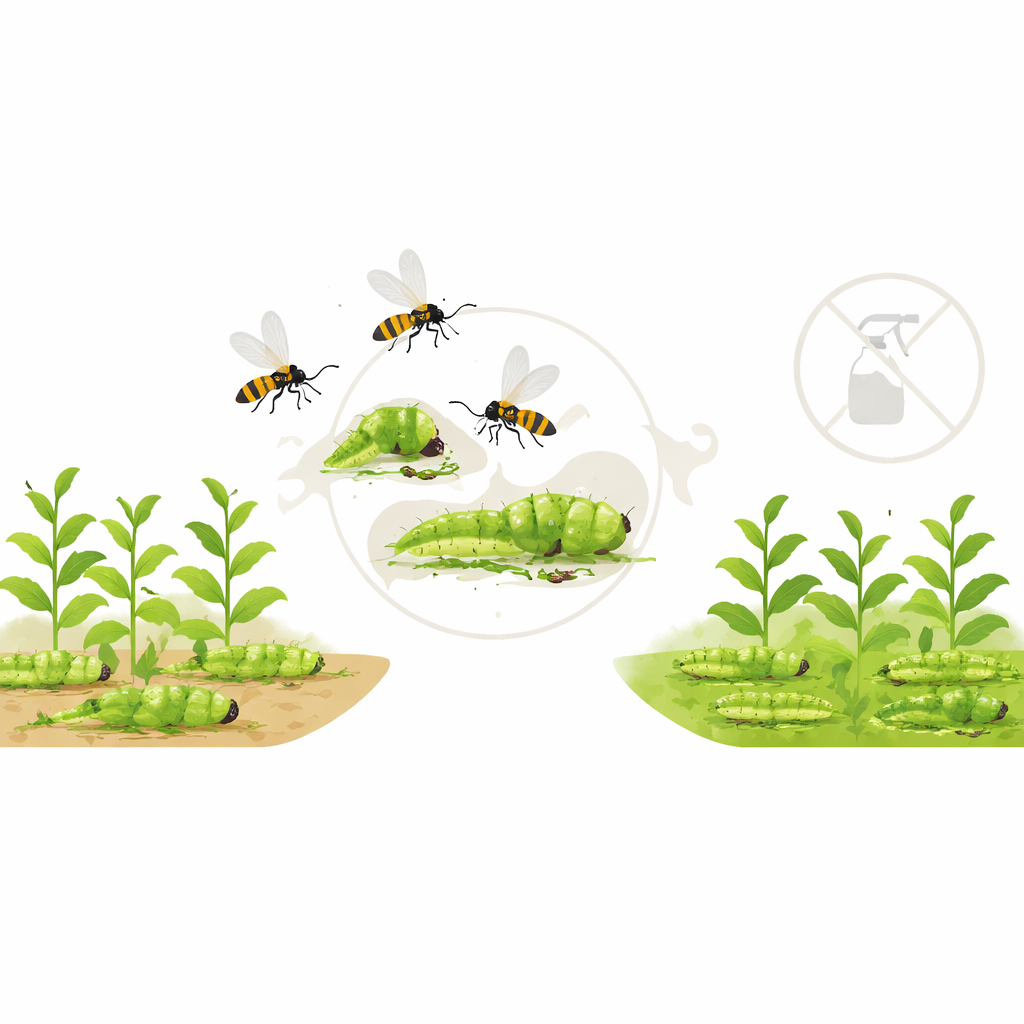
As farmers look for ways to protect crops without relying heavily on chemical pesticides, tiny wasps are emerging as powerful natural helpers. This study focuses on Gregopimpla kuwanae, a relatively large parasitic wasp that attacks caterpillar pests on the outside of their bodies. By decoding its DNA and learning how to tweak its genes, the researchers aim to turn this wasp into a more predictable and effective partner for sustainable pest control, potentially reducing the need for harmful chemicals on our food and in the environment.
Building a Genetic Map of a Helpful Wasp
The first step in this work was to assemble a complete, high-quality genetic blueprint of G. kuwanae. Using several modern DNA sequencing techniques, the team pieced together its genome into 24 chromosomes totaling about 323 million “letters” of DNA. They showed that the assembly was both accurate and nearly complete by checking for thousands of conserved insect genes. They also cataloged the many repeated DNA elements that help shape genome size; in this wasp, a type of jumping DNA called LTR retrotransposons takes up about a third of the genome and is a major contributor to its overall length.
Teaching the Wasp’s Genes to Switch On and Off
With the genome in hand, the authors next asked whether G. kuwanae could be used for hands-on genetics, something that has been very hard to do in parasitic wasps because they are usually small and develop inside their hosts. They used a gene-silencing method called RNA interference to switch off a pigment gene known as cinnabar, which normally helps make the eyes black. After injecting young larvae with specially designed RNA molecules, the wasps grew up with dark red instead of black eyes, and the effect on gene activity lasted more than ten days without harming survival. The team then applied the powerful CRISPR/Cas9 gene-editing toolkit to disrupt a gene called vestigial, which is needed for normal wing growth. Many edited adults emerged with crumpled or shortened wings, again with good survival after embryo injections laid on the surface of the host. Together, these results show that G. kuwanae can now serve as an experimental workhorse for studying gene function in parasitoid wasps.
What the Genome Reveals About Its Parasitic Lifestyle
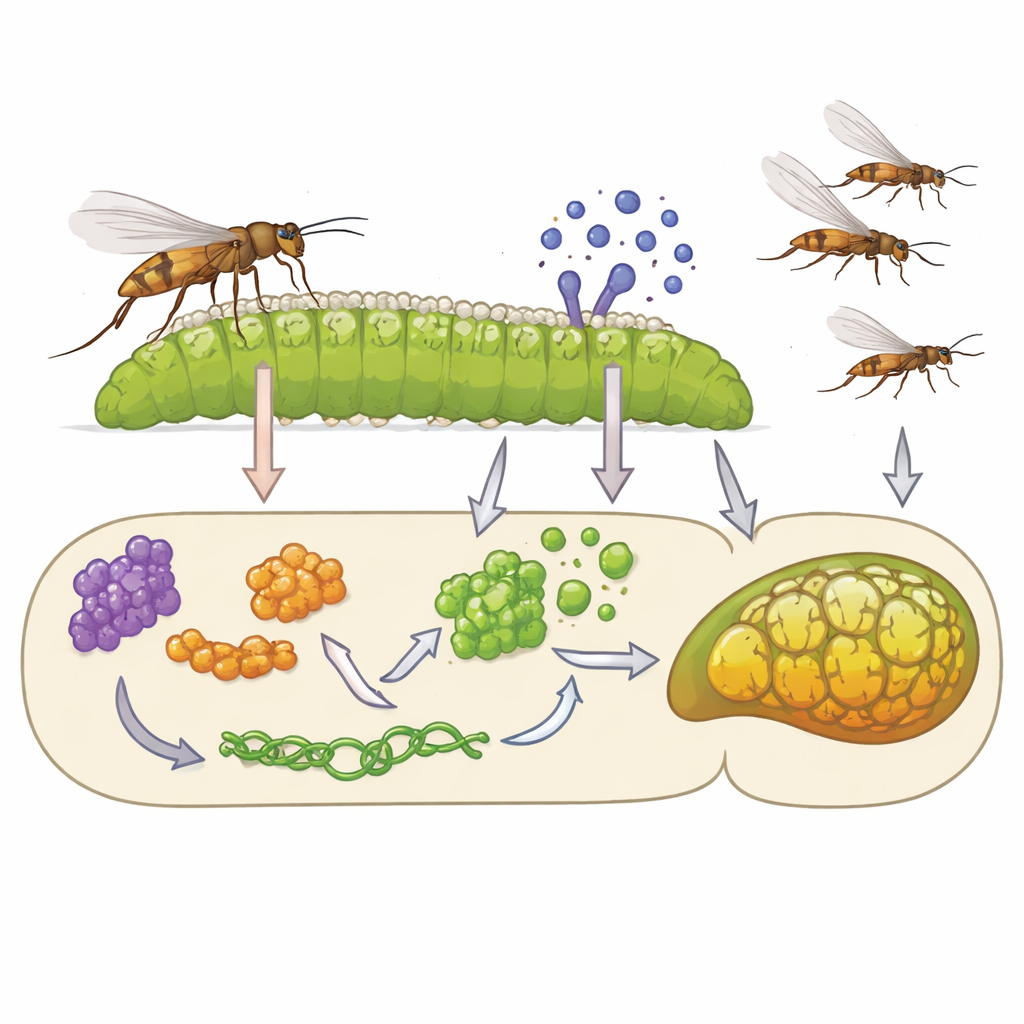
Armed with the new genome, the researchers compared G. kuwanae’s genes with those of many other wasp species. Across the group as a whole, most gene families have actually shrunk over evolutionary time, especially as parasitic and social lifestyles evolved. In contrast, G. kuwanae shows notable expansions in certain sets of genes linked to how it attacks and survives on its hosts. These include detoxification enzymes that break down foreign chemicals, venom-related proteins that help paralyze or weaken the host, and molecules that can alter host tissues, metabolism, and immune defenses. Because this species develops on the outside of its victim rather than inside, it likely faces more environmental stress and must quickly immobilize and consume the host, so having extra copies of these genes may give it a competitive edge.
Borrowed Genes That Help Adult Females Survive
The study also uncovered a surprising set of eight genes that appear to have jumped into the wasp’s genome from bacteria, fungi, or plants over evolutionary time, a process known as horizontal gene transfer. One of these genes, called JSFChr12G01362 in the paper, stood out because it is strongly switched on in newly emerged females before they start to feed. When the researchers used RNA interference to reduce its activity, females did not show obvious changes in behavior or egg-laying, but they died at a higher rate over the following days, whether they were given hosts or just sugar water. This suggests that the borrowed gene plays a quiet yet essential role in keeping adult females physiologically stable, illustrating how outside DNA can be repurposed to boost an insect’s fitness.
From Genome to Greener Pest Control
By delivering a complete chromosome-level genome and proving that genes in G. kuwanae can be precisely switched off or edited, this work turns an already useful biocontrol wasp into a true genetic model. It highlights specific expanded and foreign genes that likely contribute to its ability to kill pests efficiently while coping with toxins and host defenses. In practical terms, these insights could guide the breeding or engineering of wasp strains that are better suited to particular crop systems or environmental conditions, helping farmers manage pests with fewer chemicals and moving agriculture a step closer to sustainable, nature-based protection.
Citation: Gao, H., Li, Y., Chen, Y. et al. Genomic landscape and genetic manipulation of an ectoparasitoid wasp, Gregopimpla kuwanae. Commun Biol 9, 403 (2026). https://doi.org/10.1038/s42003-026-09699-4
Keywords: parasitoid wasp, biological control, insect genomics, gene editing, horizontal gene transfer