Clear Sky Science · en
Environmentally relevant lanthanum chloride exposure induces hepatic steatosis in zebrafish larvae via PPARα-dependent ApoB suppression
A Hidden Risk in Everyday Water
Rare earth elements help power modern technology, from smartphones to green energy devices. One of them, lanthanum, is increasingly found in rivers, lakes, and even drinking water around the world. This study asks a simple but important question: when developing animals are exposed to realistic levels of lanthanum chloride in water, what happens to their livers—the body’s main organ for handling fats and toxins? Using tiny transparent zebrafish, which share many liver features with humans, the researchers uncover how early exposure can quietly program the liver for long‑lasting fat buildup and damage.
From Clean‑Looking Water to Fatty Livers
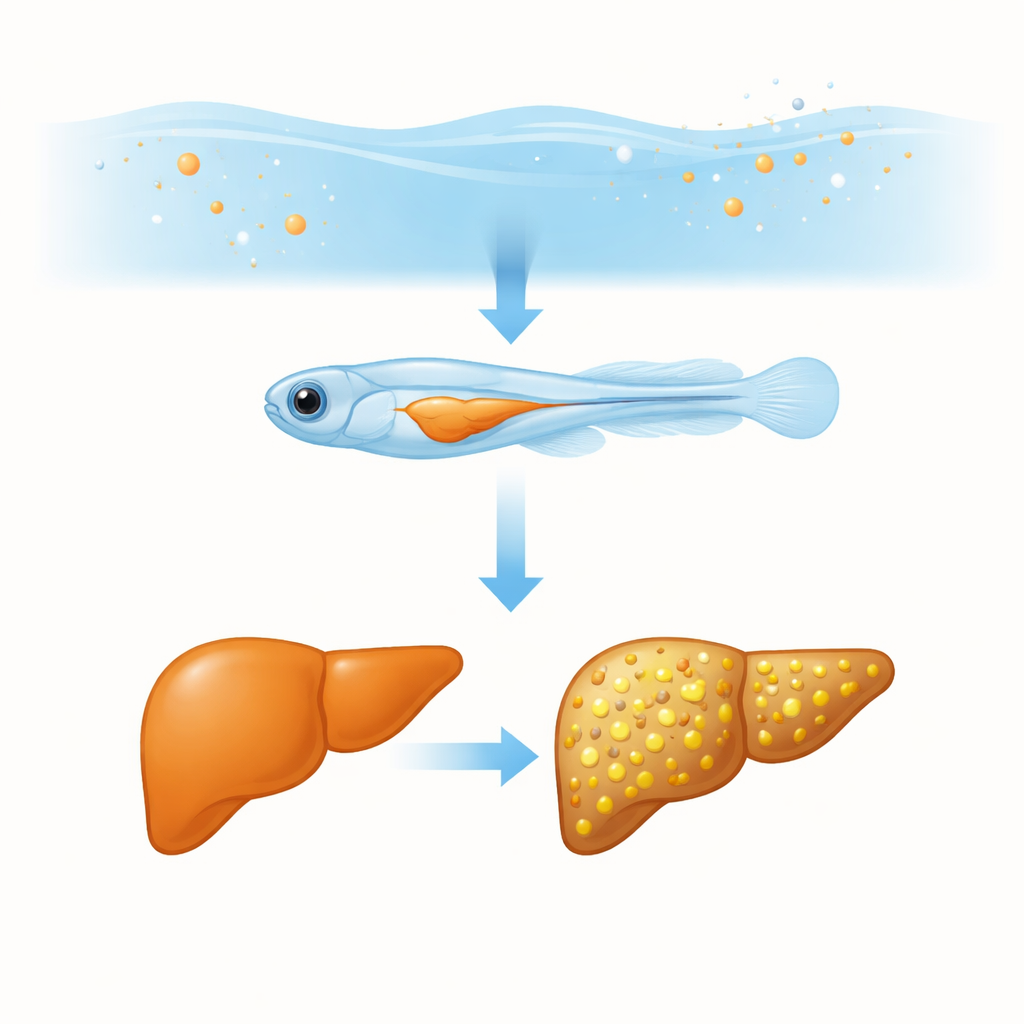
The team exposed zebrafish embryos to lanthanum chloride at concentrations similar to those measured in polluted rivers and reservoirs. At first glance, the young fish appeared normal: they hatched, grew, and swam much like unexposed fish. But when the scientists zoomed in on the liver, they saw clear trouble. The liver area was noticeably smaller, and microscopic images revealed vacuole‑like spaces and disorganized tissue—hallmarks of early injury. Special fat‑staining dyes showed that the livers of exposed fish were dotted with many more lipid droplets than normal, a condition known as hepatic steatosis, or fatty liver.
Damage That Doesn’t Go Away
One of the most striking findings was how long this damage lasted. After five days in lanthanum‑containing water, the fish were moved back into clean water and raised into adulthood. Months later, their livers still showed abnormal fat accumulation and a reduced liver‑to‑body weight ratio, especially in fish that had encountered the highest lanthanum levels early in life. The rest of the body, including overall length and weight, looked normal. This suggests that the developing liver is uniquely sensitive and that brief early exposure can leave a metabolic scar that does not fully heal, potentially mirroring how early chemical exposures in people may raise the risk of adult fatty liver disease.
How the Liver’s “Fat Export System” Breaks Down
To understand what was going wrong inside the liver, the researchers measured hundreds of small molecules and gene activity patterns. They discovered that a key fat‑shipping route was disrupted. Normally, the liver packages triglycerides—its main storage fat—into tiny particles called very‑low‑density lipoproteins, which carry fat out to the rest of the body. In lanthanum‑exposed fish, levels of these particles and their downstream breakdown products dropped, while triglycerides piled up. Gene readouts pointed to a central controller called PPAR‑alpha, which helps the liver decide when to burn fat and when to bundle it for export. Lanthanum exposure dampened PPAR‑alpha’s activity and lowered the levels of two crucial helpers, MTTP and ApoB, which are needed to build export‑ready fat particles.
A Molecular Chain Reaction Inside Liver Cells
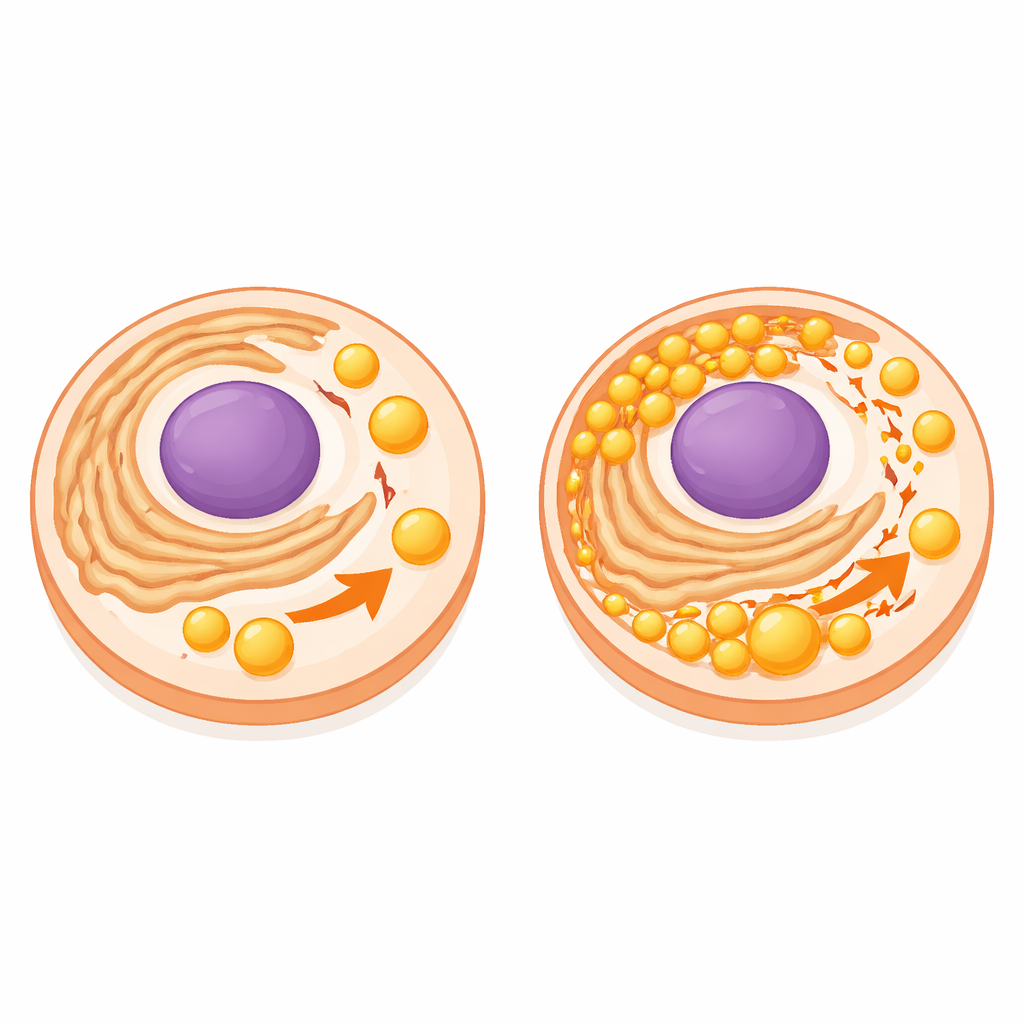
Follow‑up experiments mapped out a chain reaction. When the scientists chemically boosted PPAR‑alpha or artificially increased MTTP in zebrafish, liver size and structure improved, triglyceride levels fell, and fat‑carrying particles partially recovered—evidence that this pathway is not just affected, but causally involved. Cell culture studies then zoomed in even further. In human liver‑like cells, lanthanum led to excess fat droplets clustered around the endoplasmic reticulum, the cell’s assembly line for lipoproteins. At the same time, the amount of ApoB protein dropped, and more of it appeared side‑by‑side with HSP70, a chaperone that escorts damaged proteins to the cell’s waste‑disposal machinery. Blocking the proteasome, the main protein shredder, prevented ApoB loss and eased fat buildup, indicating that lanthanum pushes ApoB into premature destruction before it can help export fat.
What This Means for People and the Planet
Together, these findings show that lanthanum chloride, at levels already measured in some natural waters, can quietly but persistently rewire how a developing liver handles fat. By weakening PPAR‑alpha and promoting the degradation of ApoB inside the cell’s internal membranes, lanthanum slows the liver’s ability to ship triglycerides out, causing fat to accumulate and setting the stage for metabolic liver disease. While zebrafish are not humans, they share many liver pathways with us, and this work highlights a plausible route by which rising rare earth pollution could contribute to the global burden of fatty liver disease. The study not only flags lanthanum as a chemical of concern for environmental and drinking‑water regulation, but also points to the PPAR‑alpha–MTTP–ApoB axis as a potential target for future therapies aimed at protecting vulnerable developing livers.
Citation: Li, K., Zhao, X., Xie, Z. et al. Environmentally relevant lanthanum chloride exposure induces hepatic steatosis in zebrafish larvae via PPARα-dependent ApoB suppression. Commun Biol 9, 390 (2026). https://doi.org/10.1038/s42003-026-09697-6
Keywords: lanthanum pollution, fatty liver, zebrafish, rare earth elements, lipid metabolism