Clear Sky Science · en
Salinity stress response of black yeasts isolated from deep-sea sediments of the Gulf of Mexico
Life in a Hidden, Salty World
Far below the surface of the Gulf of Mexico, in cold, high-pressure mud where sunlight never reaches, fungi are quietly thriving. Among them are "black yeasts"—tiny, dark-colored organisms that shrug off extremes of salt that would kill most life. This study asks a simple but fascinating question: how do these deep-sea fungi survive and even prosper when surrounded by salt concentrations that rival brine, and what special molecules do they make while doing so?
Strange Fungi Beneath the Waves
The researchers began by recovering three species of black yeasts from deep-sea sediments more than two to three kilometers below the surface. These species—Salinomyces thailandicus, Neophaeotheca triangularis, and Neophaeotheca salicorniae—belong to a group of fungi known for their dark pigment and ability to tolerate harsh environments. When the team grew the fungi in the lab across a wide range of salt concentrations, they found that all three could grow in very salty conditions, up to around 20 percent salt for most of them. That places these yeasts among the most salt-tolerant fungi known, alongside a few classic "extreme" microbes. 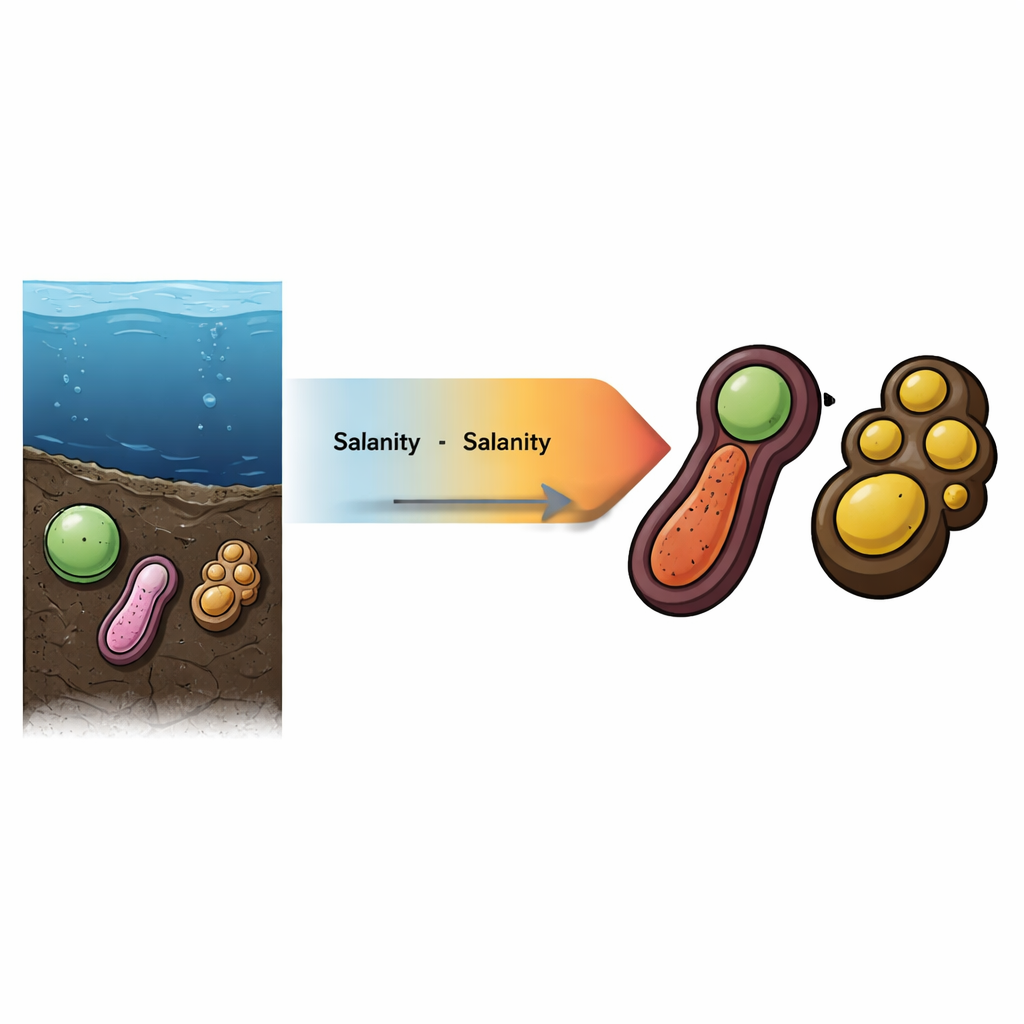
Shape-Shifters Under Salt Stress
Salt did more than slow or speed up growth; it changed what these fungi looked like and how they divided. One species, S. thailandicus, grew as tangled filaments at low salt but switched to more rounded, yeast-like forms as salt increased. N. triangularis did the opposite, becoming more filamentous at higher salt levels, while N. salicorniae mixed both shapes but grew more slowly as salt rose. Using time-lapse microscopy, the scientists watched these cells divide in unconventional ways, producing packets of daughter cells inside a parent cell that later burst open, or changing the timing of budding depending on the salt level. These flexible growth patterns likely help the fungi cope with shifting conditions in their deep-sea home.
The Protective Power of Dark Pigment
A hallmark of black yeasts is melanin, the dark pigment that also colors human skin and hair. In these fungi, melanin is packed into the cell wall and is thought to act as a shield against stress. The team used a chemical called phthalide to block one of the main melanin-making routes and then examined the cells with powerful electron microscopes. When melanin production was intact, the cell walls often thickened under salty conditions, and dark granules accumulated in and on the walls. Tiny channels in the walls of the Neophaeotheca species appeared to ferry pigment outward, where it collected on the cell surface. When melanin was blocked, filamentous growth was almost completely lost, and only clumped, yeast-like cells remained, underscoring that this pigment is not just a dye but a structural player in building and maintaining fungal forms under stress. 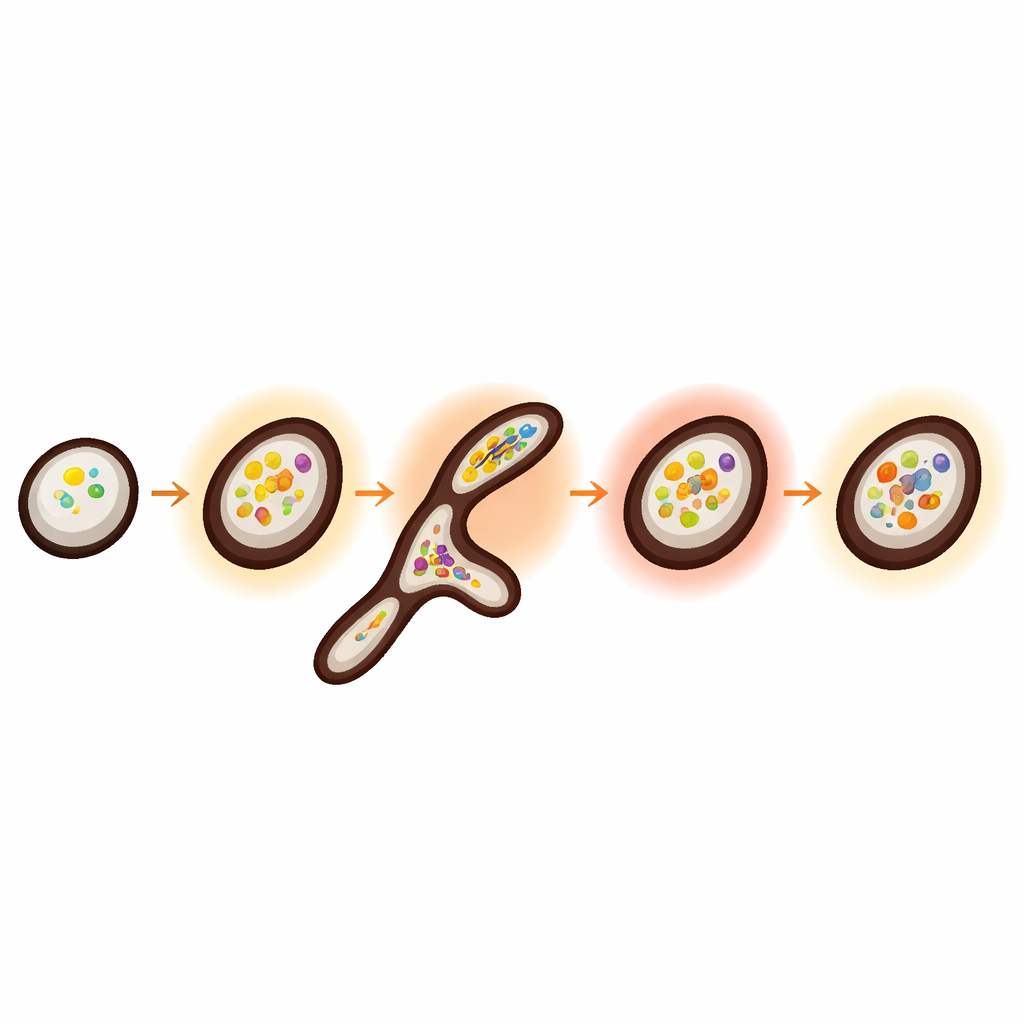
Remodeling Chemistry to Beat the Salt
Beyond changes in shape and walls, the fungi also rewired their internal chemistry. Using high-resolution mass spectrometry, the researchers profiled hundreds of small molecules produced by the cells and their surroundings under low and high salt, with and without melanin inhibition. Fatty acids dominated across species, hinting that the fungi remodel their membranes to stay flexible in salty conditions. One species, N. triangularis, went further, ramping up production of amino acids and small peptides at high salt, a strategy more familiar from salt-tolerant plants than from fungi. The team also detected unusual sugar-related molecules, various lipids, and aminocyclitols—ring-shaped compounds rarely associated with fungi—that may act as previously unrecognized protectants. When melanin was blocked, all three species broadened their chemical repertoires, especially in carbohydrates and lipids, as if compensating for the loss of a key defensive layer.
Hidden Factories of Useful Molecules
Many of the detected compounds resemble molecules already known from other marine fungi to have antibacterial, antifungal, anti-inflammatory, or anticancer properties. These include certain fatty acid derivatives, steroids, alkaloids, and complex aromatic structures. Because most of the metabolites were tied to the fungal biomass itself, they may be concentrated in or around the cell surfaces, potentially forming protective coatings against salt and other stresses. The study therefore not only reveals how black yeasts endure their extreme habitat, but also positions these deep-sea fungi as promising, still largely untapped sources of novel chemicals with biotechnological and medical potential.
What This Means for the Big Picture
In simple terms, this work shows that black yeasts from the Gulf of Mexico survive intense salt stress by changing their shape, thickening and darkening their cell walls, and overhauling their internal chemistry. Melanin acts like a multi-purpose armor, supporting filament formation and helping to control what passes through the wall, while fats, amino acids, and other small molecules fine-tune how the cells handle their salty surroundings. Together, these tricks let the fungi adapt to one of Earth’s most challenging habitats—and turn them into intriguing candidates for discovering new, useful natural products.
Citation: Camacho-López, M.D., Figueroa, M., Hernández-Melgar, A. et al. Salinity stress response of black yeasts isolated from deep-sea sediments of the Gulf of Mexico. Commun Biol 9, 396 (2026). https://doi.org/10.1038/s42003-026-09673-0
Keywords: deep-sea fungi, black yeasts, salt tolerance, melanin, marine metabolites