Clear Sky Science · en
Transcriptomic and metabolomic insights into gabapentin’s therapeutic role in neurogenic inflammation of rosacea
Why calming facial redness matters
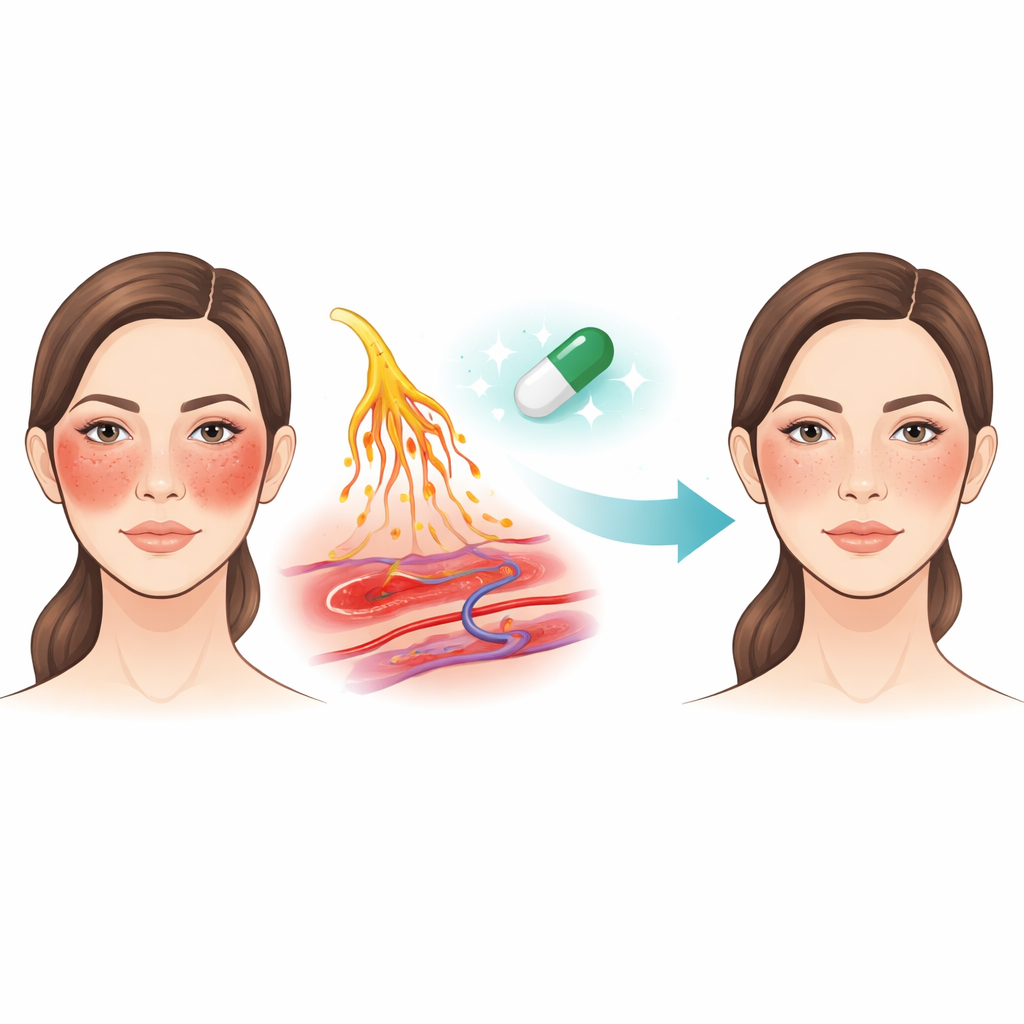
Rosacea is more than a cosmetic nuisance. People who live with this chronic facial redness often feel burning, stinging and embarrassment that can disrupt work, social life and self-confidence. Many current treatments ease symptoms only partly, can cause side effects, or stop working over time. This study explores whether a well-known nerve medicine, gabapentin, can tackle a hidden driver of rosacea—overactive nerve-linked inflammation—offering hope for gentler, more targeted relief.
From nerve signals to flushed skin
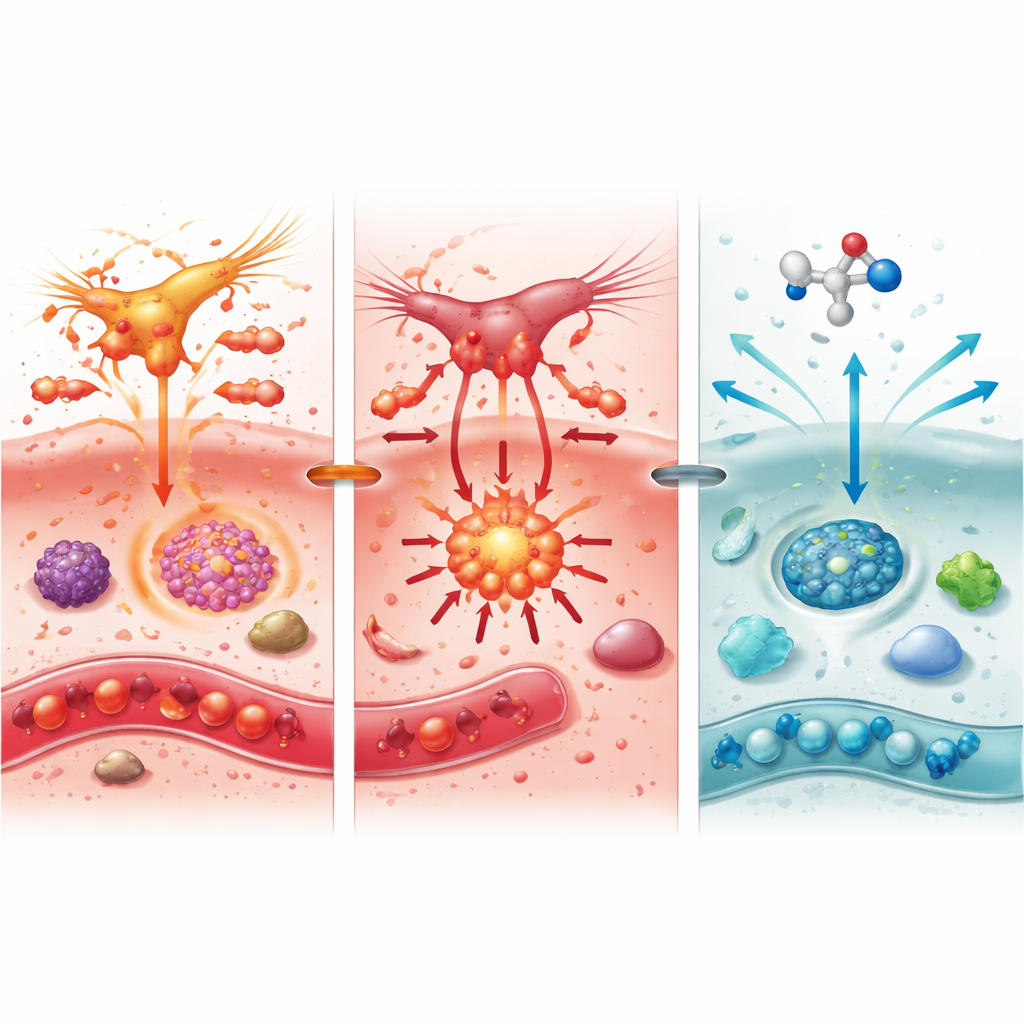
Rosacea is marked by persistent facial redness, visible blood vessels and inflammatory bumps. Increasing evidence suggests that nerves in the skin play a key role: when they are overstimulated, they release chemical messengers that widen blood vessels and attract immune cells, fueling redness and swelling. A central control switch inside many cells, known as the NF-κB pathway, helps turn on these inflammatory signals. When this switch stays stuck in the “on” position, it can drive chronic inflammation and the simmering discomfort familiar to many rosacea patients.
A nerve drug repurposed for the skin
Gabapentin is commonly prescribed for epilepsy and nerve pain, but it also appears to quiet certain inflammatory responses in the nervous system. The researchers asked whether gabapentin could calm the nerve-driven inflammation that worsens rosacea. They used a mouse model in which a natural human peptide, LL37, triggers rosacea-like redness, swelling and immune-cell buildup in the skin. Some mice received gabapentin alone, while others were given a standard combination of two anti-inflammatory drugs, minocycline and hydroxychloroquine, for comparison. The team examined skin thickness, redness, microscopic tissue structure and molecular markers tied to inflammation.
Testing the impact on vessels, genes and cells
Gabapentin-treated mice showed markedly less skin redness, thinner and less swollen skin and fewer invading immune cells, with improvements similar to those seen with the dual-drug therapy. In a separate test mimicking food-triggered flushing, capsaicin (the spicy component of chili peppers) was applied to mouse ears. Gabapentin reduced the ensuing flare of redness and blood vessel expansion and lowered levels of proteins linked to new vessel growth. To understand what was happening inside cells, the team sequenced RNA from mouse skin and found that LL37 strongly boosted genes involved in inflammation and neuroinflammation, while gabapentin reversed many of these changes. Key inflammatory messengers and components of the NF-κB pathway were dialed down in both animal tissues and nerve-related BV2 cells grown in the lab.
Real-world evidence from patients
The researchers then turned to a small clinical study of 60 people with rosacea. Participants were randomly assigned either gabapentin or the standard minocycline–hydroxychloroquine combination for four weeks. Both groups experienced significant improvements in facial redness scores, with no meaningful difference between the two treatments. Blood tests showed that after treatment, patients had lower levels of several inflammatory molecules and nerve-related peptides, consistent with a quieter NF-κB–driven response. A detailed analysis of blood metabolites—small molecules involved in body chemistry—revealed shifts in pathways tied to energy use and amino acid processing, and many of these metabolite changes tracked with drops in inflammatory markers, hinting at broader metabolic benefits.
What this could mean for people with rosacea
Altogether, the findings suggest that gabapentin helps curb rosacea by calming overactive nerve-related inflammation, in part by turning down the NF-κB switch and reshaping inflammatory and metabolic signals. In mice and in patients, this translated into less redness, less swelling and healthier-looking skin, with effectiveness comparable to an established two-drug regimen. While larger and longer clinical trials are still needed, and some details of the mechanism remain to be clarified, this work points to gabapentin as a promising alternative or add-on therapy for rosacea that targets its neurological and inflammatory roots rather than just its surface appearance.
Citation: Jiang, Z., Ding, T., Zhao, Y. et al. Transcriptomic and metabolomic insights into gabapentin’s therapeutic role in neurogenic inflammation of rosacea. Commun Biol 9, 430 (2026). https://doi.org/10.1038/s42003-026-09662-3
Keywords: rosacea, gabapentin, neurogenic inflammation, NF-kappaB, skin redness