Clear Sky Science · en
Agent-based modeling of cellular dynamics in adoptive cell therapy
Why computer-made cells matter for cancer care
Cancer therapies that use living immune cells are transforming medicine, but testing every new idea in animals and people is slow, costly, and sometimes risky. This study introduces ABMACT, a virtual laboratory that builds "digital" cancer and immune cells and lets them interact on a computer screen. By replaying and extending real experiments, ABMACT helps researchers see which features of natural killer (NK) cell therapies matter most, and how to fine‑tune treatment schedules long before entering the clinic. 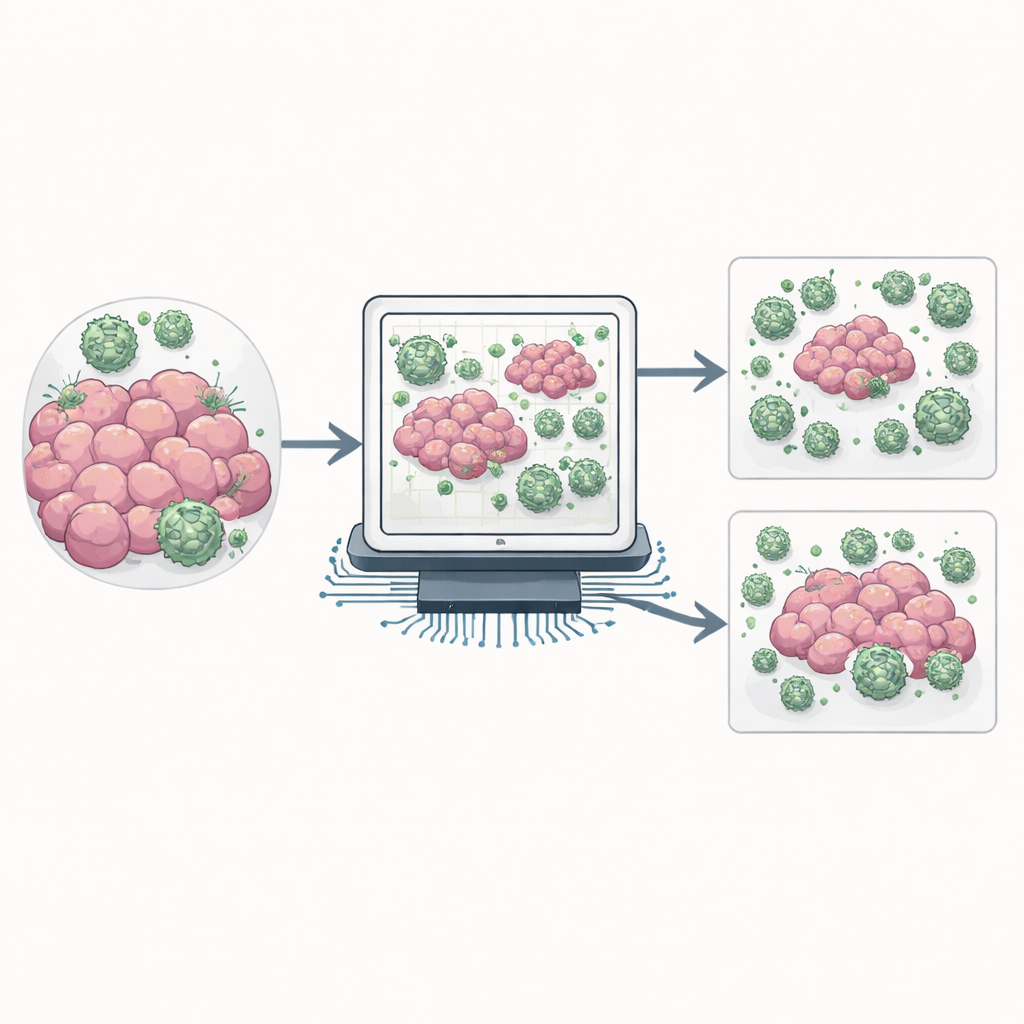
Turning cells into digital actors
ABMACT is based on agent‑based modeling, a technique in which each cell becomes its own little software agent that can move, divide, die, or attack neighbors according to simple rules. The authors designed four main actors: tumor cells, aggressive NK cells that can kill tumors, worn‑out NK cells that have lost their punch, and "vigilant" NK cells that lie low but can spring back into action. Rules for how these cells grow, tire, migrate, and switch states are drawn from existing laboratory and animal studies, then encoded into the simulation so that thousands of virtual cells can play out a miniature treatment course.
Adding the cell’s inner wiring
Modern single‑cell sequencing reveals which genes are active in each NK cell, but this molecular detail is hard to translate into whole‑body behavior. ABMACT tackles this by linking gene activity patterns to practical traits like how likely an NK cell is to kill a tumor cell or how many targets it can eliminate before exhaustion. The team used gene and pathway data from lymphoma and brain tumor mouse models to estimate how specific genes nudge NK cells toward stronger or weaker tumor control. These gene‑based effects are randomly assigned to individual virtual NK cells, creating a digital population that mirrors the natural mix of strong and weak killers seen in real experiments.
Replaying and extending animal experiments
The researchers tested ABMACT against multiple experiments where engineered NK cells were used to treat blood cancers and glioblastoma in mice. In lymphoma models, the simulator correctly reproduced the superior tumor control of NK cells engineered to express both a tumor‑recognizing receptor and the growth signal IL‑15, compared with simpler products or unmodified cells. It not only matched the measured tumor sizes at a few time points, but also filled in the day‑by‑day rise and fall in tumor burden, NK‑cell expansion, exhaustion, and the emergence of vigilant cells. In glioblastoma models, ABMACT again tracked observed tumor control and even predicted results in a separate co‑culture study without being retuned, suggesting that its rules capture general features of NK‑tumor battles.
Testing “what‑if” treatment choices in silicon
Because ABMACT runs on a computer, it can probe questions that would be difficult or expensive to test in animals. The authors systematically varied cell properties and doses to ask which levers most strongly shape tumor control. They found that the ratio of NK cells to tumor cells, the ability of each NK cell to repeatedly kill many targets, and their basic killing strength matter more than simply keeping the cells alive longer. Simulated follow‑up treatments showed that earlier additional doses and products with higher killing power can prevent tumor rebound more effectively than late, modest boosts. The model also explored how poor NK‑cell homing, crowded tissues, or low‑oxygen pockets can delay encounters with tumors and foster treatment failure. 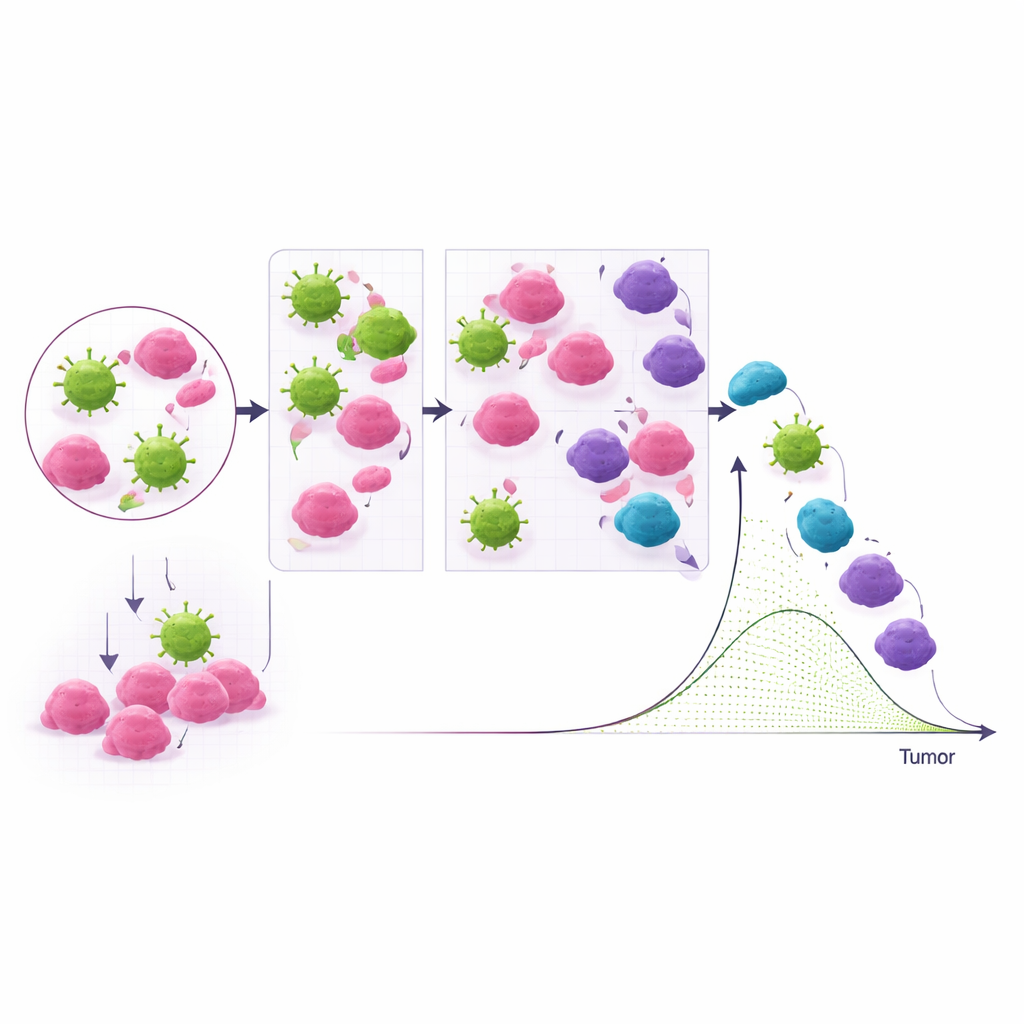
What this means for future cell therapies
To a non‑specialist, ABMACT can be viewed as a high‑resolution flight simulator for NK‑cell cancer therapies. By grounding its digital cells in real genetic and experimental data, the framework explains why some engineered NK products outperform others and why higher doses do not always bring better outcomes. It points to practical design rules: send enough NK cells to the tumor, make them potent serial killers, and schedule treatments early and thoughtfully, rather than simply turning up the dose. While such models cannot replace laboratory and clinical testing, they can narrow the field of options, reduce reliance on animal studies, and, in time, help personalize cell therapies to the biology of individual patients.
Citation: Wang, Y., Casarin, S., Daher, M. et al. Agent-based modeling of cellular dynamics in adoptive cell therapy. Commun Biol 9, 409 (2026). https://doi.org/10.1038/s42003-026-09653-4
Keywords: adoptive cell therapy, natural killer cells, agent-based modeling, cancer immunotherapy, CAR-NK