Clear Sky Science · en
Gut microbial signatures expose the westernized lifestyle of urban Ethiopian children
City Life and Hidden Gut Worlds
As more families across Africa move to cities and adopt modern habits, their children’s bodies are changing in ways we can’t see with the naked eye. This study peeks into the intestinal “ecosystems” of young children in Adama, Ethiopia’s second-largest city, to ask a simple but important question: how does an increasingly western-style life reshape the trillions of microbes that live in their guts, and what might that mean for their health?
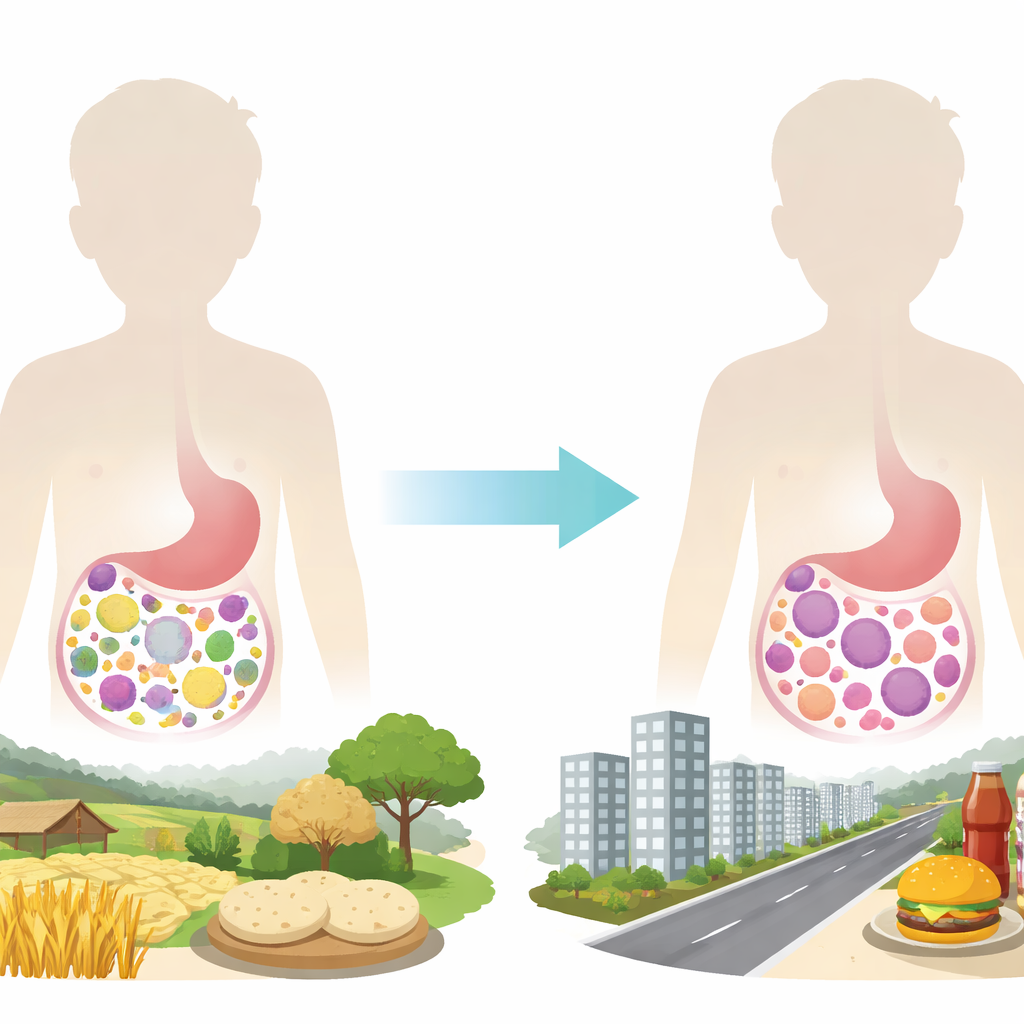
From Village Traditions to City Routines
Scientists already knew that people in rural African communities often carry very different gut microbes from those in Europe or North America. Rural diets tend to be rich in whole grains and plant fibers, and their guts are usually full of certain bacteria such as Prevotella that help break down these complex foods. But the microbiomes of African children growing up in big, rapidly changing cities had barely been studied. To fill that gap, researchers followed more than a thousand children born in Adama between 2018 and 2022, and took a close look at stool samples from about 200 of them when they were between two and five years old. The team combined two types of genetic analysis to catalog which microbes were present and what they were capable of doing.
What Matters Most for Microbial Variety
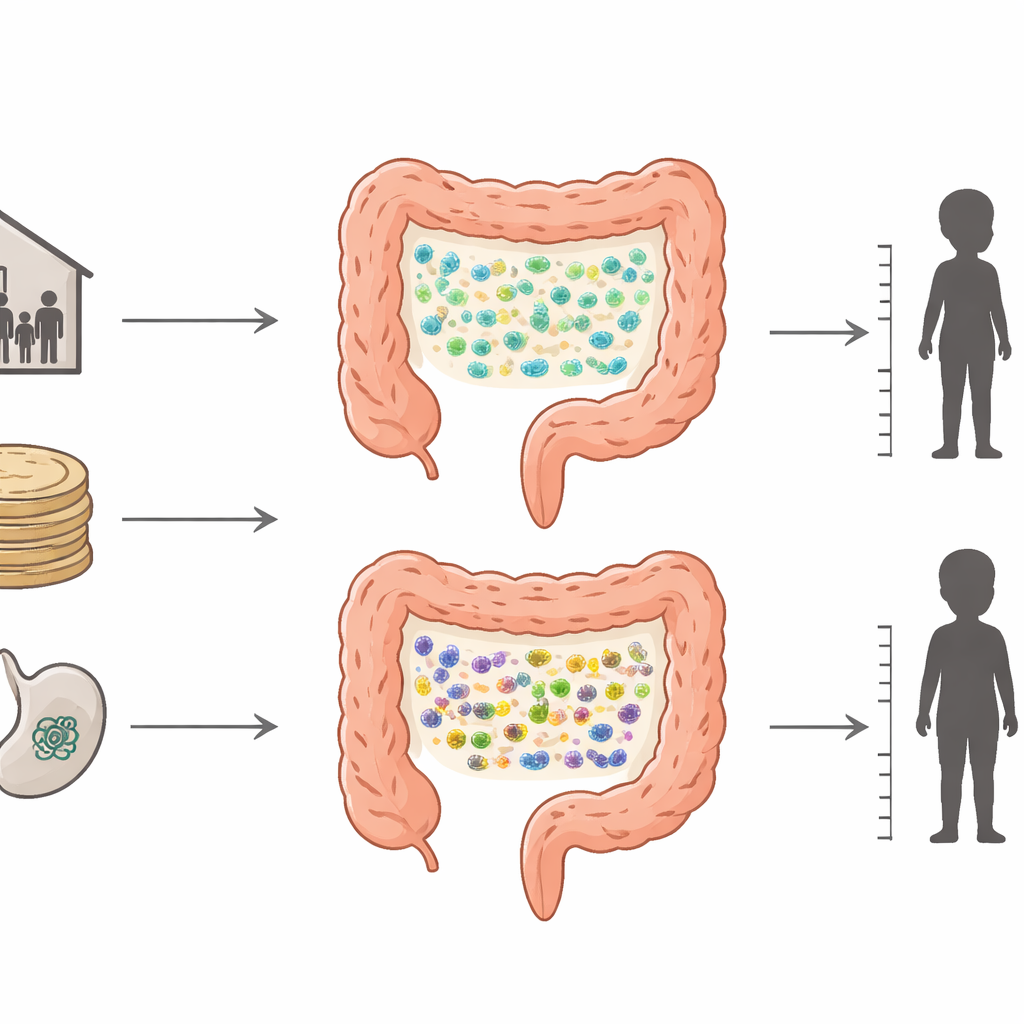
Many parents worry about things like birth by cesarean section or formula feeding and how these might influence their child’s gut microbes. In this urban Ethiopian group, however, such factors turned out to have surprisingly little impact on how varied the children’s gut communities were. Instead, other aspects of daily life mattered more. Children living with their whole family in a single room, eating traditional fermented teff bread regularly, and those who were shorter for their age (a sign of long-term undernutrition called stunting) tended to have more diverse gut microbes. By contrast, children infected with Helicobacter pylori, a common stomach bacterium in East Africa, had less diverse intestinal communities.
Fermented Teff and Little-Known Microbes
The team then focused on 105 children whose gut contents were examined in even greater detail. They assembled thousands of microbial genomes, many belonging to species that have rarely or never been described before. Children who ate teff-based foods such as injera at least once a week hosted more of these unusual species, especially from bacterial families known to ferment plant material into beneficial short-chain fatty acids. Genes involved in transporting and digesting carbohydrates were richer in these little-known microbes in teff eaters, hinting that the traditional cereal may nurture a special set of bacteria adapted to complex plant sugars. Teff-eating children also had a higher share of bacteria coated with an antibody called IgA, which is often viewed as a sign of an active, well-engaged gut immune system.
Urban Microbiomes That Look Western
To understand how city living affects Ethiopian children compared with their rural peers, the researchers compared their data with an earlier study of nearby village children, and with Italian children of similar ages. The differences were striking. Microbes that are typical of traditional African lifestyles, like Segatella and several Prevotella species, were abundant in rural children but largely missing in the city group and in Italians. Urban children, instead, had more bacteria such as Blautia and Bifidobacterium, and their gut communities were geared toward using simple sugars like glucose, lactose, and galactose—hallmarks of processed and dairy-rich diets. Ratios of major bacterial groups, which reflect whether a diet leans toward plant fibers or toward refined sugars and animal products, clearly separated rural children from urban Ethiopians, whose profiles more closely resembled those of European children.
Antibiotic Resistance and the Cost of Modernization
The researchers also scanned the children’s gut DNA for genes that make bacteria resistant to antibiotics. Rural Ethiopian children carried the fewest such genes; Italian children had more, and urban Ethiopian children carried the most. Although the study lacked detailed medical records to tie this directly to antibiotic use, the pattern fits with broader evidence that greater access to healthcare and medicines can leave a lasting footprint in the gut’s genetic “resistome.” Urban children also more often harbored potential troublemakers such as E. coli and Klebsiella pneumoniae, which can cause infections under the right conditions.
What This Means for Children’s Health
Taken together, the findings show that it is not African ancestry or geography that shapes these children’s gut microbes, but how they live and what they eat. Urban Ethiopian children have already developed gut ecosystems that look more like those of European kids than like those of nearby rural families, with a loss of traditional fiber-loving microbes and a tilt toward sugar-processing bacteria and antibiotic resistance genes. Encouragingly, one deeply rooted element of local culture—the regular consumption of fermented teff—appears to push the microbiome in a more diverse, possibly healthier direction. As cities across the Global South expand, understanding and preserving such protective food traditions may help balance the unseen microbial trade-offs of modernization.
Citation: Kirsche, L., Leary, P., Blaser, M.J. et al. Gut microbial signatures expose the westernized lifestyle of urban Ethiopian children. Commun Biol 9, 346 (2026). https://doi.org/10.1038/s42003-026-09639-2
Keywords: gut microbiome, urbanization, Ethiopian children, fermented teff, westernized diet