Clear Sky Science · en
Decreased thickness of the individually-mapped genital cortex after childhood sexual abuse exposure in adult women
Why this research matters for everyday life
Touch is one of the earliest ways humans experience the world, and the brain areas that process touch help shape how we feel about our own bodies and our relationships. This study asks a stark question with real-world consequences: does sexual abuse in childhood leave a physical mark on the part of the brain that feels genital touch, even decades later? By carefully mapping this area in adult women, the researchers show that harmful touch in early life can alter brain structure in a way that everyday adult sexual activity does not.
How the brain feels the body
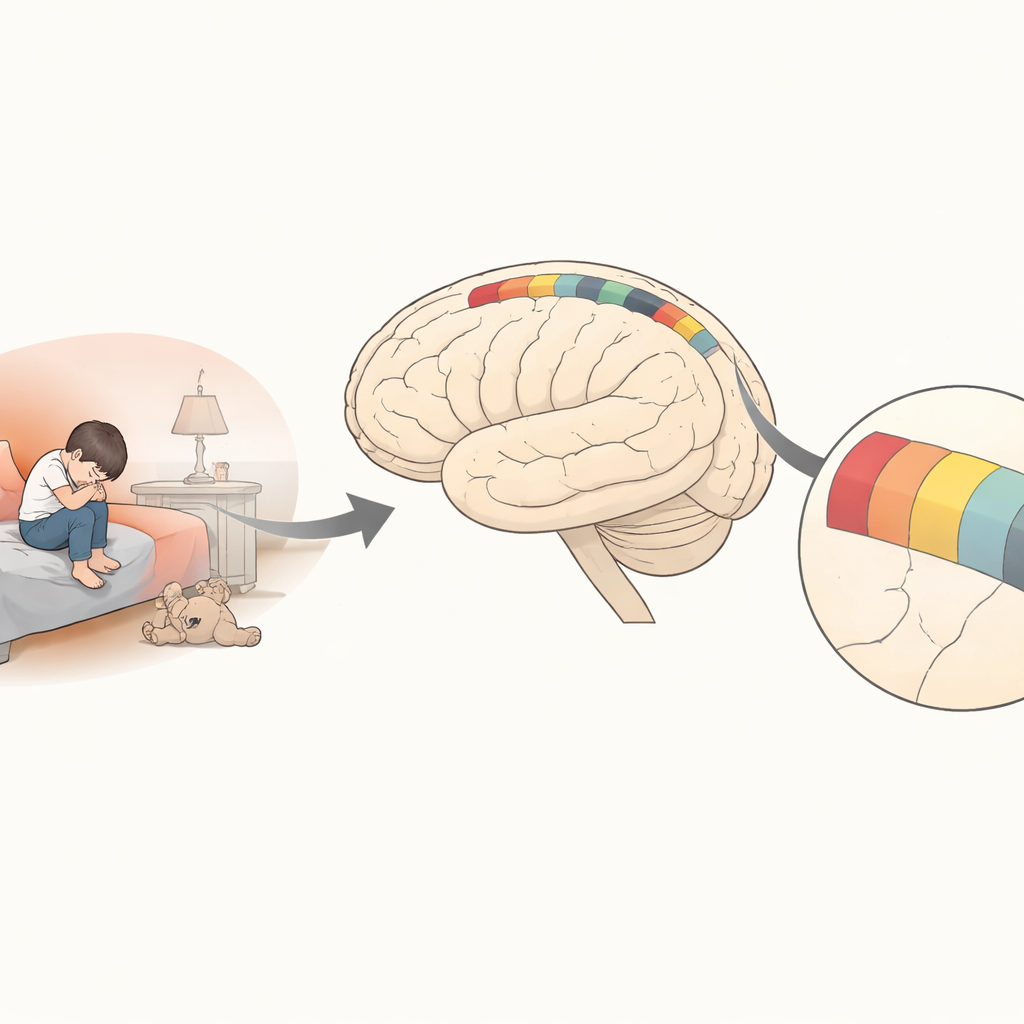
Our sense of touch is organized in the brain like a body map: neighboring skin areas are represented in neighboring patches of the primary touch region in the brain’s surface. The genital area is a small but important part of this map, yet its exact position and behavior in humans have been surprisingly hard to pin down. Earlier work suggested that, under normal circumstances, more frequent consensual sexual contact is linked to a slightly thicker genital area in this map, echoing the familiar idea that "practice strengthens" brain connections. At the same time, earlier studies hinted that sexual abuse in childhood might instead be linked to a thinning of this region, but those studies could not precisely locate the genital zone in each individual.
Pinpointing the genital area in the brain
To sharpen the picture, the authors recruited 128 women between 18 and 50 years old, half with a history of sexual abuse before puberty involving genital touch and half without such experiences. Inside a brain scanner, they used gentle, non-painful, non-arousing air puffs to the external genital area and to the right index finger as a comparison. This allowed them to identify, for each woman individually, the exact spot in the touch map that responded most strongly to genital stimulation, and to separately locate the finger area. From high-resolution brain images, they then measured how thick the brain’s outer layer was at these precisely mapped points.
What childhood abuse changed—and what it did not
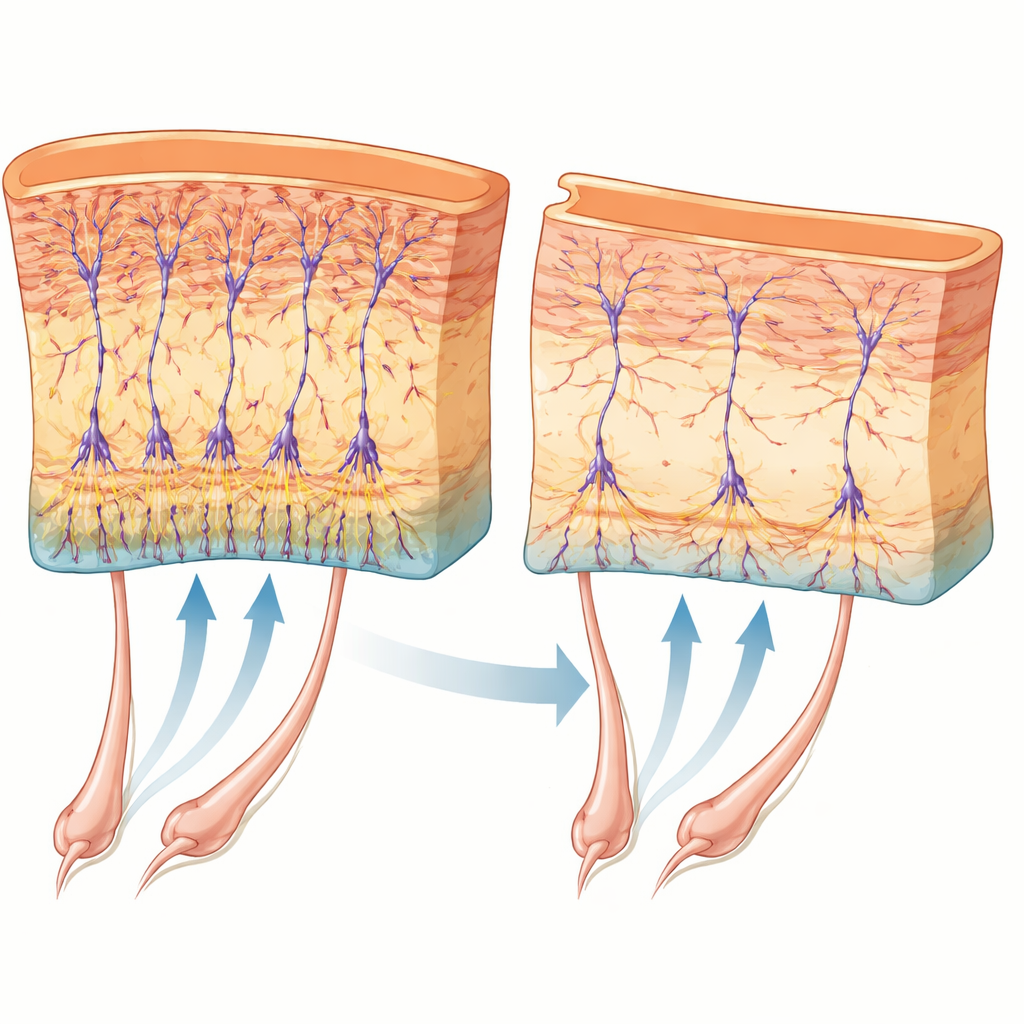
The key difference emerged in the genital part of the brain map, especially in the right hemisphere. Women who had been sexually abused as children had a thinner genital area than women without such a history, even after accounting for age and overall brain thickness. The effect size was small to moderate but specific: the thickness of the finger area and the whole brain did not differ between groups. Importantly, the researchers also confirmed that women with a history of abuse reported less frequent sexual intercourse in the past year. Yet when they included recent sexual frequency in their analyses, the genital area remained thinner in the abuse group, and there was no reliable link between thickness and how often women had sex in the past year, in either group. Earlier onset of abuse was associated with greater thinning, suggesting a particularly vulnerable window in early development.
Possible brain defenses and long-term costs
The findings challenge the simple "use it or lose it" story often told about brain plasticity. Here, repeated, age-inappropriate genital stimulation in childhood did not strengthen the genital map; it was linked to thinning, a pattern the authors interpret as a kind of "sensory gating." In this view, the developing brain may reduce the representation of an intensely aversive body region as a protective response, dampening overwhelming input. However, such changes may come with long-term costs. Thinner touch areas are generally associated with altered sensitivity, pain thresholds, and a disturbed sense of bodily ownership. This could help explain why many survivors of childhood sexual abuse later experience genital or pelvic pain, sexual dysfunction, dissociation during sex, or extremes of avoidance and compulsion, even when they consciously wish to have healthy sexual lives.
What this means for help and healing
For a layperson, the main message is that early sexual abuse is not just a bad memory—it can leave a measurable imprint in the brain’s wiring that shapes how genital touch is felt many years later. This imprint appears to stem from the timing and nature of the abuse, rather than from how often someone chooses to have sex as an adult. That recognition can help reduce misplaced blame on survivors for their later difficulties. The authors also point to hopeful directions: because the touch map remains capable of change, carefully designed, gentle sensory stimulation methods might one day help "retune" the genital area without requiring direct sexual contact. Such brain-based approaches, combined with psychological support, could eventually expand treatment options for sexual pain and dysfunction in survivors, while underlining the urgent need to prevent childhood sexual abuse in the first place.
Citation: Kovalchuk, Y., Schienbein, S., Knop, A.J.J. et al. Decreased thickness of the individually-mapped genital cortex after childhood sexual abuse exposure in adult women. Commun Biol 9, 375 (2026). https://doi.org/10.1038/s42003-026-09627-6
Keywords: childhood sexual abuse, brain plasticity, somatosensory cortex, genital touch, sexual health