Clear Sky Science · en
Gender and task type effects on the neural network of emotional prosody processing
Why the tone of voice matters
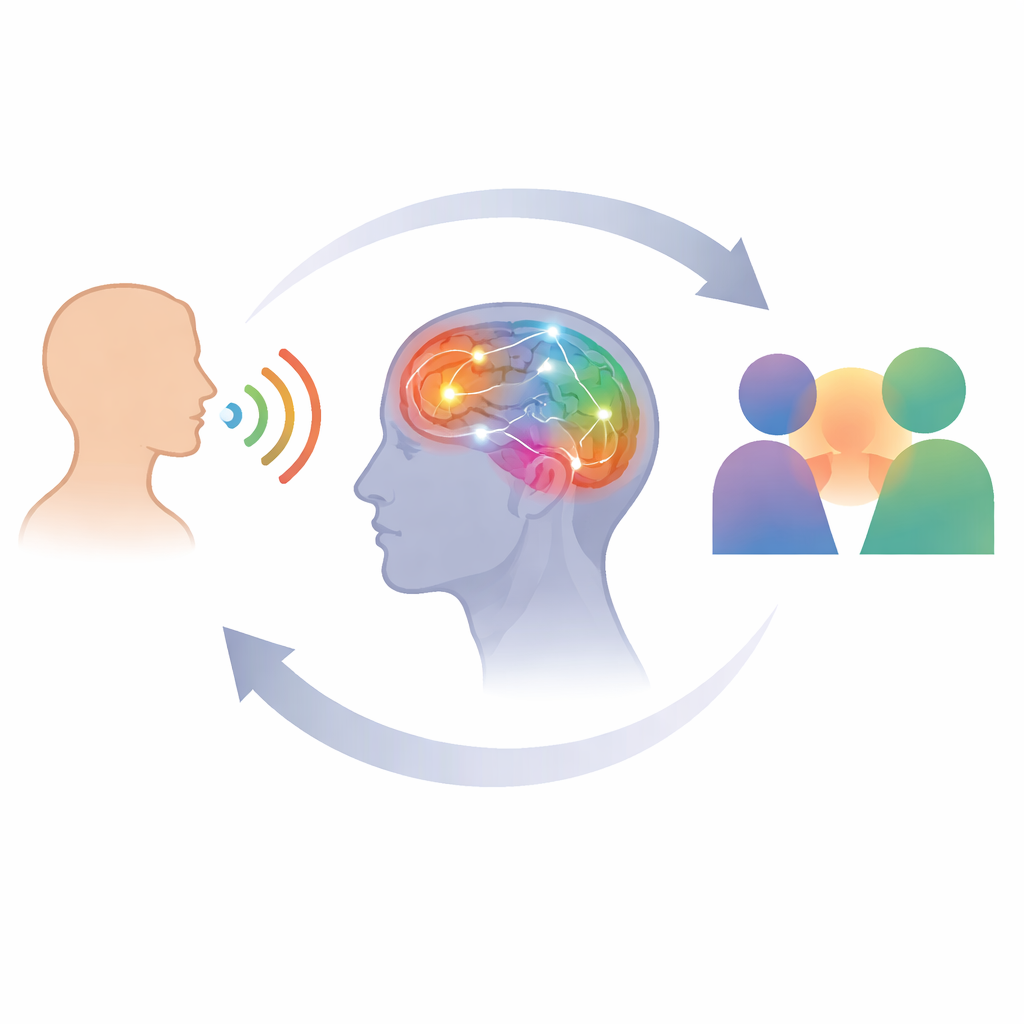
We all know that how something is said can matter as much as the words themselves. The rise and fall of the voice carries emotional prosody—the musical part of speech that signals anger, joy, sarcasm, or comfort. This study asks what happens in the brain when we read these vocal emotions, why women and men may do it differently, and how different kinds of listening tasks change the brain networks involved. The answers could help explain everyday social differences and shed light on conditions like autism and Alzheimer’s disease, where reading emotions often goes wrong.
Listening between the lines
The authors pulled together results from 40 brain-imaging studies in which people listened to emotional voices. Instead of focusing on single brain spots, they used a method called activation network mapping to see which regions tend to work together across many experiments. They then overlaid these maps on a large “wiring diagram” of typical brain connections built from more than a thousand volunteers. This allowed them to trace a common network for emotional prosody and to test how that network changes with task demands and with gender.
A layered pathway for emotional tone
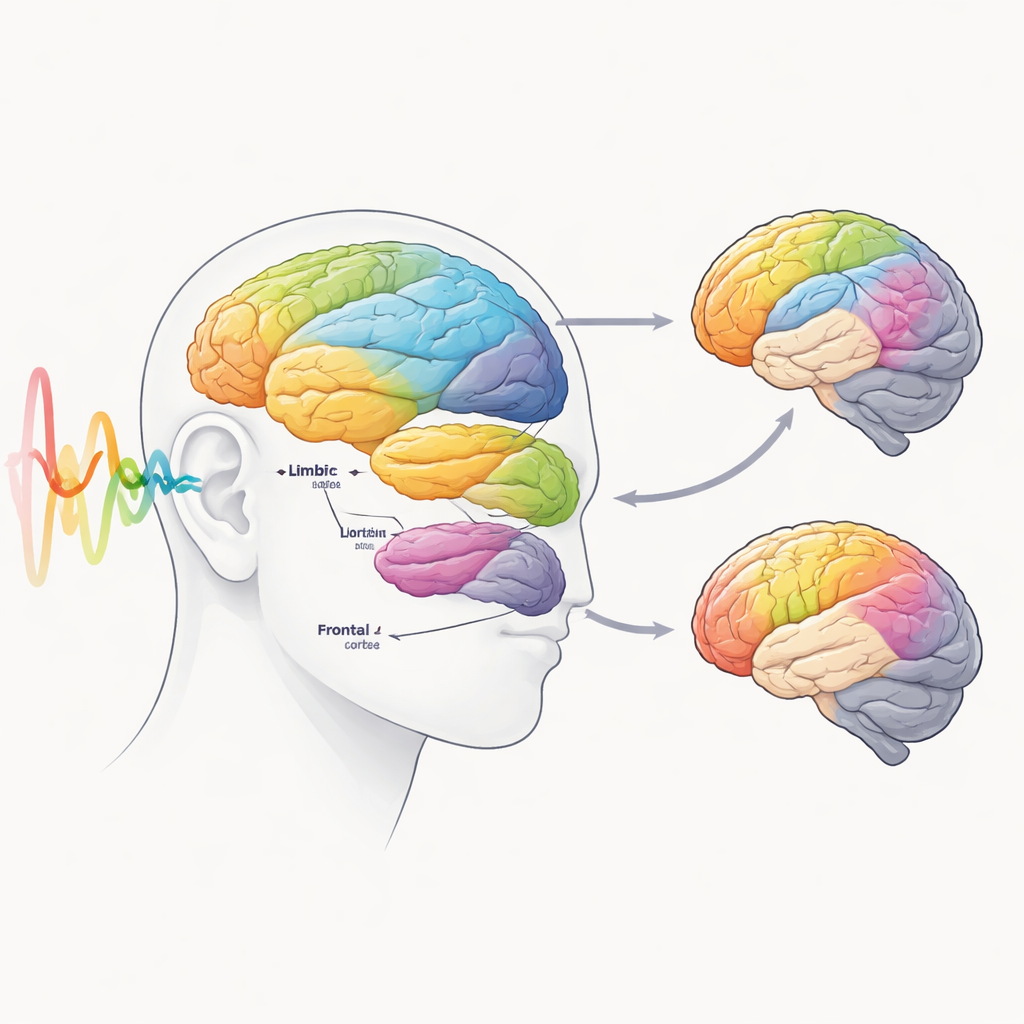
The combined data reveal a wide-spread circuit that includes early sound-processing regions in the temporal lobes, attention and control areas in the frontal lobes, and deep emotion-related structures such as the amygdala. When people simply hear emotional tone without having to name it (implicit tasks), activity is strongest in basic hearing and voice areas that analyze pitch and rhythm. When people must explicitly judge what the speaker feels, the network expands to include frontal regions involved in evaluation and decision-making, as well as sensorimotor areas that support speech and bodily feedback. This supports a hierarchical picture: first the brain captures acoustic details, then integrates them into a feeling, and finally evaluates and responds, recruiting more circuitry as the task becomes more demanding.
Different brains, different emotional tuning
When the team separated data by gender, they found that women rely on a broader network than men during emotional prosody processing. In women, extra regions in frontal cortex, temporal areas, insula, and sensorimotor strips were more strongly linked into the network, and connectivity between regions was generally higher. Men showed a more compact pattern focused on a smaller set of areas. These differences fit with behavioral research showing that women often outperform men at recognizing emotions in voices, faces, and body language, and suggest that women may draw on richer integration of sound, feeling, and motor systems when decoding how someone speaks.
Signals from molecules and genes
The researchers also looked below the level of brain regions, asking which brain chemicals and genes match the spatial pattern of the emotional prosody network. They found that several receptor systems tied to mood and anxiety—serotonin, cannabinoids, glutamate, and norepinephrine—show strong overlap with the network, hinting that the same chemistry that shapes fear and worry also tunes our sensitivity to tone of voice. Some receptors were common to both genders, while others showed gender-linked patterns, suggesting different chemical routes to similar abilities. Gene-expression analyses pointed to heavy energy use, flexible connections between nerve cells, and active transport of molecules as key biological themes. The same gene sets were enriched for links to autism and Alzheimer’s disease, consistent with the difficulties in reading emotional tone seen in those disorders.
What this means for everyday life
Taken together, this work shows that understanding tone of voice is not the job of a single “emotion center” but of a coordinated brain network that flexes with context and differs by gender. When we quickly grasp a friend’s mood from a single sentence, early hearing regions, attention systems, emotion hubs, and motor circuits are all working together, drawing on powerful chemical and genetic support. Mapping this network helps explain why some people—or some patient groups—struggle with social communication, and it points toward more tailored approaches for studying and eventually treating those difficulties, from considering gender in research design to targeting specific brain systems that support the music of speech.
Citation: Hu, P., Sun, X., Ouyang, X. et al. Gender and task type effects on the neural network of emotional prosody processing. Commun Biol 9, 351 (2026). https://doi.org/10.1038/s42003-026-09625-8
Keywords: emotional prosody, brain networks, gender differences, social communication, neuroimaging