Clear Sky Science · en
Cholecystectomy inhibits fasting hepatic fatty acid oxidation in mice
Why losing a small organ can have big effects
Having your gallbladder removed is one of the most common surgeries in the world, and most people are told they can live perfectly well without it. Yet large population studies hint that life after this operation may come with a higher risk of obesity, fatty liver, and type 2 diabetes. This study in mice asks a simple but important question: beyond helping us digest fatty meals, does the gallbladder quietly help keep our metabolism in balance during everyday cycles of eating and fasting?
The gallbladder as a daily rhythm keeper
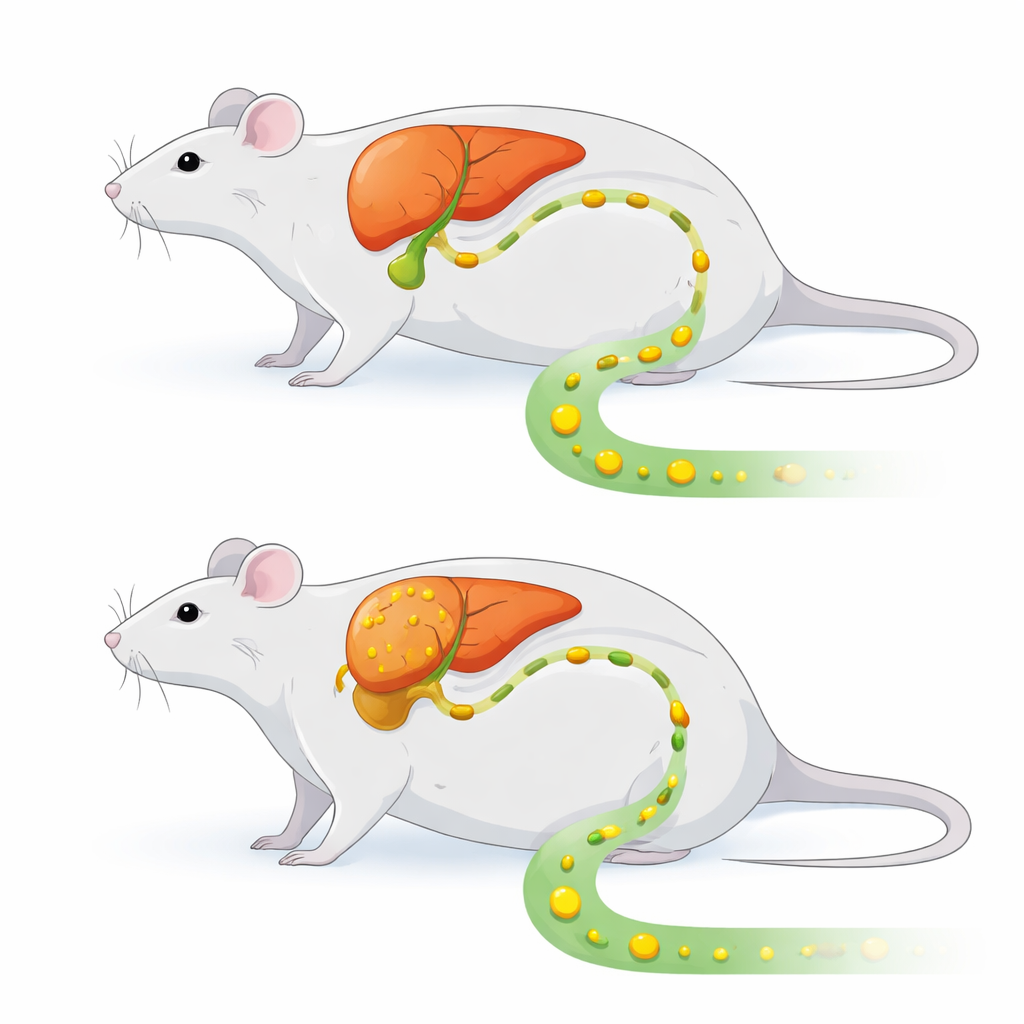
The gallbladder is usually described as a storage bag for bile, the detergent-like fluid made by the liver that helps digest fats. But bile does more than aid digestion: it also acts as a chemical signal that tells organs whether the body is in a fed or fasting state. In healthy animals, most bile is tucked away in the gallbladder during fasting and then released in short bursts after meals. The authors reasoned that removing this reservoir might turn a gently pulsing signal into a constant stream, disturbing the timing cues that the liver relies on to switch between energy-burning and energy-storing modes.
What happened to mice without a gallbladder
To probe this idea, the researchers removed the gallbladders of mice and compared them with sham-operated animals on the same diet. Over several weeks, the gallbladder-free mice gained more weight, had higher blood fats, and showed signs of insulin resistance, a key feature of metabolic syndrome. Blood and tissue samples revealed broad shifts in many small molecules, especially those related to fats and amino acids. One striking change was a drop in acylcarnitines—molecules that reflect how actively cells are burning fatty acids for fuel—suggesting that energy production from fat during fasting was impaired.
A traffic jam of bile and fat in the liver
Because the liver does much of the body’s fat burning during fasting, the team looked closely at this organ. They found that bile acids in the liver of gallbladder-free mice were roughly doubled during fasting, even though the liver was not making more bile overall. Instead, bile was recirculating more rapidly between the liver and intestine because it could no longer pause in the gallbladder. At the same time, genes that drive fat breakdown and burning were turned down, cellular energy levels fell, and fat droplets accumulated in liver cells—hallmarks of fatty liver disease. The more bile acids a liver contained, the worse these fat-burning pathways looked, and the higher the animal’s blood sugar and body weight tended to be.
How bile interferes with the liver’s fat-burning switch
Diving deeper, the authors focused on a master switch in liver cells called PPARα, which normally turns on the machinery for burning fat during fasting. Laboratory experiments showed that exposing liver cells or mice to extra bile acids dampened the activity of PPARα and its target genes, supporting the idea that excess bile directly presses down on this metabolic brake. In the gallbladder-free mice, the constant flow of bile during fasting appears to flood the liver with this signal at the wrong time, silencing PPARα, slowing fat burning, and pushing fatty acids toward storage instead.
Can changing bile flow restore balance?
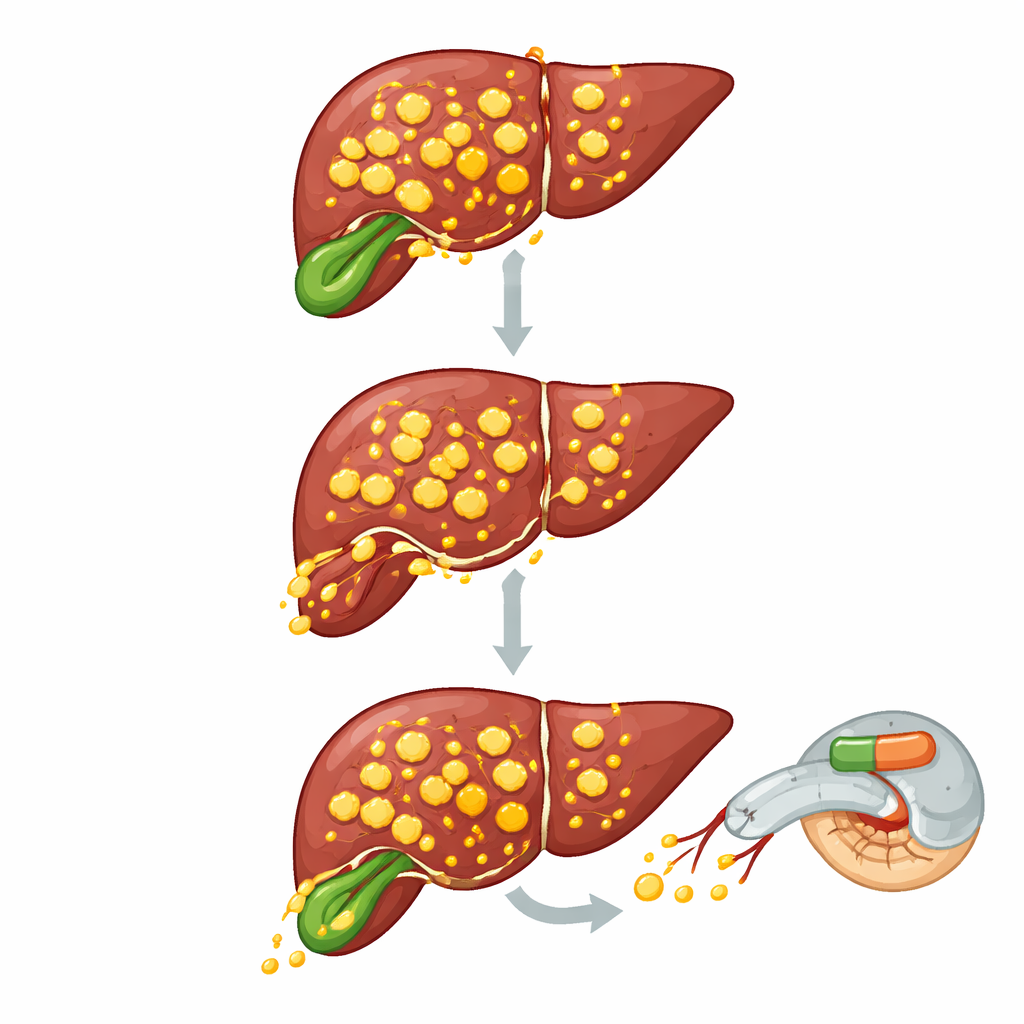
If the problem is too much bile reaching the liver too often, then blocking part of that flow might help. The researchers tested a drug that prevents the intestine from reabsorbing bile back into the body. When gallbladder-free mice received this treatment, they lost weight, had better blood sugar control, less fat in their livers, and higher levels of energy molecules. The liver’s fat-burning genes switched back on, suggesting that dialing down bile exposure can partially reset the fasting program that the missing gallbladder used to help coordinate.
What this means for people without a gallbladder
This work reframes the gallbladder as more than a passive storage sac: it acts as a timing device that shapes when the liver “sees” bile and, in turn, when it chooses to burn fat versus store it. Removing the gallbladder in mice disrupts this rhythm, leading to a liver that is bathed in bile even during fasting, a slowed fat-burning engine, and a tendency toward fatty liver and insulin resistance. While human studies are still needed to confirm the full impact, the findings offer a biological explanation for why people who have had their gallbladders removed may be more prone to metabolic problems—and point to bile-targeting drugs as a possible way to protect long-term metabolic health in this growing patient population.
Citation: Qi, L., Chang, X., Ding, C. et al. Cholecystectomy inhibits fasting hepatic fatty acid oxidation in mice. Commun Biol 9, 349 (2026). https://doi.org/10.1038/s42003-026-09621-y
Keywords: gallbladder removal, bile acids, fatty liver, metabolic syndrome, liver fat burning