Clear Sky Science · en
Single-cell and proteomic profiling unveil aberrant immune phenotypes in gestational diabetes following assisted reproductive technology
Why this matters for future parents
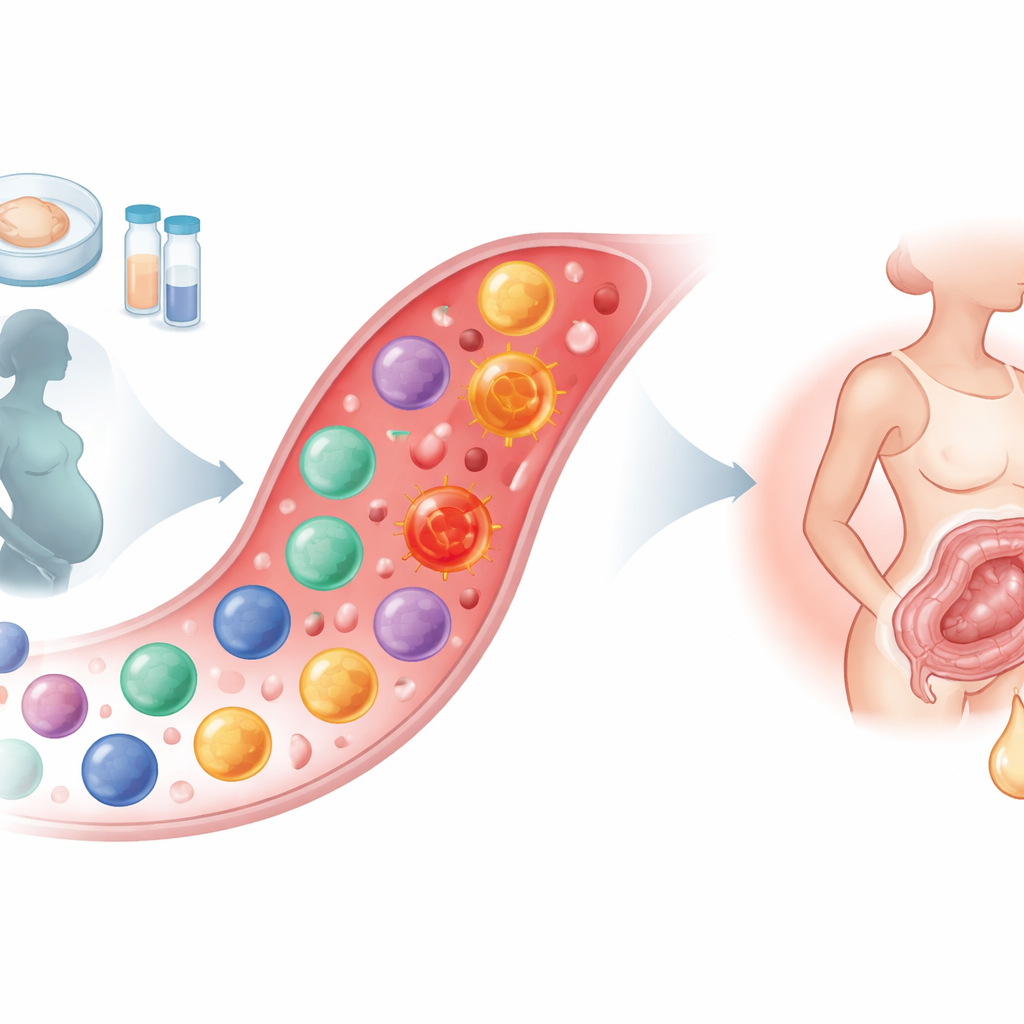
As more people turn to in vitro fertilization and other assisted reproductive technologies (ART) to build families, doctors have noticed a troubling pattern: women who conceive this way are more likely to develop gestational diabetes, a type of high blood sugar that appears during pregnancy. This study digs into the mother’s immune system at the single-cell level to ask why this happens, revealing how specific white blood cells and blood proteins may link ART pregnancies to inflammation and disturbed sugar control.
A closer look at pregnancy and blood sugar
Gestational diabetes affects roughly one in seven pregnancies worldwide and raises the risk of complications such as high birth weight, preterm birth, and long-term diabetes in both mother and child. ART pregnancies already carry higher risks because the parents often have underlying hormonal or metabolic problems and are exposed to strong fertility drugs. The authors followed 63 women who conceived through ART, comparing 32 who developed gestational diabetes with 31 who maintained normal blood sugar. They collected blood samples before pregnancy, in very early pregnancy, and again around 24–28 weeks, when gestational diabetes is usually diagnosed, and combined cutting-edge single-cell sequencing with detailed blood-protein measurements.
Mapping each immune cell, one by one
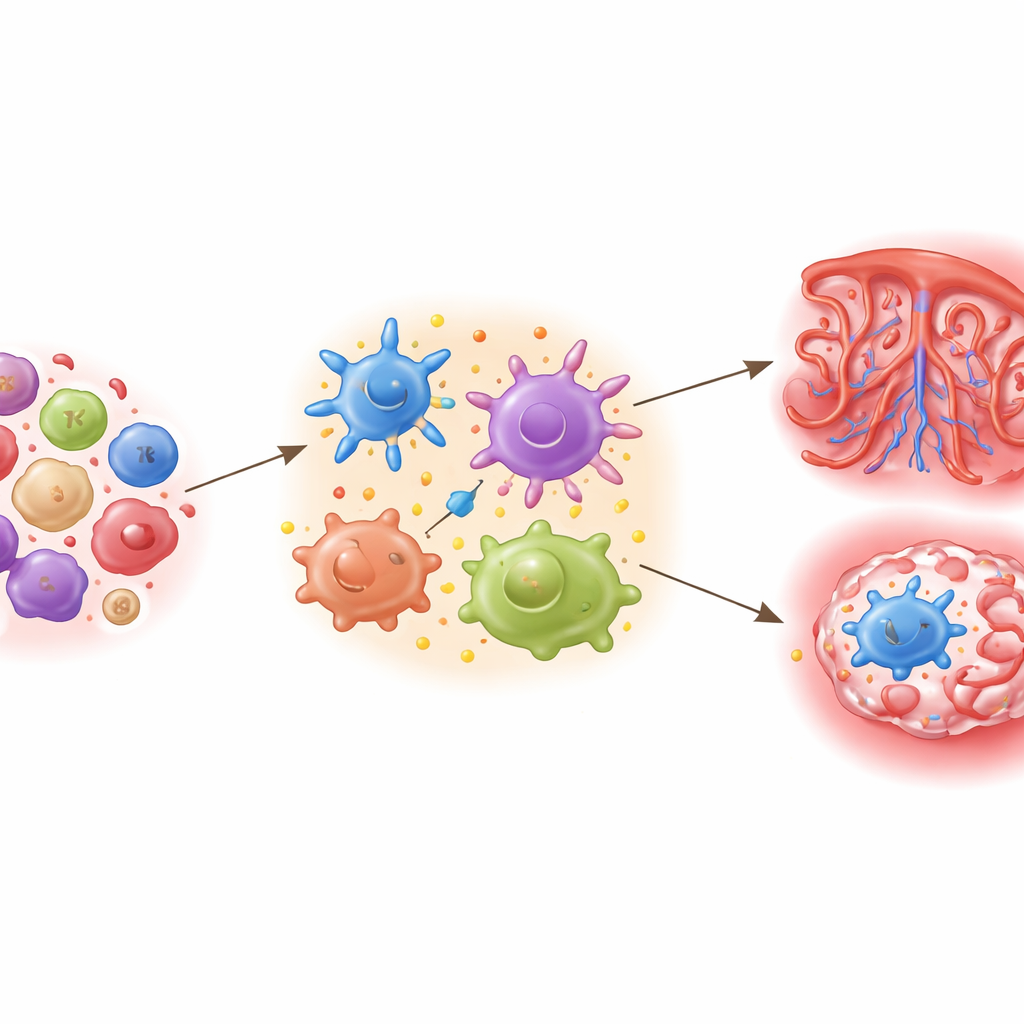
Using single-cell RNA sequencing, the team profiled more than 150,000 immune cells from mid-pregnancy blood samples. They identified all major circulating cell types—many flavors of T cells, B cells, monocytes, natural killer cells, and others—and compared their numbers and activity between women with and without gestational diabetes. Overall, women with gestational diabetes had a higher share of CD8 T cells, a class of cells best known for their ability to kill infected or damaged cells. When the researchers examined these CD8 cells in more detail, they found highly active “killer” subtypes with gene signatures indicating stronger attack functions and heightened inflammatory behavior.
When defense cells become too aggressive
The story did not stop with CD8 cells. Several T cell subgroups, including unusual “innate-like” cells, showed signs of being switched on and primed for attack in women with gestational diabetes. B cells, which produce antibodies, also carried molecular marks of activation, as did two types of monocytes and natural killer cells that belong to the body’s rapid-response defense. Many of these cells shared activation of the same inflammatory pathways, especially those driven by molecules such as TNF and IL-17 that are known to interfere with insulin and sugar handling. The researchers also traced changes in the unique receptor sequences on T and B cells, uncovering subtle shifts in how these cells may recognize targets, including a bias toward certain B cell receptor genes previously linked to autoimmune tendencies.
Invisible signals in the blood
Cells tell only part of the story; the team also measured 92 inflammation-related proteins in blood plasma over time. Before pregnancy and in the earliest weeks, women who later developed gestational diabetes looked similar to their peers. By the second trimester, however, clear differences emerged. Several proteins involved in immune signaling and tissue remodeling—including CD6, CXCL5, MMP10, and 4E-BP1—were higher in women with gestational diabetes and tracked with worse results on glucose tolerance tests. Many of these same signals were linked, in the single-cell data, to the most activated CD8 T cell subsets, suggesting a tight loop between overactive immune cells and circulating inflammatory cues. Patterns also hinted that ART-related hormone changes and the type of embryo transfer (fresh versus frozen) may shape this immune environment.
What this means for ART pregnancies
Put simply, the study suggests that, in women who conceive through ART, gestational diabetes is accompanied by an immune system that is running too “hot” in mid-pregnancy. Key killer T cells, B cells, monocytes, and natural killer cells take on a more aggressive, inflammatory state, and the blood becomes enriched with proteins that can worsen insulin resistance and blood sugar control. Although the work is observational and focused only on ART pregnancies, it highlights specific cell types, signaling pathways, and blood markers that could eventually help doctors identify high-risk women earlier and design treatments that calm harmful inflammation without weakening essential protection for mother and baby.
Citation: Zhu, H., Cai, J., Xu, Q. et al. Single-cell and proteomic profiling unveil aberrant immune phenotypes in gestational diabetes following assisted reproductive technology. Commun Biol 9, 335 (2026). https://doi.org/10.1038/s42003-026-09615-w
Keywords: gestational diabetes, assisted reproduction, immune cells, pregnancy inflammation, single-cell sequencing